
If you’ve ever browsed a seed catalog in August or stopped at a farmers market stall with a dozen garlic braids hanging overhead, you’ve probably encountered both hardneck and softneck garlic without realizing it.
Hardneck vs. softneck garlic: They look similar, and they both taste like garlic, but the differences between them matter more than most beginners expect.
Your climate, storage goals, and cooking habits all point toward one type or the other. This guide breaks down what sets them apart, profiles the most popular varieties of each, and helps you decide which one deserves a spot in your fall garden.
Hardneck vs. Softneck Garlic: What Makes Them Different?
All garlic belongs to the species Allium sativum, but it splits into two main groups: hardneck (Allium sativum var. ophioscorodon) and softneck (Allium sativum var. sativum).
The name comes from the stalk: hardneck varieties grow a rigid central stalk called a scape, while softneck varieties produce a pliable neck that collapses and dries after harvest, making them ideal for braiding.
That structural difference is just the start. The two types diverge in flavor intensity, clove count per bulb, cold hardiness, and shelf life, which are all things worth knowing before you order seed garlic.
Hardneck Garlic: Better Flavor, Better for Cold Climates
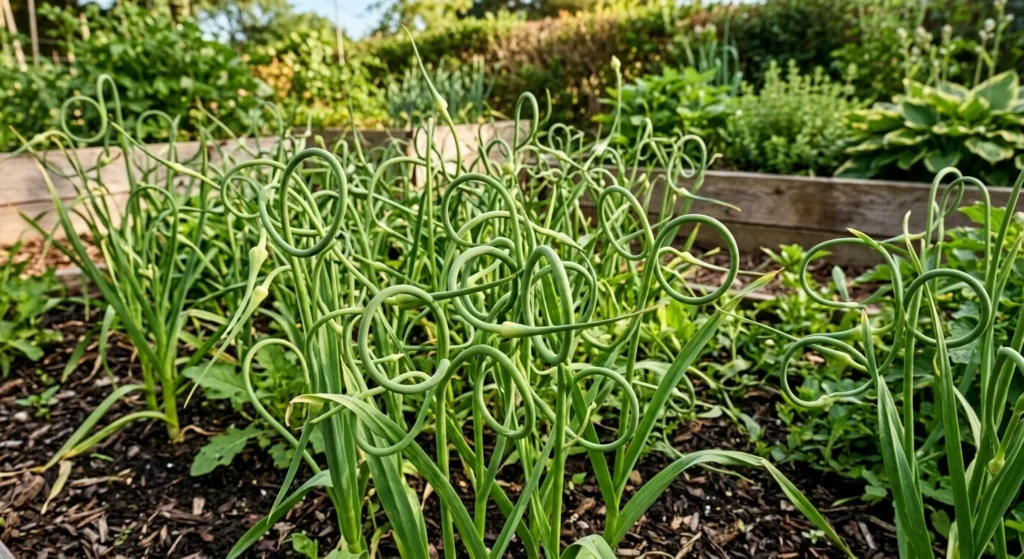
Hardneck garlic is widely considered the best choice for flavor-focused growers. The cloves are larger, fewer per bulb (typically 4–12), and more complex in taste, ranging from rich and spicy to nutty and mellow depending on the variety.
If you’ve ever had garlic that made you stop and actually notice it, it was probably hardneck.
- Flavor: Complex, rich, often pungent or earthy
- Scapes: Yes, harvest them in late spring for cooking (they taste like mild garlic)
- Cloves per bulb: 4–12, arranged in a single layer around the central stalk
- Cold hardiness: Excellent; performs best in USDA zones 3–7
- Storage life: 4–6 months after curing
Popular Hardneck Varieties
- Rocambole: The gold standard for garlic flavor. Rich, complex, and easy to peel with loose skin that practically falls away. It’s the first one garlic growers rave about and the first one they eat because storage only lasts 4–5 months. Best in Zones 4–6.
- Purple Stripe: One of the oldest garlic varieties in cultivation. Beautiful purple-streaked wrappers, excellent baked flavor, and slightly longer storage than Rocambole. A reliable choice for Zones 4–7.
- Porcelain (Music): Large, gorgeous bulbs with just 4–6 fat cloves packed with hot, pungent flavor that mellows beautifully when roasted. One of the strongest yielders in cold climates and a good entry point for first-time hardneck growers. Zones 3–7.
Softneck Garlic: Longer Storage, Better for Warm Climates
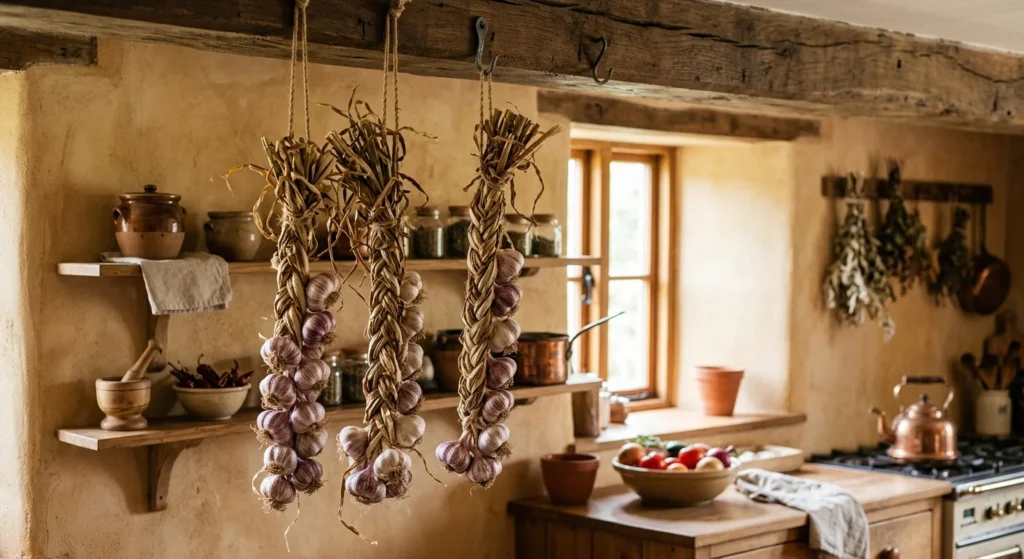
Softneck garlic is what you find in most grocery stores, and for good reason.
It stores longer (up to 12 months when properly cured), produces more cloves per bulb (12–20), and adapts well to a wider range of climates, including warmer zones where hardneck varieties struggle to develop fully.
- Flavor: Milder, more consistent, less pungent
- Scapes: No, softneck varieties don’t produce a flowering stalk
- Cloves per bulb: 12–20, often in multiple layers
- Climate range: USDA zones 3–9; best in zones 7–9 where winters are mild
- Storage life: 8–12 months after curing
Popular Softneck Varieties
- Inchelium Red: A mild, full-flavored artichoke type and one of the highest-rated softnecks for eating quality. Produces large, papery bulbs with good shelf life and consistent performance across climates. Zones 4–9.
- Silverskin (Nootka Rose): The longest-storing softneck available, up to a full year under the right conditions. Sharper in flavor than Inchelium. The variety most often used for decorative garlic braids. Zones 3–9.
- California Earl: A warm-climate standard, widely available and reliable in Zones 6–9. Mild flavor, high yield, and predictable storage. A solid first garlic for beginners in the South or the Pacific Coast.
Which Type Should You Plant?
The answer comes down to two things: where you live and what you want from your garlic.
Choose hardneck if:
- You live in USDA Zones 3–6 with cold winters.
- You care more about flavor complexity than shelf life.
- You want to harvest and cook garlic scapes in late spring.
- You’re growing for fresh use or for selling at a farmers’ market.
Choose softneck if:
- You live in Zones 7–9 with mild winters.
- You want to store garlic for 6–12 months.
- You want to grow braiding garlic.
- You’re a first-time grower looking for the most forgiving experience.
If you’re in Zones 6–7, you can grow both. Many home growers plant a mix: hardneck varieties for fresh eating through winter and softneck for long-term storage into summer. It’s one of the most practical combinations in a small kitchen garden.
When To Plant and Where To Start
Regardless of which type you choose, garlic is planted in the fall, typically 4–6 weeks before your first hard frost. This gives the cloves time to establish roots before the ground freezes and leads to stronger spring growth and better bulb development.
- For a full step-by-step guide to fall planting, care, and spring scapes, see our guide on how to grow garlic from cloves.
- When harvest season arrives, When To Harvest Garlic walks you through reading the signs, curing your bulbs, and maximizing storage time.
- If you’re already thinking ahead to what comes next, our guide What To Plant After Garlic covers the best succession crops to follow garlic in your beds.
Your First Variety Is Just the Beginning
The hardneck vs. softneck garlic question is really just an invitation to pay closer attention to what’s in your garden.
Most growers who start with one end up planting both because once you taste the difference between a grocery store bulb and something you grew, cured, and stored yourself, there’s no going back.
Start with one variety that fits your climate. Grow it well. Then next fall, add another. That’s how most garlic obsessions begin.