
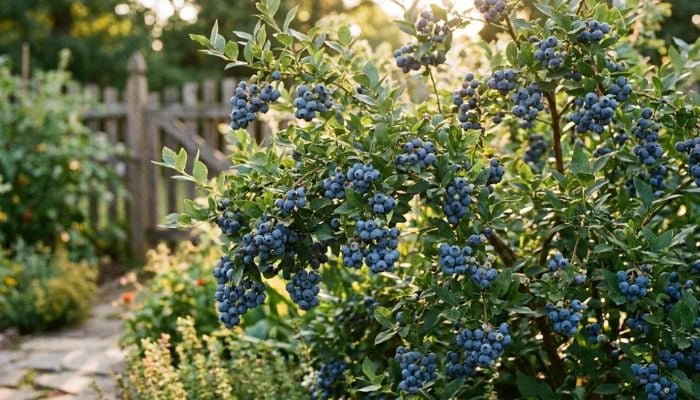
Blueberries are one of the most rewarding fruits you can grow at home. They’re packed with antioxidants and require relatively little attention once established.
A single well-tended bush can produce fruit for decades, but knowing how to grow blueberries the right way is the difference between a thriving bush and one that never produces.
There’s a reason so many home gardeners struggle with them: blueberries have one non-negotiable requirement that most plants don’t. They need highly acidic soil.
Get the soil chemistry right, and blueberries practically grow themselves. Get it wrong, and no amount of watering or fertilizing will compensate.
If you’ve tried growing blueberries before and watched them limp along with yellowing leaves and no fruit, the soil pH is almost certainly the culprit.
This guide walks through everything you need to know, from testing and amending your soil to choosing the right variety for your climate, planting two bushes for cross-pollination, and understanding the multi-year timeline before you get a real harvest.
Why Soil pH Is Everything for Blueberries
Blueberries are acid-loving plants. They need a soil pH between 4.5 and 5.5 to thrive. This is significantly more acidic than most garden beds, which typically run between 6.0 and 7.0.
At the wrong pH, blueberries can’t absorb iron and other essential nutrients, even when those nutrients are present in the soil.
The result is chlorosis (yellowing of the leaves between the veins) and eventually a plant that barely survives and never fruits well.
Before you do anything else, test your soil pH. Simple test kits are available at most garden centers, or you can send a sample to your local cooperative extension for a more accurate reading.
Knowing where your pH stands tells you exactly how much work you need to do before planting.
How To Lower Your Soil pH
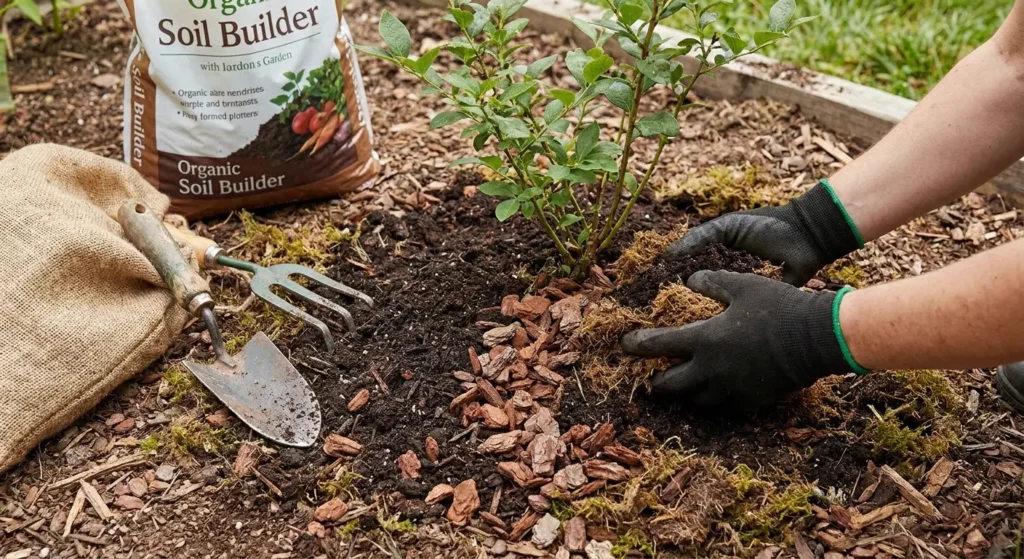
If your soil tests above 5.5, you’ll need to amend it before planting blueberries. Several options work well:
- Elemental sulfur: The most effective long-term option. Soil bacteria convert sulfur into sulfuric acid over time, gradually lowering the pH. Because it works slowly, apply sulfur at least 6–12 months before planting if you can. Follow your soil test results for the correct application rate.
- Peat moss: Naturally acidic and excellent for improving soil structure. Work it generously into the planting area. Peat moss won’t dramatically shift pH on its own, but it’s a valuable amendment to use alongside sulfur.
- Ericaceous compost: Formulated specifically for acid-loving plants such as blueberries, rhododendrons, and azaleas. Mix it into the planting hole and use it as an ongoing top dressing.
- Acidifying fertilizer: Products labeled for acid-loving plants (such as those containing ammonium sulfate) feed the plant and help maintain a lower pH over time.
Avoid adding garden lime anywhere near your blueberry beds. Lime raises pH, which is exactly the opposite of what you need.
If your native soil is heavily alkaline (above 7.0), you may get better results growing blueberries in large containers filled with a custom acidic mix rather than fighting your ground soil.
A half whiskey barrel or a 25-gallon container filled with a blend of peat moss, pine bark fines, and a small amount of elemental sulfur works well.
Just be aware that potting mixes behave differently from garden soil when it comes to moisture retention. Container-grown blueberries may need more frequent watering.
Choosing the Right Blueberry Variety
Not all blueberries are the same. The three main types vary in plant height, cold hardiness, and yield. Choosing the right one for your growing zone matters more than most gardeners realize.
Highbush Blueberries
Highbush blueberries (Vaccinium corymbosum) are the tall, productive types you’re most likely to find at a nursery. They grow 5–8 feet tall and produce large, sweet berries. Most highbush varieties are best suited to USDA Zones 4–7.
Popular highbush varieties include:
- Bluecrop: A mid-season classic; consistent, reliable, and widely available.
- Duke: An early-season variety with excellent yields and good flavor.
- Elliott: A late-season variety that extends your harvest window into August.
If you’re gardening in the South (Zones 8–9), look for Southern Highbush varieties such as O’Neal or Sunshine Blue, which require fewer chill hours to set fruit.
Lowbush Blueberries
Lowbush blueberries (Vaccinium angustifolium) are the wild-type variety native to the northeastern U.S. and Canada. They grow under 2 feet tall, are extremely cold-hardy (Zones 3–6), and produce smaller but intensely flavored berries.
Lowbush plants spread by rhizomes to form a ground-covering patch over time. They’re not ideal for small or tidy gardens, but they’re excellent for naturalizing a slope or a rough section of the property.
Half-High Blueberries
Half-high varieties are hybrids between highbush and lowbush blueberries. They’re a compact, cold-hardy, and solid option for northern gardeners who want decent-sized berries. Northblue and Northsky are popular choices in this category and perform well in Zones 3–5.
Plant Two Varieties for Better Harvests
Blueberries are self-fertile, meaning a single plant can technically produce fruit, but yields improve dramatically, sometimes doubling or more, when you plant two different varieties that can cross-pollinate each other.
Choose varieties that bloom at roughly the same time so their flowers overlap and bees can move between them.
Planting an early-season variety alongside a mid-season variety also extends your overall harvest window, which means fresh blueberries for longer.
Plan for at least two plants, spaced 4–6 feet apart for highbush varieties. The investment in a second plant pays off quickly.
How To Plant Blueberries
Blueberries need full sun with a minimum of 6 hours of direct sunlight daily. They’ll tolerate part shade, but fruit production drops significantly without adequate light.
Plant in spring or fall when temperatures are mild. Dig a hole about twice as wide as the root ball and no deeper than the container the plant came in.
Backfill with a mix of native soil and ericaceous compost or peat moss. Set the plant so the crown sits at or slightly above soil level. Don’t bury it.
Water thoroughly after planting, and keep the soil consistently moist through the first growing season.
Blueberries have shallow root systems and don’t tolerate drought well, especially while getting established.
Be sure to read our guide on blueberry companion planting so you’ll know what pairs well and what not to plant near your blueberries.
Blueberry Plant Care
Once established, blueberries need relatively little intervention, but a few regular practices will make a significant difference in how much fruit you get each year.
Watering
Blueberries need consistent moisture, especially during fruit development. Aim for about 1–2 inches of water per week.
Drip irrigation works well because it delivers water directly to the root zone without wetting the foliage, which reduces the risk of fungal disease.
Fertilizing
Use an acidifying fertilizer formulated for blueberries or other acid-loving plants. Apply in early spring when new growth starts and again in late spring or early summer.
Avoid high-nitrogen fertilizers in late summer; they push tender new growth that won’t harden off before frost arrives.
Blueberries are light feeders. Over-fertilizing, especially with nitrogen, can damage roots and actually reduce fruiting.
Mulching
Mulching is one of the single best things you can do for blueberries. A 3–4 inch layer of pine bark, pine needles, or wood chips keeps the soil moist, suppresses weeds, insulates the shallow roots, and, importantly, helps maintain soil acidity as it breaks down over time.
Reapply mulch each spring, and keep it pulled back slightly from the base of the plant to prevent crown rot.
Pruning Blueberry Bushes
Blueberries don’t need heavy pruning in the first 2–3 years. Let them establish and put energy into building roots and strong canes.
Starting in year 3 or 4, prune in late winter while the plant is still dormant:
- Remove any dead, diseased, or crossing branches.
- Cut out the oldest, thickest canes (those more than 6 years old) at the base; they’ve passed their prime fruiting years.
- Thin out dense interior growth to improve airflow and light penetration.
- Shorten very long canes by about a third to encourage lateral branching.
The goal is a plant with 6–8 healthy canes of varying ages. Blueberries fruit best on 2–4 year old wood, so keeping a mix of young and mid-aged canes ensures consistent production.
When To Harvest Blueberries
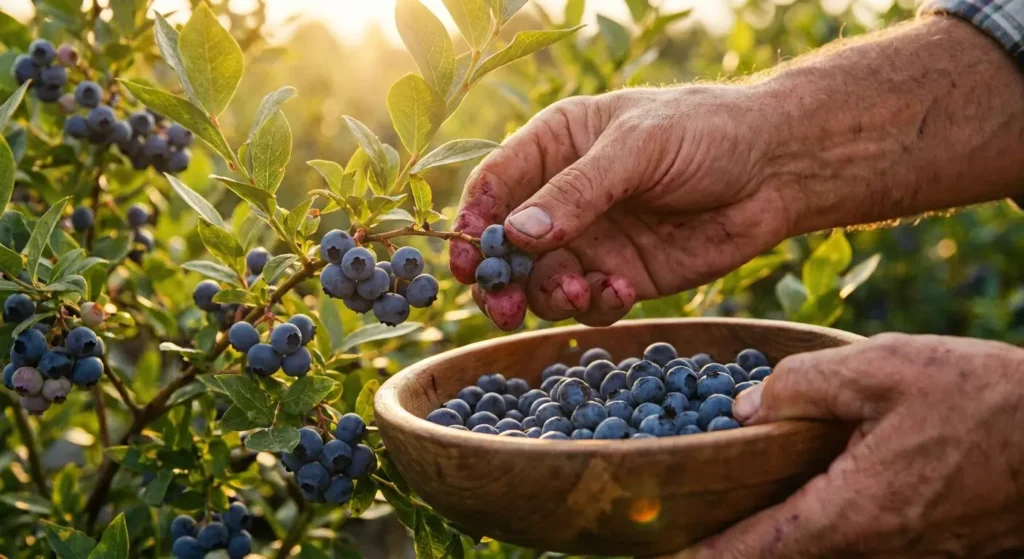
Blueberries are ready to harvest when they’re fully blue, plump, and come off the branch with a gentle tug.
Don’t go by color alone; a berry can look ripe and still be underripe and tart. Taste a few before you start picking in earnest.
Harvest in the morning when temperatures are cool. Ripe berries at the top of each cluster will release easily; leave the harder ones at the base for the next picking.
Blueberries don’t ripen all at once; you’ll typically return to the same plant several times over 2–3 weeks.
Store fresh blueberries in the refrigerator for up to two weeks. Don’t wash them until you’re ready to eat them, as moisture shortens shelf life significantly.
Patience Pays Off: The Long Game With Blueberries
The thing most new blueberry growers don’t expect is how long the timeline is.
In year one, many experienced growers actually remove the flowers to redirect the plant’s energy into root development. Year two brings modest fruit.
By year three, you start to see what the plant is really capable of, and from there, production builds every year. A healthy, well-maintained blueberry bush can fruit for 50 years or more.
Growing blueberries requires the same mindset as any long-lived fruit planting.
The work you put in early, especially getting the soil pH right from the start, determines how the plant performs for decades. Correct the soil, plant two varieties, mulch well, and let the plant build itself up.
The patience required in the first few years pays dividends for longer than most gardens last.