
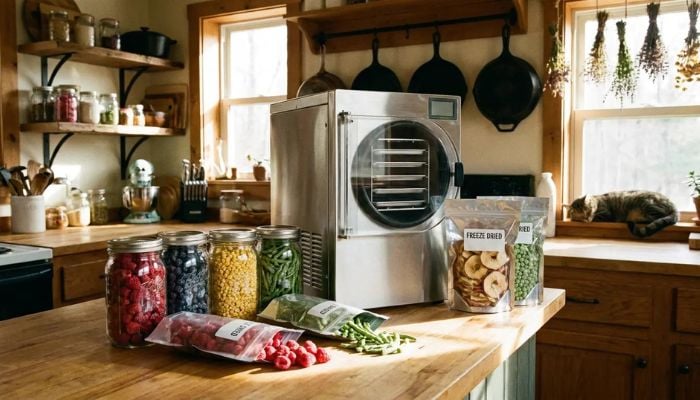
If you’ve gone down the food preservation rabbit hole, you’ve probably landed on freeze-drying. The pitch is compelling: 20–25 year shelf life, no refrigeration required, and food that tastes and rehydrates like it was just cooked.
But then you see the price tag on a Harvest Right machine, and you stop cold.
Is freeze-drying at home actually worth it? That depends entirely on who you are and what you’re trying to do.
Here you’ll find an honest breakdown of how the technology works, what it actually costs, what foods it handles well (and which ones aren’t worth the effort), and who stands to gain the most from making this investment.
Let’s get into it.
What Is Freeze-Drying (And How Is It Different From Dehydrating)?
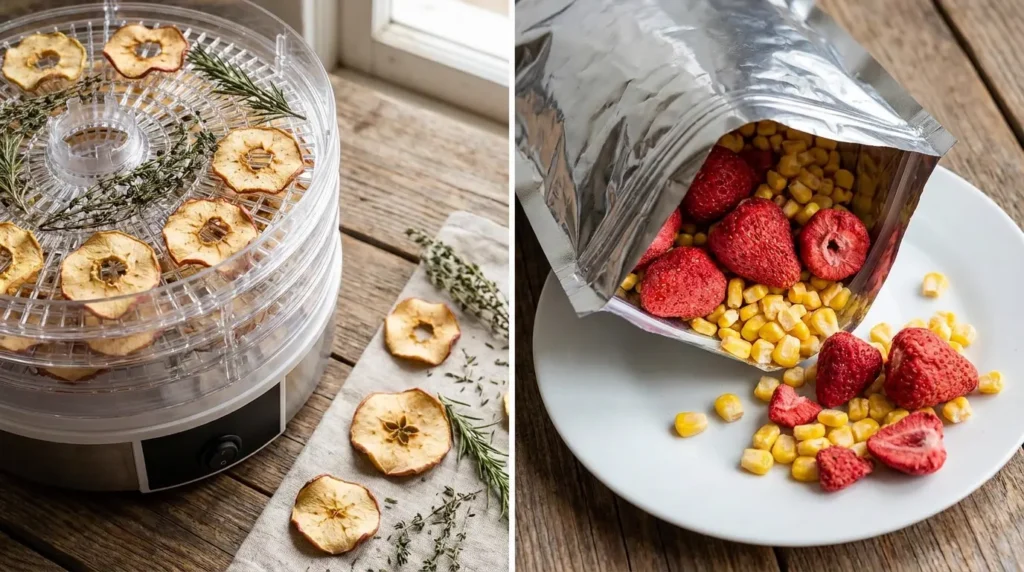
Freeze-drying and dehydrating both remove moisture from food, but they do it in completely different ways, and the results aren’t even close.
A standard food dehydrator uses low heat and airflow to evaporate water from food over several hours. It’s affordable, energy efficient, and great for making jerky, dried herbs, fruit leather, and sliced produce.
However, dehydrated food still retains 20–30% of its original moisture, which limits shelf life to about 1–4 years under ideal conditions.
Texture and nutritional quality take a hit as well. You know how a dehydrated apple slice is chewy and leathery rather than crisp? That’s what heat does.
Freeze-drying works differently. The food is frozen solid first and then placed in a vacuum chamber. The vacuum causes the ice to convert directly from solid to vapor, bypassing the liquid stage entirely, in a process called sublimation.
The result is food that retains its original shape and color and around 97% of its nutritional content, with only 1–2% residual moisture remaining.
That near-zero moisture is the key. At that level, almost no bacterial or enzymatic activity can occur, which is why properly packaged freeze-dried food can genuinely last 20–25 years on a shelf without refrigeration.
The catch? The equipment that creates those conditions is expensive, slow, and draws significant power. A home freeze-dryer takes 24–50 hours per batch. That’s not a dealbreaker, but it is a real commitment.
The Real Cost of Home Freeze-Drying
Let’s be honest about the numbers. This is where most people’s excitement either solidifies into conviction or dissolves into “maybe later.”
Machine Cost
The dominant brand in the home freeze-dryer market is Harvest Right, and their machines range from roughly $2,500 for a small unit (handles 4–7 pounds of fresh food per batch) to $5,000+ for a large unit (handles 12–16 pounds per batch).
There’s also a medium unit in the $3,500–$4,000 range.
You’ll also need:
- Mylar bags and oxygen absorbers for long-term storage (roughly $30–50 per box of 100 bags).
- A vacuum sealer or impulse sealer for the bags.
- A chest freezer if you want to freeze large batches before loading the machine.
Figure $2,700–$5,500 to get fully set up, depending on the size you choose.
Operating Costs (Electricity + Consumables)
Freeze-dryers are not energy-light appliances. A medium Harvest Right unit uses approximately 990–1,500 watts during operation. Running a 40-hour batch daily would cost roughly $3–6 per batch in electricity, depending on your local rates.
That adds up over time, but most home users aren’t running the machine daily. A more realistic scenario for a family actively building a food storage supply is 2–4 batches per week, which puts monthly electricity costs in the $25–$75 range during heavy use.
Add in Mylar bags, oxygen absorbers, and occasional oil changes for the vacuum pump (roughly $20–30 in oil every few months for older pump models; newer units have oil-free pumps), and you’re looking at around $50–$150/month in ongoing consumables during active use.
Food Cost vs. Buying Freeze-Dried
This is where the math can tip in your favor if you’re processing your own garden harvest or buying food in bulk at the right prices.
Commercial freeze-dried food is expensive. A #10 can of freeze-dried strawberries might run $25–$40. A meal kit from a major emergency food brand can be $5–$12 per serving.
If you’re buying produce at peak season (or growing your own) and processing it yourself, you can undercut those costs significantly.
The payback period for a medium Harvest Right machine, assuming regular use and smart sourcing, is commonly estimated at 3–5 years. If you stop using it or only run it sporadically, you may never recoup the cost.
The bottom line is that the machine pays for itself only if you actually use it consistently.
How Long Does Freeze-Dried Food Actually Last?
The 25-year shelf life claim is real… with the right packaging and storage conditions.
To hit that number, your freeze-dried food needs to be sealed in Mylar bags with oxygen absorbers, stored in a cool, dark location (ideally below 70°F), and kept away from direct light.
Heat and oxygen are the two biggest enemies. Stored properly in a climate-controlled pantry, most freeze-dried foods will maintain quality for 20–25 years.
In less-than-ideal conditions, say, a garage that swings between 40°F in winter and 95°F in summer, that number can drop considerably. Shelf life is about moisture and oxygen control first and temperature second.
For foods that you’re planning to rotate through in 1–5 years (which most homesteaders actually do), the exact shelf life ceiling matters less than the fact that freeze-dried food is significantly more stable than dehydrated or canned alternatives.
What Foods Freeze-Dry Best (And What To Avoid)
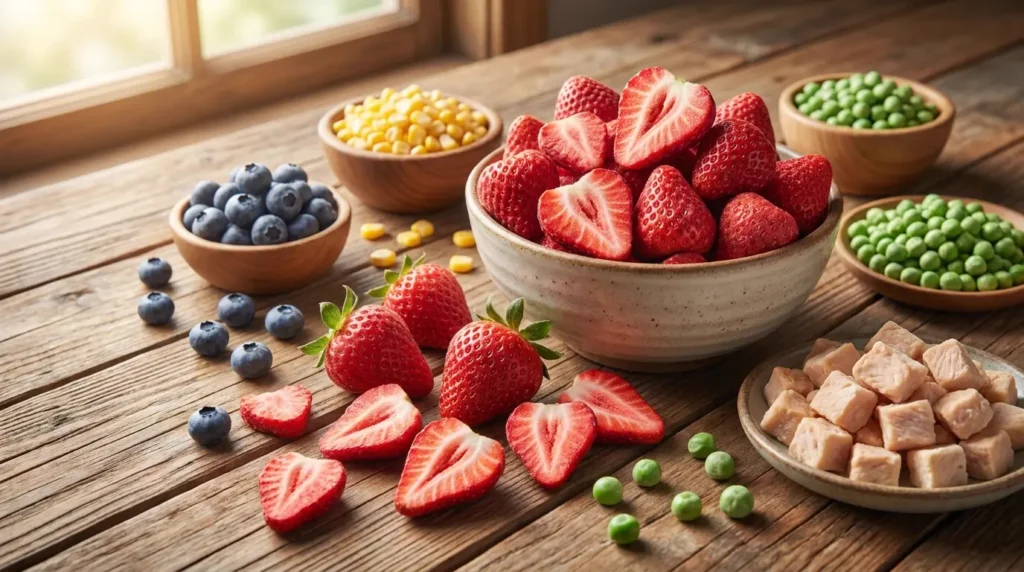
Freeze-drying is not a magic fix for every food. Some things come out beautifully; others aren’t worth the effort.
Best candidates:
- Fruits (strawberries, blueberries, raspberries, peaches, bananas, and apple slices): Texture rehydrates well; also delicious eaten straight as a crunchy snack.
- Vegetables (corn, peas, green beans, carrots, broccoli, and spinach): Hold nutritional value exceptionally well.
- Dairy (sour cream, shredded cheese, yogurt, and ice cream): One of freeze-drying’s unique advantages over other preservation methods.
- Cooked meats (ground beef, chicken, and shrimp): Rehydrates surprisingly well in soups, stews, and casseroles.
- Full meals (chili, soup, pasta dishes, and scrambled eggs): Ideal for emergency food storage or backpacking meals.
- Herbs: Quick, easy, and preserves flavor far better than air-drying.
Foods to skip or approach carefully:
- High-fat items (peanut butter, butter, and fatty cuts of meat): Fat doesn’t freeze dry well, goes rancid faster, and can coat the mechanism.
- High-sugar foods (jam, honey, and syrup): Stay sticky and don’t dry properly.
- Dense, whole foods (whole potatoes and large chunks of meat): Require slicing or shredding first; otherwise, the center doesn’t dry fully.
- Alcohol: Evaporates during the process.
- Raw eggs in shells: Crack them and scramble or blend first.
The sweet spot is cooked, sliced, or small-piece foods with moderate moisture and low fat content.
If you’re thinking about what to freeze-dry first, start with strawberries and corn; both come out perfectly and help you get a feel for batch timing.
Who Actually Benefits From a Home Freeze-Dryer?
Here’s where the honest answer lives.
A home freeze dryer makes the most sense for:
- Large families or multi-household groups who plan to seriously stock a food storage supply. The per-batch cost drops significantly at scale.
- Gardeners and homesteaders with a high-volume harvest they’d otherwise struggle to process. Freeze-drying handles summer abundance better than almost anything else.
- Preppers and emergency preparedness households for whom the 20–25 year shelf life is the whole point. If you’re building a deep pantry, this is the most efficient way to do it.
- Backpackers and outdoor enthusiasts who want to make their own lightweight, high-quality trail meals instead of paying premium prices for commercial freeze-dried packs.
- Allergy or dietary-restriction households that need control over ingredients in long-term storage food.
It probably doesn’t make sense for:
- Single-person households or couples without a clear food storage goal.
- People who process food only occasionally (the machine will sit idle, and the payback math won’t work).
- Anyone buying impulsively. If you don’t have a plan for consistent use, the machine becomes expensive garage furniture.
The machine is a tool. Like a chest freezer or a pressure canner, it rewards people who use it regularly and have a clear purpose for it.
If you’re new to food preservation and still building your skillset, start with dehydrating and home canning first.
Both methods are far cheaper to get into, teach you how food preservation actually works, and produce results that last for years with minimal investment.
Freeze-drying is the upgrade you reach for once you’ve outgrown those methods or when the scale of what you’re preserving justifies the jump.
The Honest Verdict: Freeze-Drying at Home Is Powerful, but It Has To Fit Your Life
A home freeze-dryer is genuinely impressive technology. The shelf life is real, the food quality is excellent, and for the right household, the investment pays off. But it is an investment in money, in time, and in commitment to actually using the machine.
If you’re actively growing large amounts of food, feeding a big family, or are serious about long-term food storage, a Harvest Right freeze-dryer is likely worth it. If you’re just curious about the technology or casually interested in food preservation, the math probably doesn’t work yet.
Start by getting clear on your goals. Are you trying to preserve a garden surplus? Build a year’s worth of emergency food? Make your own backpacking meals? The answer shapes whether a $3,500 machine is a smart investment or an expensive novelty.