
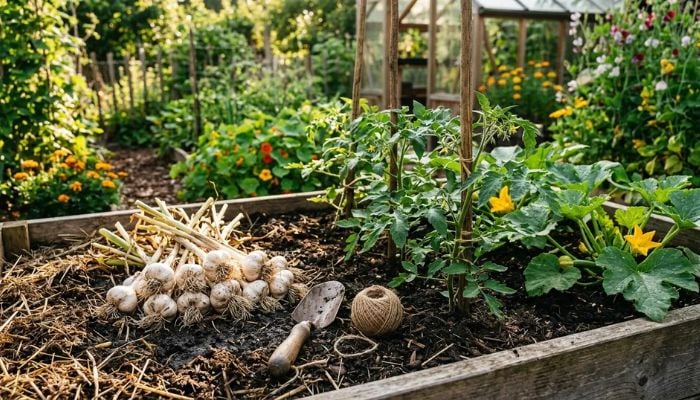
Your garlic harvest is done. The bed is clear. And now you’re staring at freshly turned soil, wondering what to do with it next.
Did you know that garlic leaves your garden in better shape than it found it? The lingering allicin in the soil acts as a mild natural pest deterrent, and garlic’s deep root channels improve drainage and soil structure. Whatever you plant next gets a head start.
But there are rules governing what to plant after garlic. Plant the wrong thing after garlic, and you’ll undo all that work, or worse, set up a disease cycle that’ll haunt that bed for years.
Here’s what you need to know about crop rotation and succession planting after harvesting your garlic.
Why Crop Rotation Matters After Garlic
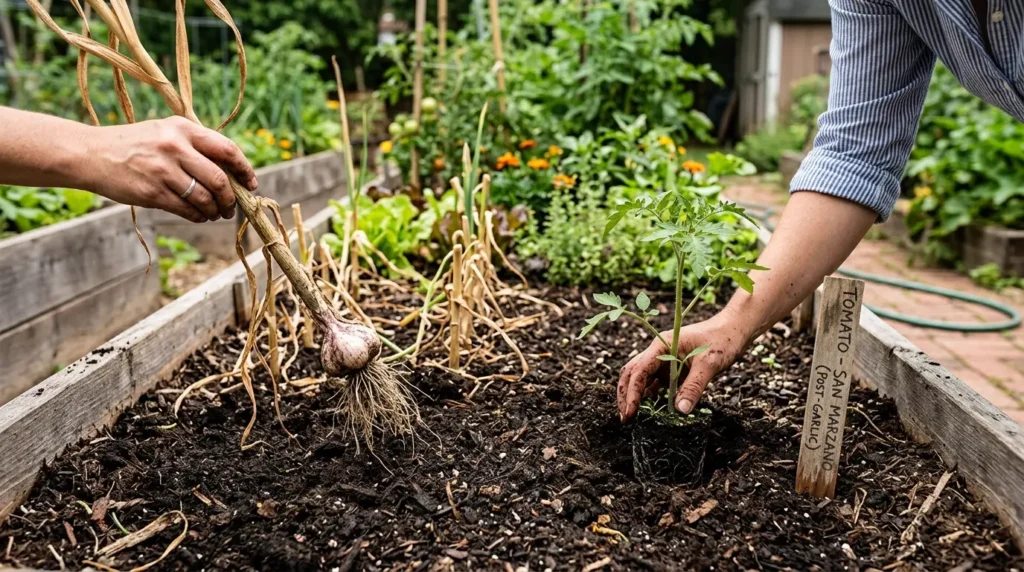
Garlic is an allium, and alliums share a common set of soil-borne diseases and pests. White rot, downy mildew, onion maggots, and root-knot nematodes can all persist in the soil long after the harvest is over.
If you plant another allium (onions, leeks, shallots, chives, etc.) in the same bed the following season, you’re handing those pathogens exactly what they need to thrive. This is especially dangerous if your garlic crop showed any signs of disease.
Avoid planting alliums in the same bed for at least 3 years. Rotate them to a different part of your garden each season, cycling back only after a few years of other crops.
How Garlic Improves the Soil for What Comes Next
One of the underrated benefits of growing garlic is what it does for the soil by the time it’s gone. Unlike heavy feeders that leave the soil depleted, garlic actually works in your favor in a few key ways.
The allicin compounds left in the soil from garlic roots have mild antibiotic and antifungal properties. This can suppress certain soil-borne pathogens and reduce populations of some common garden pests, giving you a head start for whatever you plant next.
Garlic’s long taproots also break up compaction and create channels that improve both drainage and aeration. When you amend the bed with compost after harvest, you’re working with soil that’s already been loosened and conditioned over an entire growing season.
The takeaway: Don’t skip your post-harvest prep. Pull the garlic, clear any debris, rake in a couple of inches of compost, and that bed is ready for almost anything.
What To Plant After Garlic
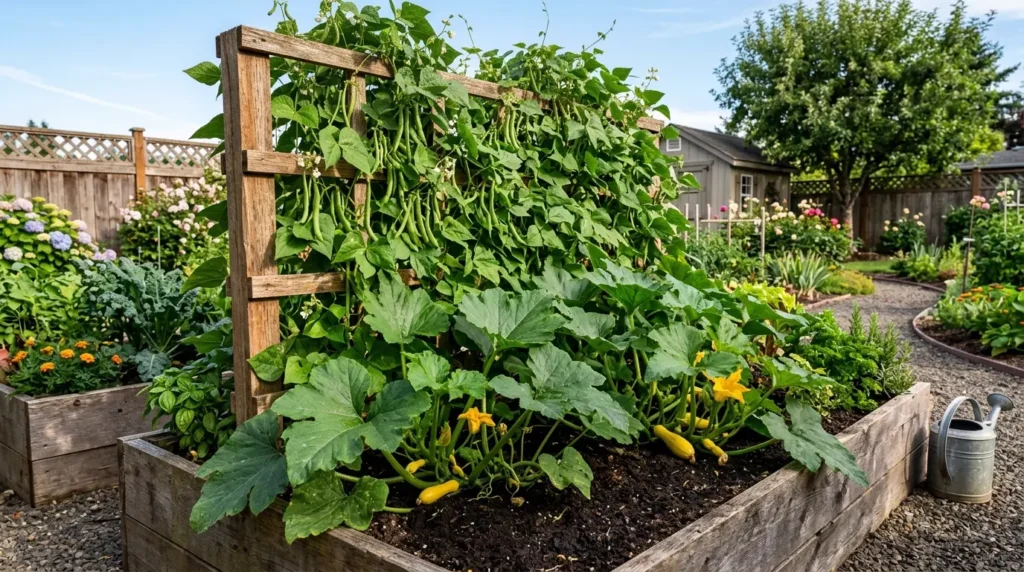
Most warm-season crops do exceptionally well following garlic. The improved soil structure and natural pest-suppressing compounds left behind create a welcoming environment for a wide range of vegetables.
Tomatoes
Tomatoes are one of the best crops to follow garlic. They’re heavy feeders that benefit from well-worked soil, and garlic’s allicin residue helps deter common tomato pests such as aphids and spider mites.
If your garlic harvest wraps up in early-to-mid June, you’ve still got enough growing season to get transplants established before the heat peaks.
Peppers
Like tomatoes, peppers thrive in warm, well-drained soil, which is exactly what a freshly harvested garlic bed offers.
They’re relatively drought-tolerant once established and won’t strain nitrogen availability the way heavier feeders do. A mid-June transplant works well in most growing zones.
Summer Squash and Zucchini
If you want to fill space fast, squash is your answer. Summer squash and zucchini can go in right after garlic comes out with minimal prep, either as transplants or direct-seeded.
They’re not fussy about soil fertility and will spread to cover the bed quickly. Their broad leaves shade out weeds, keeping the bed clean for fall planting.
Beans and Legumes
Beans are a strategic choice after garlic. As legumes, they fix atmospheric nitrogen back into the soil, which garlic, as a moderate feeder, can deplete over a season.
Green beans, pole beans, or bush beans planted mid-summer will feed the soil while feeding your family. This is especially valuable if you’re planning a heavy-feeding brassica crop in the same bed come fall.
Brassicas (For Fall Plantings)
Broccoli, cabbage, kale, and other brassicas prefer the cool weather of fall and early spring. If your garlic comes out in July, you’ve got plenty of time to start brassica transplants for a September or October harvest.
Brassicas are a natural fit in a post-garlic bed; there’s no overlapping disease pressure with alliums, and they love the worked, nutrient-rich soil garlic leaves behind.
Timing Your Mid-Summer Plantings
The window between garlic harvest and first frost is shorter than it feels, so timing matters.
When garlic comes out in late June or July, you’ve got roughly 6–10 weeks before nights start to cool in most growing zones.
That’s enough time for:
- Summer squash and zucchini (mature in 50–60 days)
- Bush beans (50–60 days)
- Fast-maturing tomato varieties, from transplants
It’s tighter for:
- Full-size peppers from seed; stick to transplants only
- Indeterminate tomatoes in short-season climates
If the harvest is late and the window is tight, don’t try to squeeze in another summer crop. A cover crop is almost always the smarter move.
When You’re Not Ready To Plant: Use a Cover Crop
If you’re not planting into the bed right away or if you had disease pressure in your garlic crop and want to break the cycle, a cover crop is your best option.
Quick cover crops to consider for a mid-summer sow:
- Buckwheat: Fast-growing, smothers weeds, and pulls phosphorus up from deeper in the soil. Matures in 4–6 weeks. Easy to chop and drop before frost.
- Crimson Clover: A nitrogen-fixer. Slower than buckwheat but excellent for long-term soil health. Can overwinter in warmer climates.
- Annual Ryegrass: Establishes quickly, prevents erosion, and adds organic matter when tilled in.
- Oats: Plant in late summer, let it winter-kill, and you’ll have a tidy mulch layer ready to work in come spring.
Cover crops aren’t filler; they’re investments. A well-timed cover crop in a summer-emptied bed can significantly improve soil structure, weed pressure, and fertility for whatever you grow there next year.
What NOT To Plant After Garlic
A few crops to avoid putting in the same bed:
- Onions, leeks, and shallots: Same disease and pest vulnerabilities as garlic. Give this bed a 3-year break from all alliums.
- Other garlic varieties: Don’t replant garlic in the same spot year after year; disease builds quickly.
- Parsley and sage: These can harbor some of the same fungal issues. This isn’t a hard rule, but it’s worth considering.
When in doubt, rotate it out.
Planting Strategically After Garlic
Garlic harvest day is one of the most satisfying moments in the garden. Don’t let the momentum stop there.
With a little planning, the same bed that gave you garlic can give you tomatoes, squash, beans, or broccoli before the season’s done… or a cover crop if you’d rather set up next year for success.
Start planning your succession plantings before the garlic comes out. Know what you’re putting in, have your transplants or seeds ready, and get them in the ground within a week of harvest. An empty bed grows weeds. A planted bed grows food.
If your garlic crop left you less than satisfied, it’s time to go back to the basics. Read our guide on how to plant garlic from cloves to reacquaint yourself with the proper steps and techniques.