
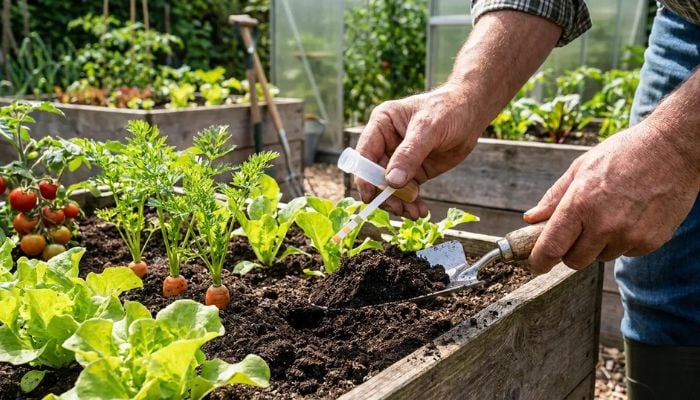
If your garden looks like it should be thriving but your plants keep stalling, yellowing, or producing poorly, the problem may not be water or fertilizer. It may be pH.
Learning how to test soil pH gives you a clearer picture of what your plants can actually use from the soil they’re growing in.
Soil pH measures how acidic or alkaline your soil is. The scale runs from 0 to 14, with 7 considered neutral. Numbers below 7 are acidic, and numbers above 7 are alkaline.
Most vegetables, herbs, and flowers grow best in slightly acidic to neutral soil, but some plants have much narrower preferences.
Soil pH is testable, understandable, and usually fixable. The key is to test before you start adding lime, sulfur, compost, or fertilizer. Guessing can push your soil farther away from what your plants need.
Why Soil pH Matters More Than Most Gardeners Realize
Soil pH doesn’t just describe your soil. It affects how nutrients behave inside it.
A garden bed can contain plenty of nitrogen, phosphorus, potassium, calcium, magnesium, iron, and other minerals, but if the pH is too high or too low, some of those nutrients become less available to plant roots.
This is often called nutrient lockout. The nutrients are present, but the plant cannot easily access them.
That’s why a struggling plant may not improve after another round of fertilizer.
If the pH is outside the plant’s preferred range, more fertilizer can create salt buildup, weak growth, or further imbalance instead of solving the real issue.
For many garden crops, a soil pH between about 6.0 and 7.0 is a strong target. That range keeps many major nutrients available while still working well for common vegetables and herbs.
However, there are important exceptions, especially acid-loving plants like blueberries.
How To Test Soil pH: 3 Reliable Methods
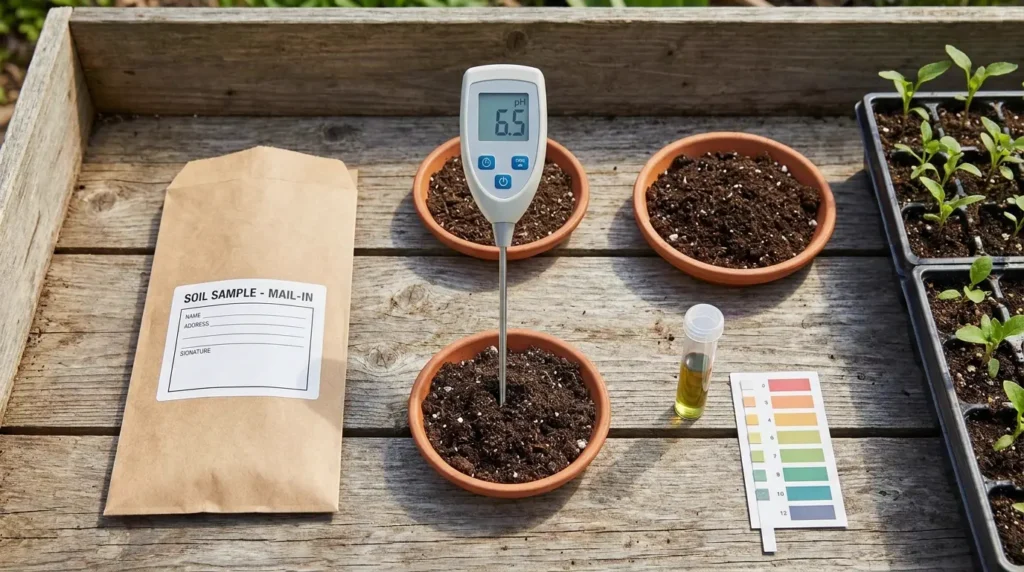
There are three practical ways to test garden soil pH: a mail-in lab test, an electronic meter, or a home test kit. Each one provides a result, but they’re not equal in accuracy.
Mail-In Lab Soil Test
A lab soil test is the most accurate and useful option, especially when you’re starting a new garden, correcting a known problem, or preparing a raised bed for long-term crops.
With a lab test, you collect soil from the growing area, package it according to the lab’s instructions, and mail it in. The report usually includes pH and may also include nutrients, organic matter, lime recommendations, and fertilizer guidance.
This is the best choice if you want more than a number. A pH reading tells you whether your soil is acidic or alkaline, but a lab report can help you understand what to do next and how much amendment your soil may need.
- Best for: New garden beds, raised bed planning, orchards, berry patches, problem-solving, and serious long-term soil improvement.
- Main drawback: It costs more than a basic kit and takes longer than testing at home.
Electronic Soil pH Meter
Electronic pH meters are convenient because you can insert the probe into moist soil and get a quick reading. Some are simple single-purpose meters, while others also measure light or moisture.
The challenge is accuracy. Cheap meters can be inconsistent, especially if the soil is too dry, the probe is dirty, or the meter is poorly calibrated.
A better-quality meter can be useful for spot checks, but it should not replace a lab test when you’re making major soil changes.
If you use a meter, clean the probe between readings, test soil that is evenly moist, and take several readings from different parts of the bed. Don’t base a lime or sulfur application on one quick probe reading.
- Best for: Quick checks, comparing different beds, and monitoring trends after you already have a baseline.
- Main drawback: Accuracy varies widely by product and technique.
Home Soil pH Test Kit
Home soil pH test kits usually use capsules, liquid reagents, or test strips that change color. They’re inexpensive and easy to find at garden centers.
These kits can give you a rough idea of whether your soil is acidic, neutral, or alkaline. That’s helpful if you’re just trying to understand the general direction of your soil.
However, they are less precise than lab testing, and color matching can be subjective.
A home kit is a reasonable starting point for casual gardeners, but if the result surprises you or you plan to apply a major amendment, confirm it with a lab test first.
- Best for: Beginner gardeners, quick estimates, and small, low-risk adjustments.
- Main drawback: Less accurate and less detailed than a lab report.
How To Take a Better Soil Sample
The quality of your test depends on the quality of your sample. A rushed sample can give you a misleading result, even if the test itself is good.
For most garden beds, collect soil from the root zone, about 6 to 8 inches deep. Remove mulch, leaves, roots, stones, and surface debris first.
Take several small samples from the same bed or planting area, mix them together in a clean bucket, and test from that combined sample.
Do not mix soil from very different areas unless you only want a general average. A raised vegetable bed, blueberry bed, lawn edge, and old compost pile may all have different pH levels.
Test them separately if you plan to grow different crops in each area.
Let wet soil air-dry if the lab or kit instructions call for it, and avoid using rusty tools, fertilizer-coated buckets, or containers that previously held chemicals. Clean sampling matters.
How To Read Your Soil pH Results
Once you have a number, compare it to what you want to grow rather than chasing a perfect universal pH.
A pH around 6.0 to 7.0 works well for many vegetables, including tomatoes, peppers, beans, cucumbers, squash, lettuce, and many herbs. Slightly acidic soil is often ideal because many nutrients remain available in that range.
Blueberries are different. They need strongly acidic soil, often around 4.5 to 5.5. If your soil is naturally neutral or alkaline, blueberries may struggle even if you water and fertilize correctly.
Yellow leaves with green veins indicate that the plant cannot access iron because the pH is too high.
Brassicas such as cabbage, broccoli, kale, and cauliflower usually prefer a pH closer to neutral, often around 6.5 to 7.0. Keeping soil within that range can support stronger growth and may help reduce certain soil-related diseases.
Tomatoes are flexible, but they generally perform best in slightly acidic soil, roughly 6.0 to 6.8. If your pH is far outside that range, you may see weak growth, nutrient deficiencies, or disappointing fruit production.
How To Raise Soil pH With Garden Lime
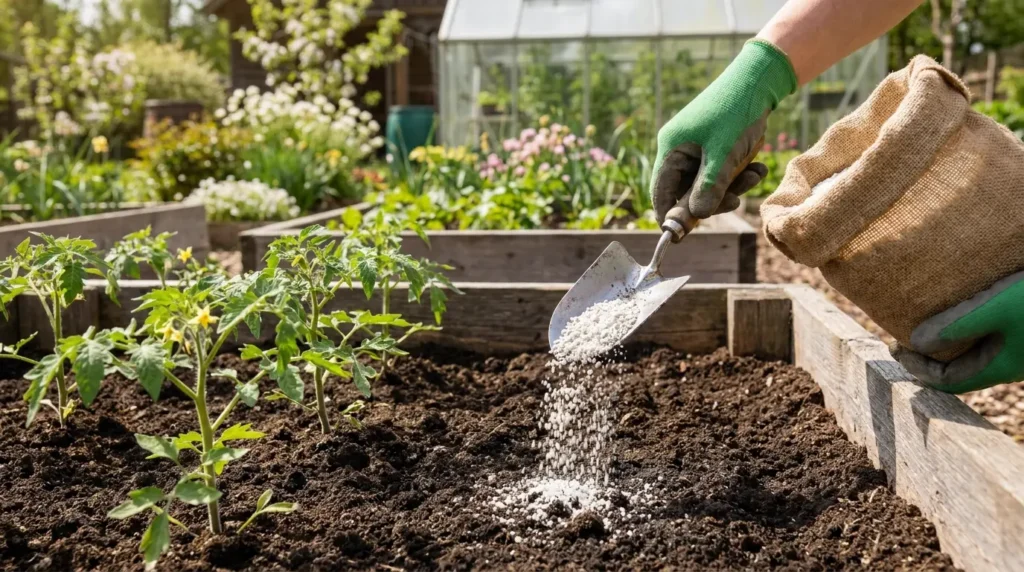
If your soil is too acidic for the plants you want to grow, garden lime is the standard amendment for raising pH. Lime adds calcium compounds that reduce acidity over time.
There are two common forms: calcitic lime and dolomitic lime.
- Calcitic lime mainly adds calcium.
- Dolomitic lime adds both calcium and magnesium.
If your soil test shows low magnesium, dolomitic lime may be useful. If magnesium is already adequate or high, calcitic lime may be the better choice.
Apply lime based on a soil test recommendation whenever possible. The amount needed depends on your current pH, target pH, soil texture, organic matter, and the crop you plan to grow.
Clay soils often require more amendment than sandy soils to shift pH. See our guide on how to improve clay soil to learn the specifics.
Lime works slowly. For best results, apply it several months before planting, and mix it into the soil rather than leaving it on the surface. Fall is often a good time to lime garden beds for spring planting.
Do not add lime just because plants look weak. If your pH is already neutral or alkaline, lime can make nutrient problems worse.
How To Lower Soil pH With Sulfur and Acidifying Amendments
If your soil is too alkaline, lowering pH is usually slower and more difficult than raising it. Elemental sulfur is one of the most common garden amendments used for this purpose.
Soil bacteria convert elemental sulfur into sulfuric acid, which gradually lowers pH. This process takes time and works best in warm, moist, biologically active soil. It’s not an instant fix, and it should be applied carefully.
Acidifying fertilizers can also help maintain lower pH around acid-loving plants, but they’re not a substitute for knowing your starting number.
Peat moss, pine needles, and compost may have mild acidifying effects in some situations, but they usually don’t change mineral soil pH dramatically on their own.
See our guide for a deeper look at sulfur as a garden amendment.
Avoid using vinegar as a serious soil pH correction. It may temporarily acidify the immediate area, but the effect is short-lived and can damage roots or soil life if overused.
How Fast Can You Fix Soil pH?
Soil pH correction is measured in months, not days. That is one of the hardest things for new gardeners to accept.
Lime may take several months to fully react in the soil. Sulfur can also take months because it depends on microbial activity. The change may be slower in cold, dry, or compacted soil.
This is why it’s better to test and amend before the growing season. If you discover a pH problem in the middle of summer, you can make a careful adjustment, but don’t expect an immediate transformation.
Focus on keeping plants healthy while planning a better correction window for fall or early spring.
Retest after amendments have had time to work. For most garden beds, retesting every one to three years is enough unless you’re actively correcting a major problem or growing pH-sensitive crops.
Common Soil pH Mistakes To Avoid
The biggest mistake is adding amendments without a test. Lime, sulfur, wood ash, and acidifying fertilizers all change soil chemistry. Used blindly, they can create the exact problem you were trying to solve.
Another mistake is trying to change the pH of an entire yard for one plant. If you want to grow blueberries in alkaline soil, it may be easier to create a dedicated acidic bed or large container than to fight your native soil across a whole garden.
Gardeners also forget that potting mixes behave differently from in-ground soil. Bagged mixes can go bad, compact, dry out, or lose structure over time. If you’re working with containers, check the condition of the mix before planting.
Finally, don’t assume compost fixes every pH problem. Compost is excellent for soil structure, biology, and nutrient cycling, but it’s not a precise pH correction tool.
Match the Soil to the Crop, Not the Other Way Around
The best pH target depends on what you want to grow. A vegetable bed, blueberry patch, herb garden, and brassica bed may not all need the same soil.
If your soil is close to the preferred range for your crops, small improvements may be enough.
Add organic matter, keep the soil covered, avoid overfertilizing, and retest occasionally. If your soil is far off, choose amendments based on test results, and give them time to work.
Testing soil pH is not about chasing a perfect number. It’s about removing guesswork.
Once you know where your soil stands, you can stop throwing random products at struggling plants and start building the kind of growing environment they actually need.