
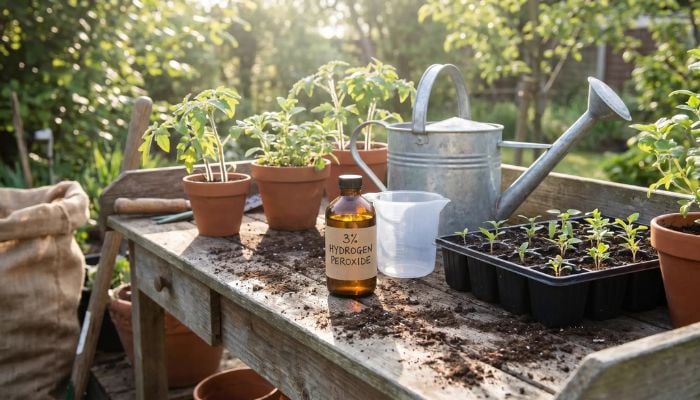
Using hydrogen peroxide for plants can be good for your garden when it’s diluted correctly and used for the right job.
Because common 3% hydrogen peroxide breaks down into water and oxygen, gardeners sometimes use it to add temporary oxygen to soggy soil, support stressed roots, clean seed trays, and reduce surface-level pathogens on tools or containers.
The key word here is temporary. Hydrogen peroxide is not fertilizer, and it’s not something healthy soil needs every week.
Used carefully, it can help in a few specific situations. Used too often or too strongly, it can damage roots and wipe out the beneficial microbes that make living soil work.
This guide explains what hydrogen peroxide actually does for plants, when it’s worth using, the safest dilution ratios, and when to skip it in favor of better drainage, compost, or gentler organic inputs.
What Hydrogen Peroxide Does in the Garden
Hydrogen peroxide is water with an extra oxygen atom: H2O2 instead of H2O.
That extra oxygen atom is unstable, so hydrogen peroxide breaks down fairly quickly into water and oxygen when exposed to light, organic matter, soil, or plant tissue.
That reaction is why gardeners use it. The brief oxygen release can help in low-oxygen root zones, while the oxidizing effect can reduce some bacteria, fungi, and organic residue on hard surfaces.
It’s the same reason hydrogen peroxide bubbles when it touches a cut or dirty surface.
For plants, that bubbling reaction can be helpful in small doses, especially around stressed roots or dirty propagation equipment. But it’s also why hydrogen peroxide should be treated with respect.
It doesn’t only affect “bad” microbes. It can also harm the helpful fungi and bacteria that support soil structure, nutrient cycling, and plant resilience.
Hydrogen Peroxide for Plants: Safe Benefits and Real Limits
Hydrogen peroxide can support plant care in three main ways: root-zone oxygen, short-term root rot treatment, and sanitation. Each use has limits.
For root-zone oxygen, diluted hydrogen peroxide may help when the potting mix has stayed too wet and roots are struggling to breathe.
This is most useful for container plants, seedlings, or temporary waterlogging problems. It’s not a permanent fix for compacted soil or pots without drainage holes.
For root rot, diluted hydrogen peroxide can reduce some of the organisms thriving in soggy, low-oxygen conditions while giving roots a small oxygen boost.
It may help if caught early, but severely rotted roots still need trimming, fresh potting mix, and better watering habits.
For cleaning, hydrogen peroxide is often a great choice. It can be used to sanitize seed trays, small pots, pruners, scissors, plant labels, and other garden tools before reuse.
This is especially helpful when starting seeds or working with cuttings, where young plants are more vulnerable to disease.
The limit is soil life. If you are building a rich, organic garden with compost, mulch, worm castings, or other living-soil inputs, frequent hydrogen peroxide drenches work against that goal. Use it as a targeted tool, not a routine tonic.
Best Hydrogen Peroxide Dilution Ratios for Plants
Most garden advice assumes standard 3% hydrogen peroxide, the kind commonly sold in brown bottles. Do not use stronger concentrations from beauty supply, pool, or industrial sources unless you’re trained to dilute them safely.
Higher-strength hydrogen peroxide can burn skin, damage plants, and create serious safety risks.
Use these 3% hydrogen peroxide ratios as a starting point:
- Gneral stressed-root drench: 1 tablespoon of 3% hydrogen peroxide per 1 cup of water.
- Mild maintenance watering for a temporary oxygen boost: 1 teaspoon of 3% hydrogen peroxide per 1 cup of water..
- Seed tray or small-pot cleaning spray: Use 3% hydrogen peroxide straight from the bottle on hard surfaces. Let it sit briefly, and rinse if desired.
- Tool cleaning: Wipe off soil first, and then spray or soak metal blades with 3% hydrogen peroxide before drying thoroughly.
- Hydroponic or Kratky system cleanup: Use hydrogen peroxide for cleaning containers between grows, not as a constant additive unless you’re following a hydroponic-specific plan.
Always mix only what you need. Hydrogen peroxide loses strength over time once diluted, especially if left in light or stored in an open container.
How To Use Hydrogen Peroxide for Root Rot
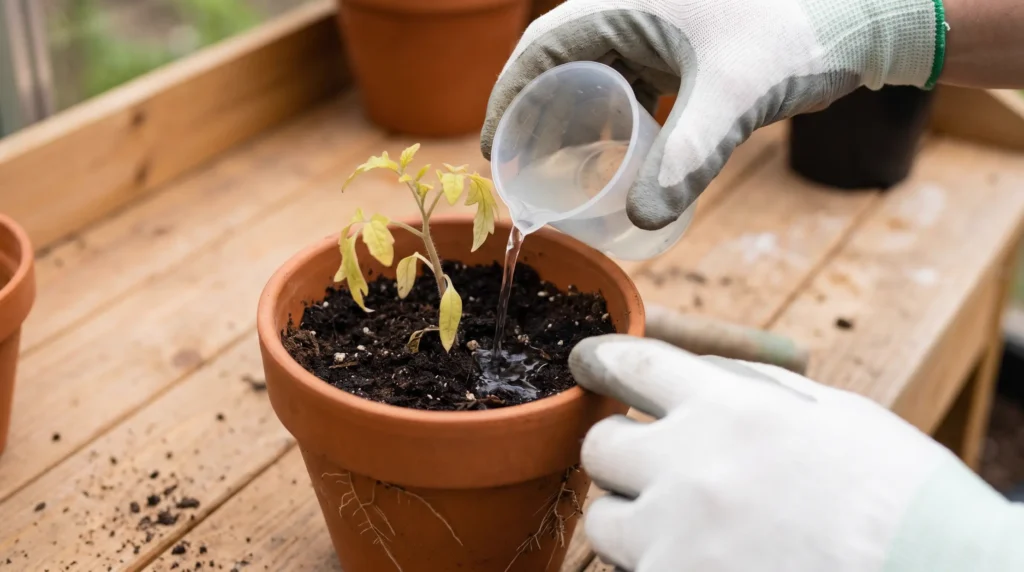
Hydrogen peroxide root rot treatment works best when the problem is caught early and the plant still has some firm, healthy roots.
Signs of root rot include yellowing leaves, wilting even when the soil is wet, sour-smelling potting mix, black or mushy roots, and slow new growth.
- Start by removing the plant from its pot if possible. Gently shake away wet potting mix and inspect the roots.
- Trim off roots that are black, slimy, hollow, or foul-smelling. Healthy roots are usually white, cream, tan, or light brown, depending on the plant.
- Mix 1 tablespoon of 3% hydrogen peroxide into 1 cup of water. Pour the solution through the remaining root ball, or use it as a short soil drench after repotting.
- Let excess liquid drain completely. Do not leave the pot sitting in a saucer of treated water.
- Repot the plant into a fresh, well-draining mix and a container with drainage holes.
- Then change the conditions that caused the problem. Water less often, improve airflow, use a lighter potting mix, and avoid oversized containers that stay wet for too long.
One treatment is usually enough to assess whether the plant responds. Repeating strong drenches every few days can stress roots further and slow recovery.
Using Diluted Hydrogen Peroxide on Waterlogged Soil
When soil stays saturated, roots can suffocate. Oxygen moves slowly through water, so waterlogged potting mix creates the perfect environment for root stress and rot.
A diluted hydrogen peroxide drench can provide a short burst of oxygen, but it cannot replace drainage.
For potted plants, use the mild ratio first: 1 teaspoon of 3% hydrogen peroxide per 1 cup of water. Water the soil lightly with the solution, and then let the container drain fully.
Move the plant somewhere with better airflow and brighter indirect light if appropriate for the species.
For garden beds, hydrogen peroxide is usually less practical. The better fix is to loosen compacted areas, add compost, shape beds so water moves away from roots, and avoid walking on wet soil.
If a garden bed repeatedly stays soggy, the issue is drainage, not a lack of hydrogen peroxide.
This is also where growing methods matter. In water-based systems such as the Kratky method, oxygen management is part of the setup.
Hydrogen peroxide may be useful for cleaning jars, reservoirs, and tools between grows, but the day-to-day solution is proper water level, light control, and system hygiene.
Cleaning Seed Trays, Pots, and Garden Tools
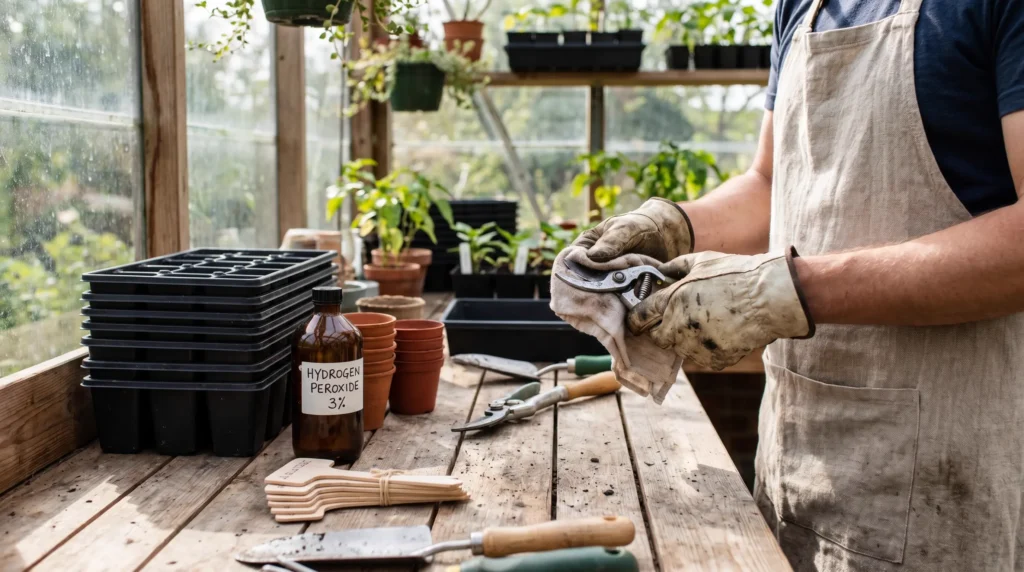
Hydrogen peroxide is often safer and more useful as a cleaner than as a soil drench. Old seed trays and reused pots can carry fungal spores, algae, and residue from previous plants.
Cleaning them before the next planting reduces the chances of damping off and other seedling problems.
First, scrub off loose soil and plant debris. Hydrogen peroxide works better on a clean surface than on a crust of old potting mix.
Spray 3% hydrogen peroxide directly onto trays, pots, humidity domes, labels, and small tools. Let it sit for several minutes, and then rinse or air-dry.
For pruners and scissors, wipe away sap and soil before applying hydrogen peroxide. Dry metal parts afterward to reduce rust. If you’re moving between diseased and healthy plants, clean tools between cuts or between plants.
When Not To Use Hydrogen Peroxide on Plants
Skip hydrogen peroxide when plants are already healthy and growing well. Healthy soil doesn’t need routine sterilizing, and healthy roots don’t need regular oxidizing treatments.
Avoid using hydrogen peroxide on freshly transplanted seedlings unless there’s a clear reason. Young roots are tender, and transplant shock already puts plants under stress. Focus on gentle watering, light, warmth, and airflow first.
Do not combine hydrogen peroxide with other garden sprays in the same bottle unless a trusted source gives a specific recipe.
Mixing it with vinegar, bleach, strong fertilizers, pesticides, or homemade concoctions can create plant damage or unsafe reactions.
Avoid repeated use in compost-rich beds, worm bins, or living-soil containers. If your goal is to encourage microbial activity, reach for compost, mulch, worm castings, or gentle microbial foods instead. Hydrogen peroxide is a reset tool, not a soil-building input.
Common Mistakes To Avoid
Hydrogen peroxide is simple to use, but mistakes are easy to make and all too common:
- Using it too strongly because the plant looks bad.
- Treating every yellow leaf as root rot.
- Pouring it into soil that has no drainage.
- Repeating root drenches before the plant has time to respond.
- Using high-strength hydrogen peroxide without proper dilution.
- Expecting it to replace good watering habits.
- Applying it weekly as a “plant booster.”
The biggest mistake is treating symptoms without fixing the cause. If a plant has root rot because the potting mix stays wet for days at a time, hydrogen peroxide may buy time, but it will not solve the watering or drainage problem.
A Simple Hydrogen Peroxide Safety Checklist
Before using hydrogen peroxide on plants, run through this quick checklist:
- Confirm you are using 3% hydrogen peroxide.
- Dilute it before applying it to soil or roots.
- Test on one plant before treating many plants.
- Use it only when there is a specific problem to solve.
- Keep it away from eyes, skin, children, and pets.
- Store it in the original dark bottle.
- Stop using it if leaves wilt, roots brown, or growth slows after treatment.
If you’re unsure, use the milder ratio first. Plants usually recover better from a gentle treatment than from an aggressive one.
Use Hydrogen Peroxide as a Tool, Not a Habit
Hydrogen peroxide can definitely help with plant care, especially for early root rot, short-term waterlogging, and cleaning seed-starting supplies.
The safest approach is to use standard 3% hydrogen peroxide, dilute it carefully, and apply it only when the situation calls for it.
For long-term plant health, the fundamentals still matter more: drainage, airflow, balanced watering, clean tools, healthy soil, and the right inputs at the right time.
Hydrogen peroxide can help reset a problem area, but your best garden results come from building conditions where plants don’t need rescuing in the first place.