
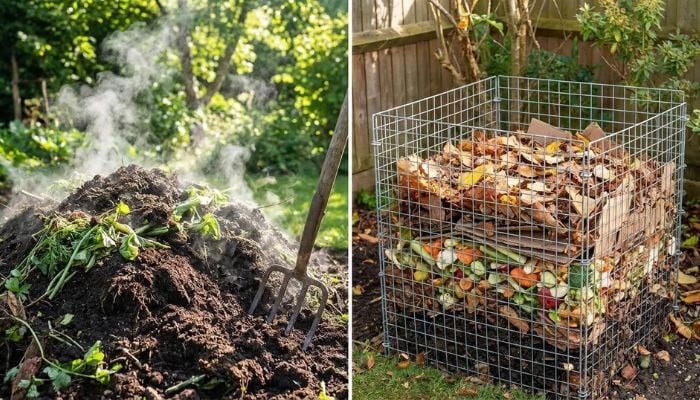
You’ve decided to compost. Good call. But then you start reading and realize there are actually two completely different approaches, and they work nothing alike.
Hot composting and cold composting both produce finished compost, but they get there in very different ways.
One takes months of hands-off patience. The other takes weeks of deliberate management. Neither is wrong, but one is probably a better fit for your time, your goals, and your garden.
Here’s how they actually work and how to decide which one makes sense for you.
What Is Hot Composting?
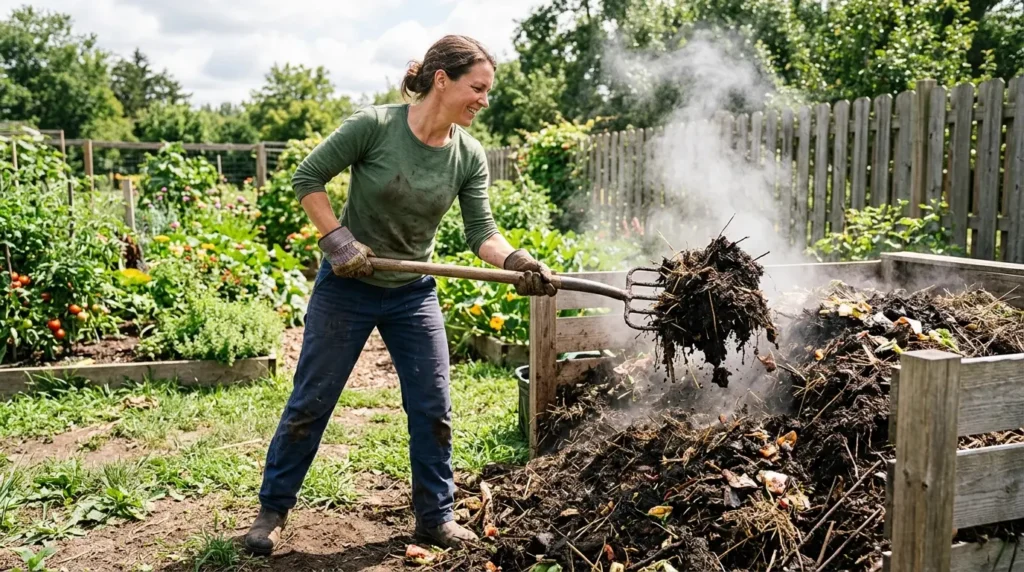
Hot composting is active composting. You build a pile with the right balance of materials, manage moisture and airflow, and the pile heats up, sometimes reaching 130–160°F, as microorganisms break everything down at speed.
How Hot Composting Works
The heat comes from microbial activity. When you get the carbon-to-nitrogen ratio right (roughly 25–30 parts brown material to 1 part green), pile the material in bulk, and keep moisture consistent, thermophilic bacteria kick into overdrive and generate serious internal heat.
That heat is what makes hot composting powerful. At temperatures above 131°F, most weed seeds are killed. Pathogens are destroyed. And the breakdown process is dramatically faster than what happens in a passive pile left to its own devices.
You’ll turn the pile every 3–7 days to move the cooler outer material into the hot core. Done right, you can have finished, garden-ready compost in 4–8 weeks.
What You Need to Get Started:
- A pile or bin with at least 3 cubic feet of material (roughly 3 feet × 3 feet × 3 feet)
- A balanced mix of browns (dry leaves, cardboard, straw, wood chips, etc.) and greens (kitchen scraps, fresh grass clippings, fresh garden trimmings, etc.)
- A pitchfork or compost aerator for turning
- A compost thermometer if you want to monitor temperatures; useful but not required
The critical difference from cold composting is that hot composting is a batch process. You need enough material all at once to generate and sustain heat. Adding scraps gradually won’t get you there.
Pros and Cons of Hot Composting
Pros:
- Fast results: Finished compost in 4–8 weeks with active management
- Kills weed seeds and most pathogens at proper temperatures
- Well-suited for large volumes of material (fall leaves, garden cleanouts, etc.)
- A satisfying project if you like hands-on gardening tasks
Cons:
- Requires regular turning: Every 3–7 days during the active phase
- Needs a critical mass of material to heat up properly
- More planning involved: Ratios, moisture, monitoring, etc.
- Not practical if you’re working with small or irregular amounts of scraps
What Is Cold Composting?
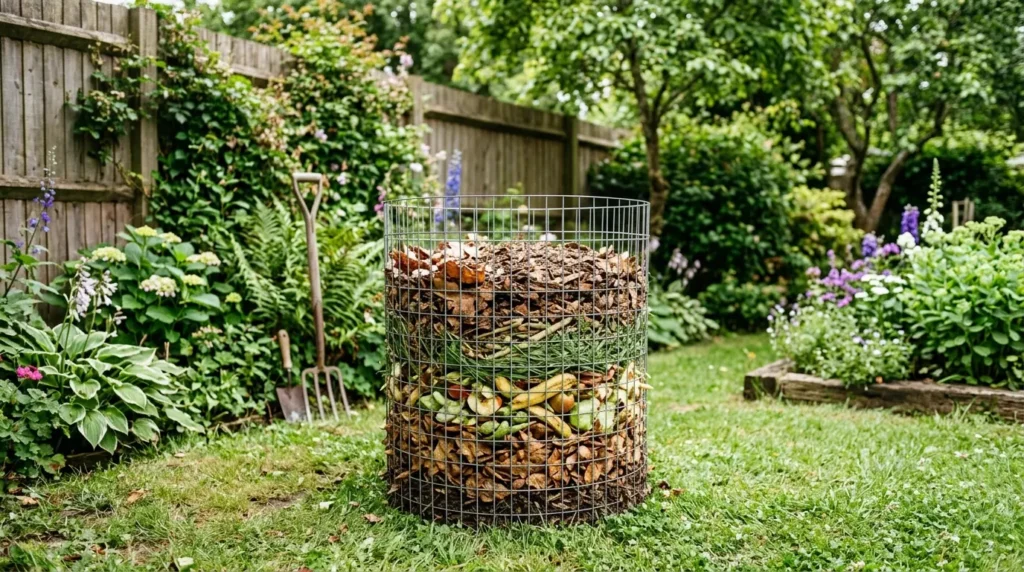
Cold composting is passive composting. You add organic material to a pile or bin over time, and you wait. That’s mostly it.
How Cold Composting Works
Without bulk material and active turning, the pile never builds up the internal temperature needed for fast decomposition. Instead, it breaks down slowly, driven by fungi, earthworms, and slow-acting bacteria rather than heat-generating microbes.
You add materials as you have them, such as kitchen scraps, fallen leaves, a batch of garden trimmings, and coffee grounds. The pile breaks down on its own schedule.
In most climates, expect 6 to 12 months before you have finished compost. In colder regions or with less-than-ideal conditions, it can take longer.
What You Need To Get Started
- A designated spot, bin, or wire enclosure where you’ll add materials over time
- Any mix of organic matter: kitchen scraps, leaves, grass clippings, garden waste, and cardboard
- Patience
That’s genuinely the full list. Cold composting is as low-effort as composting gets. No thermometer, no turning schedule, and no need to build the pile in one go. Just keep adding material and let nature work.
Pros and Cons of Cold Composting
Pros:
- Almost zero maintenance: Add material and walk away
- No need to accumulate large amounts of material before starting
- Works perfectly for a steady trickle of kitchen and garden waste
- Low barrier to entry: Anyone can do it immediately
Cons:
- Slow: 6 to 12+ months for finished compost
- Does not reliably kill weed seeds or pathogens: Avoid adding diseased plants or weeds gone to seed
- Finished compost often gets buried under fresher additions: You may need to dig down to harvest it
Hot vs. Cold Composting: Side-by-Side
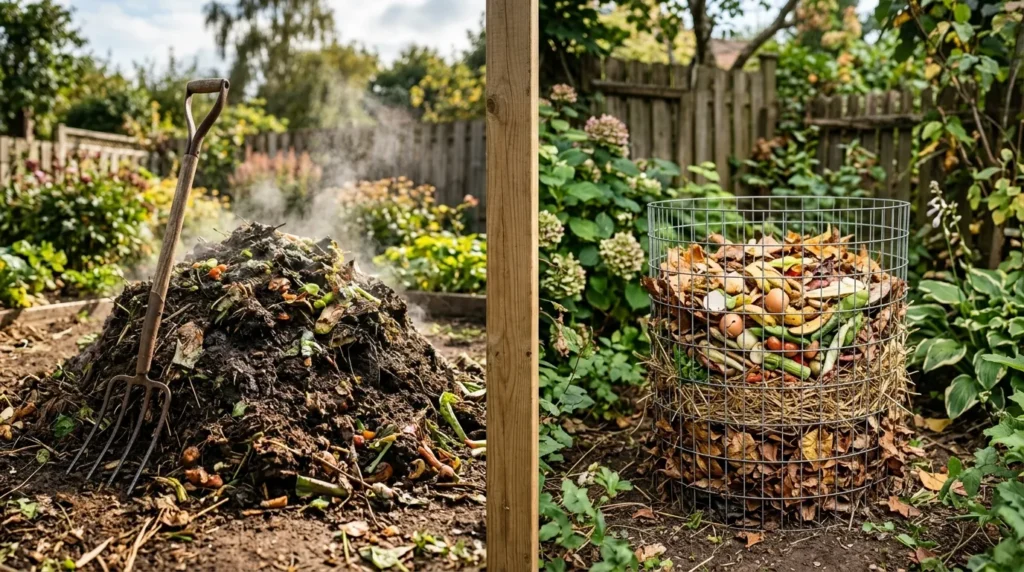
Here’s a plain comparison of the two methods:
- Time to finished compost: Hot = 4–8 weeks. Cold = 6–12+ months.
- Effort required: Hot = regular turning, monitoring, and upfront planning. Cold = add materials as you have them; minimal attention.
- Kills weed seeds: Hot = yes, at proper temperatures. Cold = no.
- Kills pathogens: Hot = yes. Cold = no
- Minimum material needed: Hot = a full 3×3×3 ft pile built at once. Cold = whatever you have, added gradually.
- Best for: Hot = large volumes, fast results, and weed-heavy garden waste. Cold = small yards, kitchen scraps, and low-effort setup.
Which Method Is Right for You?
Both methods produce finished compost. The question is really about matching the approach to how you actually live.
Choose Hot Composting If…
You generate a lot of garden waste at once. This includes big fall leaf cleanups, grass clippings, and seasonal garden trimmings.
If you want compost ready in time for spring planting, hot composting is the only method that can realistically deliver. It’s also the right choice if you’re dealing with weedy plant material or anything that might harbor pathogens, i.e., things that cold composting can’t safely handle.
If you’re just getting started and want a solid foundation on materials, ratios, and layering technique, our guide on how to start a compost pile covers everything from the browns-to-greens balance to what never goes in your pile.
Choose Cold Composting If…
You just want somewhere to put kitchen scraps without thinking much about it.
If you have a small yard, limited space, or inconsistent access to large volumes of carbon-heavy material, cold composting is the realistic choice.
It won’t win any speed records, but it will eventually turn your waste into something useful, and it requires almost nothing from you in the meantime.
Pine needles are a good cold composting candidate, though they break down more slowly than most leaves. If you have a lot of them, our post on composting pine needles covers how to use them without throwing your pile out of balance.
Tips To Get the Most Out of Either Method
A few fundamentals apply regardless of which approach you pick:
- Balance your carbon and nitrogen. Too many greens, and your pile goes slimy and starts to smell. Too many browns, and decomposition stalls. Hot composting demands more precision here. Cold composting is more forgiving, but a rough balance still helps.
- Keep moisture consistent. Both systems work better when the pile stays damp, not soaked, and not dry. The classic test: grab a handful and squeeze it. It should feel like a wrung-out sponge.
- Chop and shred when you can. Smaller pieces break down faster in both systems. Shredded leaves decompose significantly faster than whole ones and are far less likely to mat together and block airflow.
- Cover the pile in wet climates. A tarp prevents cold composting piles from getting waterlogged and keeps hot piles from losing heat on rainy days.
- Harvest from the bottom. In cold composting setups, the oldest, most finished material is always at the bottom. Many cold composters use a bin with a removable panel at the base for exactly this reason.
The container you use matters more than most people realize. Whether you’re running a hot composting operation with a three-bin system or keeping a single tumbler for steady kitchen scraps, the right bin setup shapes how manageable the whole process feels.
Hot Composting vs. Cold Composting: Either Way Is a Win
There’s no perfect composting method, just the one that actually gets done.
If you have the material and the inclination to manage a hot pile, the payoff is real. You’ll have finished compost in weeks, weed seeds won’t make it back into your garden, and you’ll go through large volumes of organic waste with satisfying efficiency.
If your life doesn’t support that level of attention, cold composting still works. It still turns scraps into soil amendment. It still keeps waste out of the landfill. It just happens quietly in the corner of your yard while you go about everything else.
Most experienced composters end up running both: a hot pile for fall garden cleanouts and a cold bin for steady kitchen scraps through the rest of the year.
Once you see what even basic composting does for your soil structure and plant health, the only real question becomes: why didn’t I start sooner?