
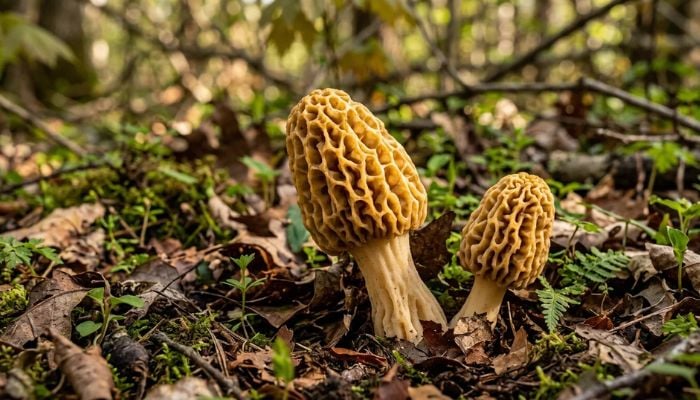
Morel mushrooms are one of the most sought-after wild edibles in North America, with a brief, blink-and-you’ll-miss-it season, unmistakable looks, and incredible flavor on a plate.
If you’ve been curious about foraging, morels are a great place to start. This guide covers everything you need: how to identify true morels, when they fruit, where to look, and the one lookalike you genuinely need to avoid.
The search is always worth it. Here’s what to know before you head into the woods.
A Word on Safety Before We Start
Foraging for wild mushrooms carries real risk. The golden rule: if you’re not 100% certain of your identification, don’t eat it. Morels have one dangerous lookalike known as the false morel, and confusing the two can make you seriously ill.
Work through every identification feature in this guide, not just one. And if you’re new to foraging, read our Beginner’s Guide to Wild Mushroom Identification before heading out.
What True Morels Look Like
True morels (Morchella species) are one of the most distinctive mushrooms in the forest. Once you know what you’re looking for, the ID is largely unmistakable.
Cap Shape and Texture
The cap is deeply pitted and ridged, forming a honeycomb or sponge-like pattern. The pits are actually the fertile surface; that’s where the spores develop.
The ridges are typically tan to grayish-brown or dark brown, with pits that are darker and recessed. The cap is attached directly to the stem (no overhang and no free-hanging skirt).
Stem
The stem is white to pale cream, stocky, and usually a bit irregular or slightly ribbed. It’s hollow from base to tip when you cut the mushroom in half; this is one of the key ID confirmations.
Hollow Interior: The Definitive Test
Slice any suspected morel vertically from the cap to the stem base. A true morel is completely hollow inside. The cap and stem form one continuous, hollow chamber. This is the single most reliable ID feature and the one you should always verify before eating.
Size
These mushrooms are typically 2 to 4 inches tall, though large specimens can reach 6 inches or more. Black morels tend to be smaller and darker; yellow morels are larger and paler.
Smell
Morels have an earthy, nutty, and slightly woodsy smell that is not unpleasant. Fresh morels don’t have an off smell.
True vs. False Morel (The One You Need To Know)
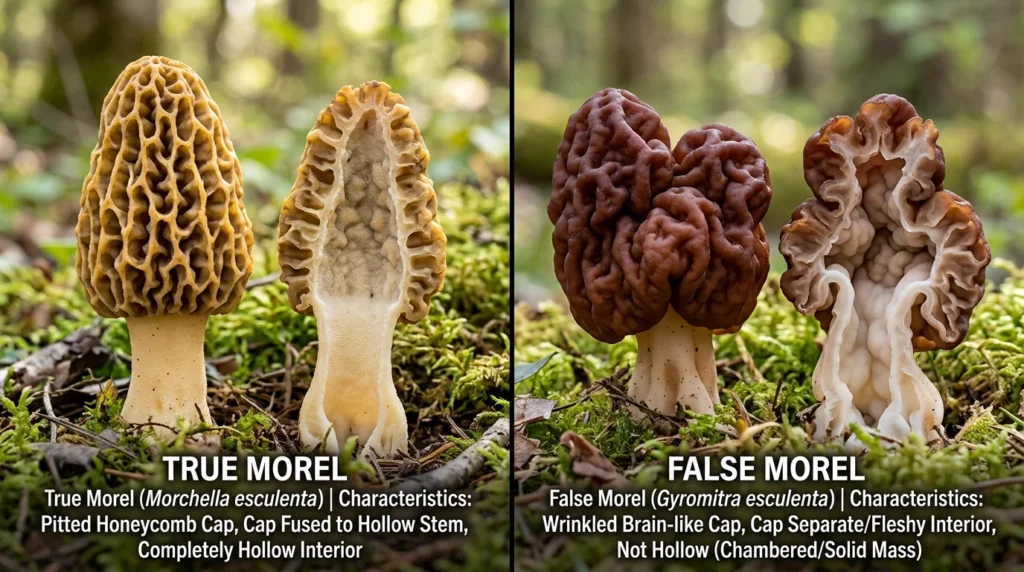
The false morel (Gyromitra species, sometimes called the “brain mushroom”) is toxic. It contains gyromitrin, which metabolizes into monomethylhydrazine, a compound toxic enough to cause serious liver and kidney damage, and in rare cases, death.
The good news is that the differences are clear once you know them.
Cap Shape
- True morel: Honeycomb texture, with deep pits and ridges that are regular and symmetrical.
- False morel: Wrinkled, lobed, or brain-like. The cap looks lumpy and irregular, more like a crumpled saddle than a honeycomb.
Cap Attachment
- True morel: Cap attaches directly to the stem with no overhanging sections.
- False morel: Cap often overhangs or is partially free from the stem.
Interior
- True morel: Completely hollow, cap to base; one continuous chamber.
- False morel: May have some hollow sections but also contains cottony material or partial chambers; not fully hollow.
Color
False morels are often reddish-brown to dark brown, more uniform in color than the two-toned pitting of a true morel.
When you’re in the field, always cut before cooking and eating. A fully hollow interior is the clearest confirmation that you have a true morel, not a false one.
Morel Season: When Do They Fruit?
Morel season is short, geography-dependent, and tied closely to soil temperature. The general window is April through May across most of the US, but it shifts based on where you are:
- Deep South / Gulf Coast states: Late February to early April
- Mid-Atlantic and lower Midwest: Mid-April through early May
- Upper Midwest and Northeast: Late April through late May
- Mountain states and northern regions: May through June, sometimes into early July at elevation
The trigger is soil temperature. Morels prefer soil temps in the 50–55°F range (some foragers say 55–60°F). You can track this with a basic soil thermometer; many serious foragers do exactly that.
Weather matters too. Morels tend to push up after warm, rainy periods following a cool stretch. A few nights in the upper 30s–40s°F followed by a day or two in the 60s and a good soaking rain? That’s ideal morel weather.
A late freeze or extended dry spell can stall or end the season early.
You have a narrow window. Most regions see peak morel season last just 2–4 weeks. Miss it, and you’re waiting another year.
Where To Find Morel Mushrooms
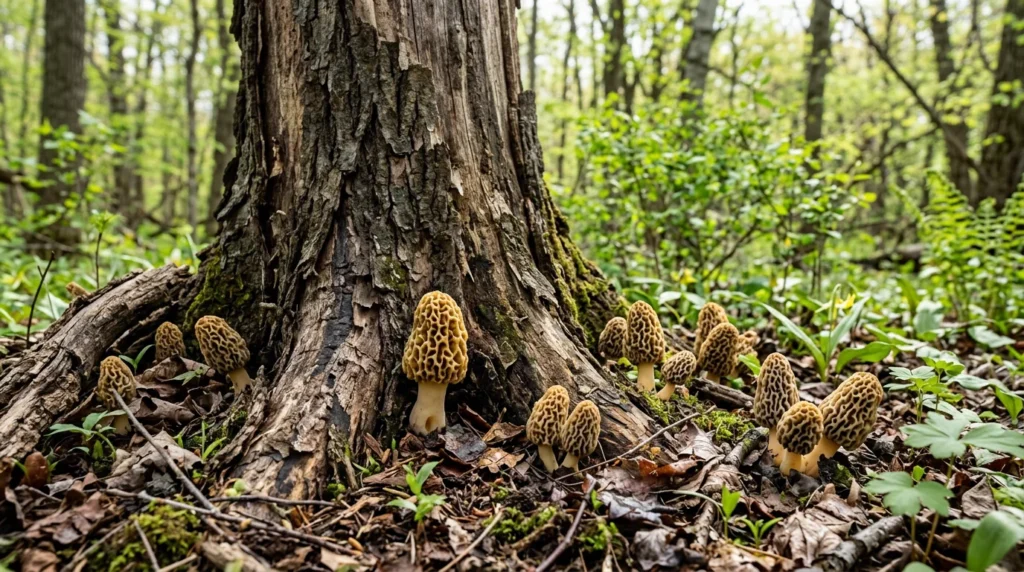
Morels don’t grow randomly. They favor specific habitat conditions, and learning those conditions is the real skill of morel hunting.
Dying and Dead Elm Trees
This is the most consistent finding tip. Morels form a mycorrhizal relationship with elms, and as Dutch elm disease has devastated elm populations across North America, dead and dying elms have become prime morel ground.
Look for standing dead elms with bark still on the trunk. Once the bark falls off, the relationship ends, and morels stop fruiting there. The mushrooms typically fruit right at the base of the tree and radiate outward under the canopy.
South-Facing Slopes
Morels chase warmth. South-facing slopes warm up first in spring, so they often fruit there before any other location in the same forest. Check these early in the season.
Old Orchards
Old apple orchards are legendary morel spots. The mycorrhizal relationship that morels form with apple trees (and other fruit trees) can produce reliable crops year after year. If you know of a long-abandoned orchard, it’s worth investigating every spring.
Forest Edges
Morels prefer transitional zones, i.e., the edge where mature forest meets open ground, along creek drainages, near forest roads, and at the margins of disturbed areas. Pure deep-forest interiors are less productive than edges.
Recent Burn Areas
Burn morels can fruit in abundance the spring following a forest fire. If there were controlled burns or wildfires in your area the previous summer or fall, those sites can produce morels in the following spring, sometimes in extraordinary numbers.
Ash and Tulip Poplar
After elms, ash trees (also suffering devastation from the emerald ash borer) are the next best bet. Tulip poplar, sycamore, and old-growth cottonwood are worth checking too, especially in the South.
Tips for a Successful Hunt
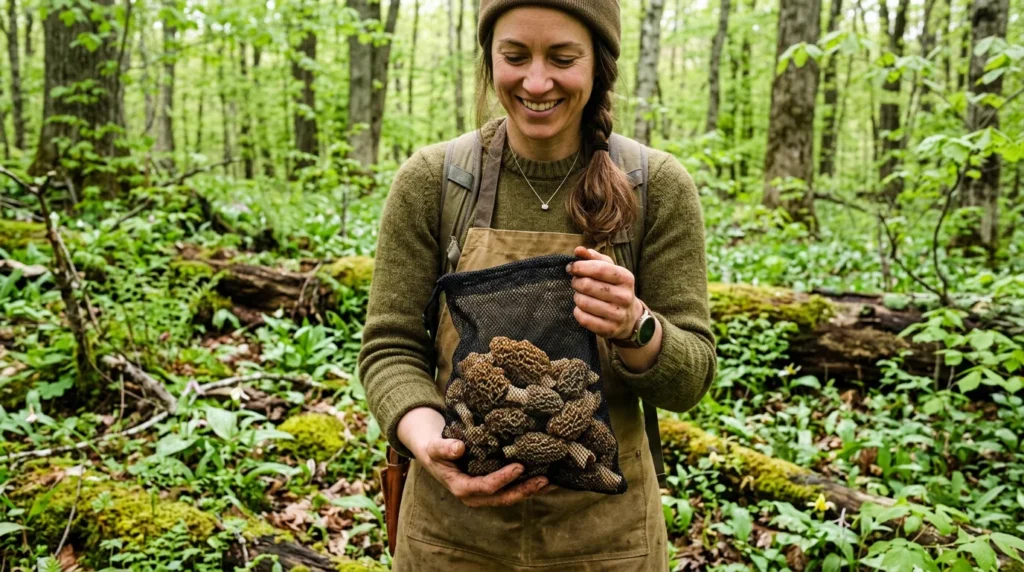
- Hunt in the morning: Morels are easier to spot when the light hits at an angle, and the woods are cooler
- Scan the ground low: Get your eyes down near ground level; morels blend into leaf litter when viewed from standing height
- Move slowly: Once you find one, stop and look carefully. Where there’s one morel, there are usually more. Slow down and circle the area.
- Bring a mesh bag: Morels need airflow; a sealed plastic bag causes them to sweat and degrade quickly. A mesh bag or basket lets them breathe and helps disperse spores as you walk.
- Mark your spots: Morels return to the same locations year after year. Keep notes or use GPS to track your best spots.
How To Clean and Store Morels
Fresh morels should be cleaned before eating. Cut them in half lengthwise and rinse briefly under cold water (the hollow interior can trap grit, insects, and debris). Let them drain on a paper towel before cooking.
Fresh morels keep for 3–5 days in the refrigerator in a paper bag (not plastic). For longer storage, dry them in a food dehydrator and store in an airtight container. Dried morels reconstitute well and hold their flavor for up to a year.
Never eat morels raw. Raw morels contain small amounts of hydrazine compounds that cooking destroys. Always cook them thoroughly before eating.
Make the Most of Morel Season
The morel season is one of the most anticipated events in the foraging calendar… and one of the shortest.
Understanding the identification features (honeycomb cap, hollow interior, and attached cap), knowing the false morel differences, and reading the habitat cues are all you need to have a safe, successful hunt.
The woods are waiting. Go find your morels.