
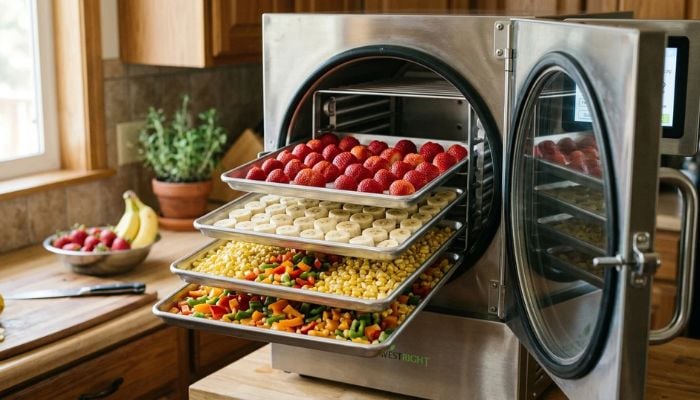
If you’ve spent any time researching home freeze-drying, you’ve probably seen the impressive shelf-life numbers of 20 to 25 years for most freeze-dried foods.
But before you start loading up your Harvest Right with everything in the freezer, it’s worth knowing that not all foods are ideal candidates for freeze-drying.
Some come out perfectly. Some technically work but aren’t worth the time or electricity, and a handful of foods simply don’t belong in a freeze-dryer at all.
So, what foods can you freeze-dry at home? This guide breaks it all down, including the best candidates, the marginal ones, and the ones that are a hard no, so that you can make the most of every batch.
A Quick Note on How Freeze Drying Works
Freeze-drying removes moisture through a process called sublimation: the machine freezes food solid and then creates a vacuum that causes the ice crystals to evaporate directly into vapor without passing through a liquid stage.
The result is food that retains its original shape, flavor, and most of its nutritional value but with 98–99% of its moisture removed.
That moisture removal is what drives everything. Foods that are high in water content and low in fat and sugar tend to freeze-dry beautifully. Foods that are dense with fat, sugar, or alcohol don’t freeze-dry well, or at all, because those compounds don’t sublimate the same way water does.
The Best Foods To Freeze Dry
Fruits
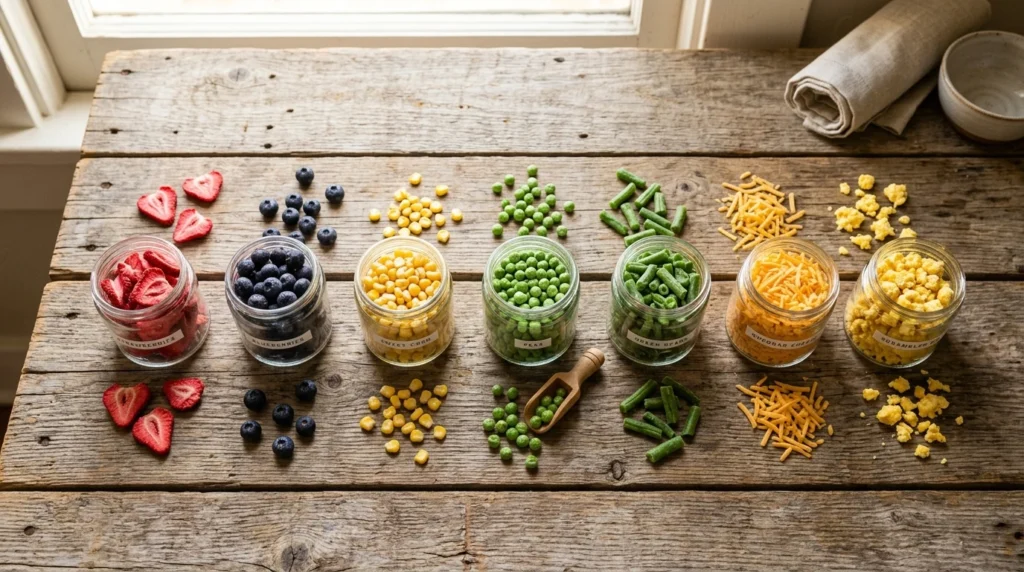
Fruits are among the best freeze-drying candidates you’ll find. Most have high water content, natural sugars that hold up well to the process, and flavors that intensify once dried.
Strawberries, raspberries, blueberries, and peaches come out crisp and flavorful with a shelf life of up to 25 years when stored properly. Bananas, apples, and mangoes work well too, but slice them thin for faster, more even drying.
Prep note: Most fruits need no pre-treatment. Slice larger fruits into slices ¼- to ½-inch thick. Berries can go in whole.
Vegetables
Vegetables are another strong category. Corn, peas, green beans, broccoli, bell peppers, carrots, and spinach all freeze-dry reliably.
Blanching dense vegetables before freeze-drying (broccoli, green beans, corn, etc.) helps preserve color and texture. Leafy greens such as spinach collapse significantly but retain all their nutrition and rehydrate well for soups and smoothies.
Prep note: Blanch dense vegetables first. Spread in a single layer on trays; overcrowding extends cycle time.
Dairy and Eggs
This is where home freeze-drying really outshines dehydrating, which can’t handle most dairy safely. Shredded cheese, sour cream, cream cheese, yogurt, butter, and whole eggs can all be freeze-dried successfully.
Freeze-dried cheese is light, crunchy, and intensely flavorful. Eggs freeze-dry and rehydrate nearly perfectly, making them one of the most valuable foods to have in long-term storage.
Prep note: Scramble eggs before freeze-drying. Spread dairy products in thin layers. Don’t freeze-dry raw egg whites alone because they foam excessively.
Cooked Meats and Fish
Cooked meats freeze-dry better than raw. Ground beef (fully cooked and drained of fat), shredded chicken, diced ham, and cooked fish all work well.
The key is removing as much fat as possible before freeze-drying; fat doesn’t sublimate and will shorten shelf life significantly. Well-drained, lean cooked meats can last 15–25 years stored in sealed Mylar bags.
Prep note: Always cook and drain fat before freeze-drying meat. Pat dry with paper towels. Avoid fatty cuts such as bacon or sausage.
Full Meals and Leftovers
One of the biggest advantages of home freeze-drying is that you can preserve complete meals, including soups, stews, chili, pasta dishes, and rice bowls. Anything that reheats well tends to freeze-dry beautifully.
The texture of the rehydrated meal won’t be identical to fresh, but it’ll be close enough that it’s genuinely good to eat. This is the approach used by every major commercial freeze-dried meal brand, and it works just as well at home.
Prep note: Cool meals completely before loading trays. Soups and stews should be moderately thick; very watery broths take longer and take up more batch capacity.
Foods That Freeze-Dry but Aren’t Worth the Effort
Some foods can technically go through a freeze-dryer and come out edible, but the time, electricity, and machine wear aren’t justified by the result.
- Honey and jam: These freeze-dry, but the process takes extremely long cycle times due to sugar density. The resulting product is also very hygroscopic, meaning that it absorbs moisture from the air almost immediately when the lid comes off.
- Peanut butter: Possible, but the high fat content makes cycle times very long, and the shelf life improvement is minimal.
- Avocado: Freeze-dries, but the flavor and texture don’t rehydrate well, and the high fat content limits shelf life.
- Pasta (plain, uncooked): Dry pasta already keeps for years in a pantry. Freeze-drying it provides no meaningful benefit.
- White rice (plain, uncooked): Same issue. White rice has a 30-year shelf life raw. Freeze-drying a meal with rice in it makes sense; freeze-drying plain dry rice does not.
Foods You Should Never Freeze Dry
A short list, but important:
- Alcohol: Alcohol doesn’t sublimate; it stays liquid and can damage the pump.
- Soda and carbonated beverages: The carbonation causes foaming that can make a mess of your machine.
- Raw, high-fat meats (bacon, sausage): The fat oxidizes during long freeze-dry cycles, creating off-flavors and dramatically shortening shelf life. The end product is often rancid within months. Cook and drain fat first, or skip freeze-drying entirely.
- Butter in large quantities: Small amounts in full meals are fine. Freeze-drying large slabs of butter isn’t effective, as fat doesn’t remove cleanly.
- Syrup and pure sugar solutions: Very high sugar concentrations essentially never fully dry and stay sticky indefinitely.
- Nuts (whole): The high oil content prevents proper drying and creates a rancidity risk. Some people freeze-dry nut butter in thin layers, but even that requires careful storage.
Freeze Drying Shelf Life at a Glance
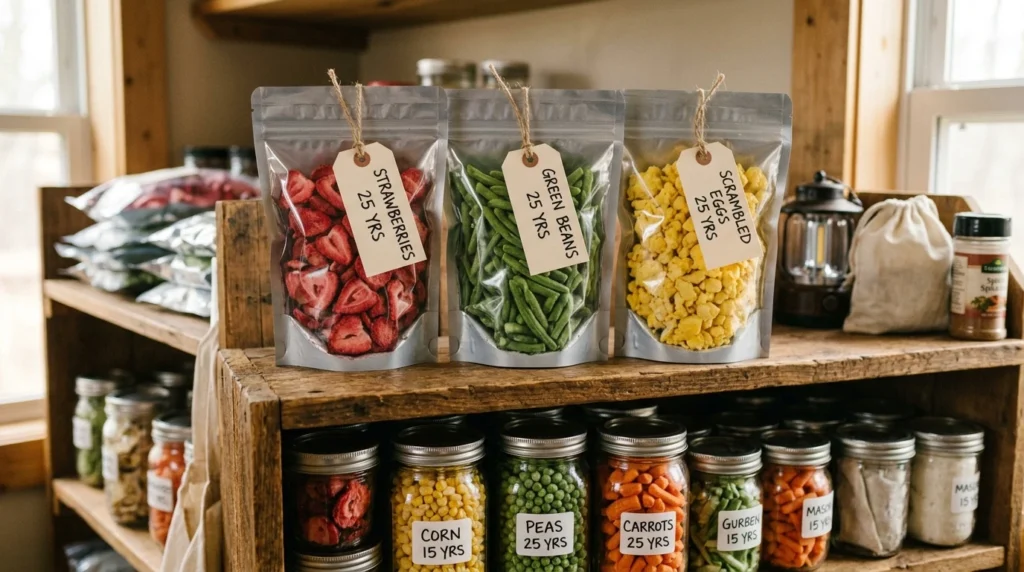
When freeze-dried food is properly stored in sealed Mylar bags with oxygen absorbers, at or below room temperature, here’s what you can realistically expect:
- Fruits: 25 years
- Vegetables: 25 years
- Cooked meats (lean): 15–25 years
- Dairy (cheese, yogurt, butter): 10–25 years
- Eggs: 25 years
- Full meals: 5–15 years, depending on fat content
- High-fat or high-sugar items: 1–5 years (if they freeze-dry at all)
Storage conditions matter as much as the food itself. Heat, light, and oxygen are the enemies. Even the best freeze-dried food will degrade faster in a warm pantry than it will in a cool, dark basement.
Fill Your Freeze Dryer With Foods That Earn Their Place
The most important shift in thinking about home freeze-drying is this: your machine’s capacity is a resource.
Each batch takes 24–40 hours of electricity and machine time. Fill it with foods that give you the best return (lean proteins, whole fruits, vegetables, full meals, and dairy), and you’ll build a genuinely impressive long-term food supply batch by batch.
Save the marginal foods for commercial freeze-dried products if you want them, and keep the no-list firmly out of the drum.
If you’re still deciding whether home freeze-drying is right for your household, our guide on freeze-drying at home is worth reading before you buy an expensive machine.
And if you’re weighing freeze drying against dehydrating, our beginner’s guide to food dehydrating covers how the two methods compare and which one fits different preservation goals.