
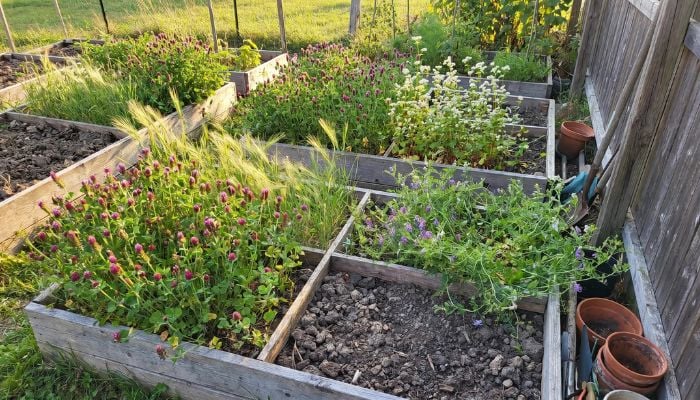
Planting cover crops for home gardens is one of the easiest ways to keep soil alive when a vegetable bed would otherwise sit bare.
Instead of leaving rain, wind, weeds, and temperature swings to work on exposed ground, you plant a temporary crop that protects the bed, feeds soil organisms, and can add organic matter before your next vegetables go in.
The trick is choosing the right cover crop for the right window. A fast summer crop such as buckwheat can clean up a bed between early potatoes and fall greens, while winter rye or hairy vetch can hold soil through cold weather.
Some crops winter-kill on their own. Others need to be cut, crimped, pulled, or turned under before they go to seed.
If you garden in raised beds, small plots, or backyard rows, you don’t need big farm equipment to make cover crops work. You just need a clear planting goal, a realistic season, and a plan for what comes after.
Why Cover Crops Belong in a Home Garden
A cover crop is any plant grown mainly to improve or protect the soil instead of being harvested for food.
Farmers use them on large acreage, but the same idea works beautifully in a 4-by-8 raised bed or one empty corner of a backyard garden.
The biggest cover crop benefits come from keeping living roots in the ground. Roots hold soil in place, feed microbes, and open small channels that improve water movement.
Above ground, leaves shade the soil surface, slow weed growth, and soften the impact of heavy rain.
Cover crops can also recycle nutrients. Deep-rooted crops pull nutrients from lower soil layers and hold them in plant tissue instead of letting them wash away.
When the crop decomposes, those nutrients move back into the topsoil where vegetables can use them.
Some cover crops are legumes, which means they can work with soil bacteria to fix nitrogen from the air.
Clover, hairy vetch, and field peas are common examples. They aren’t instant fertilizer, but when managed well, they can add useful nitrogen for future crops.
The other major benefit is organic matter. When you cut a cover crop and let the roots and tops break down, you’re feeding the soil in place. That pairs well with compost additions.
If you’re still building your soil fertility routine, learning how to start a compost pile gives you another steady way to add organic material.
The Best Cover Crops for Home Gardens by Season
The best cover crop depends on when the bed is open, how long it will stay open, and what you plan to plant next.
A crop that works well before winter may be a headache if you need that bed for early spring lettuce. A summer cover crop may be perfect after garlic but useless if frost is only two weeks away.
Think of cover crops by season first, then by job.
Spring Cover Crops for Quick Soil Coverage
Spring is a good time to use cover crops if a bed will sit empty for four to eight weeks before warm-season vegetables go in.
The goal is usually fast soil coverage, weed suppression, and light organic matter rather than a huge biomass crop.
- Oats are one of the easiest beginner options. They germinate in cool soil, grow quickly, and are simple to cut down before planting. In many climates, spring-planted oats can be mowed, clipped, or pulled when they are 8 to 12 inches tall.
- Field peas are a good companion for oats because they add a legume to the mix. The oats give structure while the peas add nitrogen-fixing potential. This combination is useful before heavy-feeding crops such as tomatoes, squash, corn, or cabbage.
- Crimson clover can also work in spring if you have a long enough window. It’s slower than buckwheat or oats, but it creates a dense mat and can add nitrogen when inoculated and allowed enough growth time.
For small gardens, spring cover crops work best when you’re realistic about timing.
If tomatoes need to go in soon, skip a full cover crop and use compost or mulch instead. If the bed is open for more than a month, a quick oat-and-pea mix is worth considering.
Summer Cover Crops for Empty Beds and Succession Gaps
Summer cover crops shine when a bed opens after peas, garlic, early potatoes, lettuce, or spring brassicas.
Hot weather can dry exposed soil quickly, and weeds can take over in days. A fast cover crop protects the bed until you’re ready for fall planting.
- Buckwheat is the classic summer choice for home gardeners. It germinates quickly in warm soil, shades weeds, and can flower in about a month. Pollinators love the blooms, but you should cut buckwheat before it sets mature seed unless you want volunteer buckwheat later.
- Cowpeas are another warm-season option in hot climates. They tolerate heat better than many cool-season legumes and can add organic matter during summer gaps.
- Sorghum-sudangrass can produce a lot of biomass, but it’s usually too vigorous for very small raised beds unless you are ready to cut it repeatedly. It can be helpful in larger garden plots where you want root growth and soil structure improvement.
The best use for summer cover crops is succession planning. If you harvest garlic in mid-summer, you can follow garlic with beans, fall greens, or a short cover crop depending on your climate and goals.
Fall Cover Crops for Winter Soil Protection
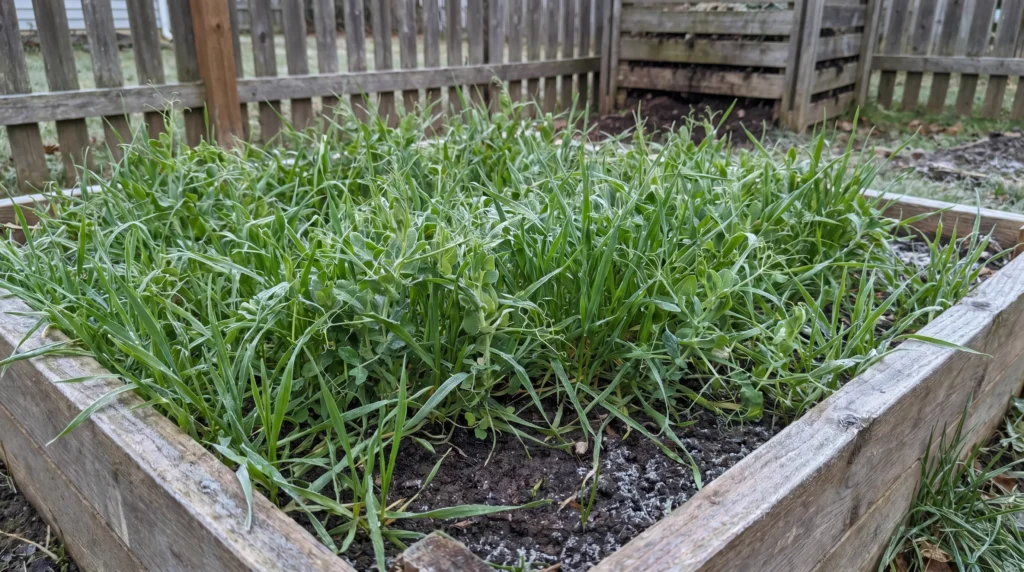
Fall is the main cover crop season for many home gardeners. Once tomatoes, peppers, beans, and squash come out, the soil may otherwise sit exposed all winter.
Fall-planted cover crops protect the soil through rain, snow, freeze-thaw cycles, and wind.
- Winter rye is one of the hardiest options. It germinates in cool weather, grows late into fall, and resumes growth in spring. It’s excellent for erosion control and weed suppression, but it can be aggressive. If you need to plant early spring crops, rye may require more termination work than you want.
- Winter wheat is a slightly easier grass option for many gardeners. It provides soil coverage and root growth but is often more manageable than rye in spring.
- Hairy vetch is a hardy legume that can add nitrogen if it has enough time to grow. It’s often mixed with rye or wheat so the grass supports the vetch and adds fibrous roots. The tradeoff is that vetch needs careful termination before it sets seed.
- Crimson clover is another good fall legume in milder climates. It makes an attractive spring bloom, feeds pollinators, and can be cut before vegetables go in.
- Oats are a great first fall cover crop because they usually winter-kill in cold climates. That means they die after hard freezes and leave a soft mat that is easier to rake aside or plant through in spring. If you want low-stress cover cropping, start with oats.
Winter Cover Crops for Small Gardens
In cold regions, winter cover cropping is mostly about what you planted in late summer or fall. The crop may keep growing, go dormant, or winter-kill depending on the species and your climate.
For small gardens, the easiest winter cover crops are the ones that don’t fight you in spring. Oats and forage radish often winter-kill, leaving residue behind. That’s ideal if you want to plant peas, lettuce, carrots, or onions early.
Winter rye, wheat, clover, and hairy vetch survive winter in many areas. They’re useful if you don’t need the bed until late spring, but they should not be allowed to get away from you. Once the weather warms, they can grow fast.
If your soil is acidic, compacted, or unusually sandy, test before you depend on a cover crop to fix everything. Cover crops help, but they cannot replace knowing your baseline.
Our simple guide on how to test soil pH can help you understand whether your garden needs lime, sulfur, compost, or a different planting strategy.
Best Cover Crop Options for Common Garden Goals
Choosing by season gets you close. Choosing by goal helps you narrow the list.
For Weed Suppression
Buckwheat is excellent for quick summer weed suppression because it grows fast and shades the soil.
Winter rye is one of the strongest fall and winter weed suppressors, but it takes more spring management. Oats are a gentler option for gardeners who want easier cleanup.
For Nitrogen Building
Hairy vetch, crimson clover, field peas, and other legumes are the main nitrogen builders. For best results, buy inoculated seed or use the correct inoculant for that legume.
Without the right soil bacteria, the plant may still grow, but nitrogen fixation can be limited.
For Soil Structure
Winter rye, oats, wheat, and radish are useful for soil structure. Grasses create dense fibrous roots that help hold and open soil. Forage radish sends down a thick taproot that can loosen compacted spots as it grows and decomposes.
For Pollinators
Buckwheat, crimson clover, and phacelia are pollinator-friendly when allowed to flower. Phacelia is especially attractive to bees and beneficial insects, though seeds may be harder to find than oats, rye, or clover.
For Beginner-Friendly Management
Start with oats, buckwheat, or a simple oat-and-pea mix. These are easier to terminate than rye or vetch and are forgiving in small spaces. Once you understand the timing, you can experiment with hardier winter crops.
How To Plant Cover Crops in a Small Garden
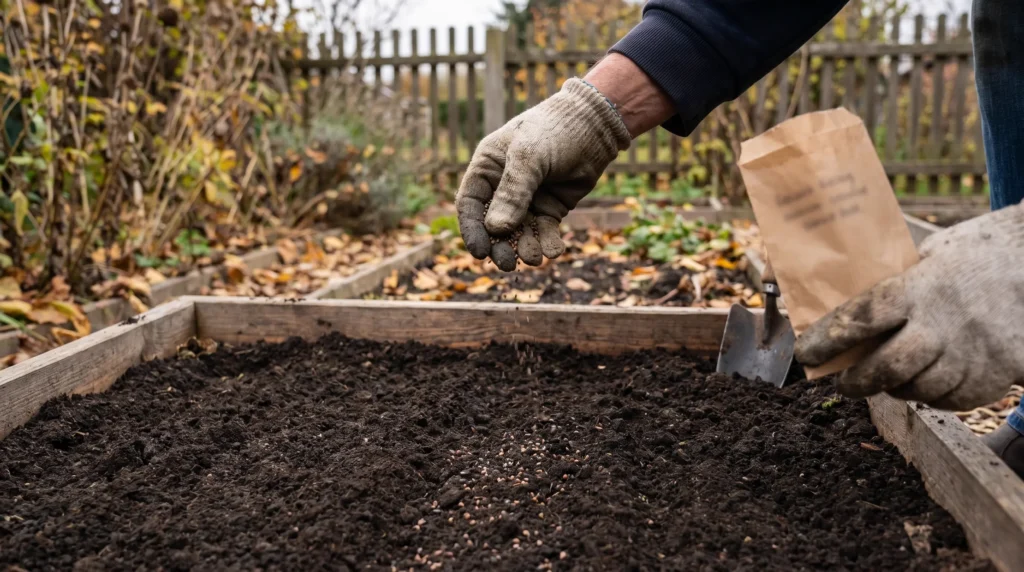
Planting cover crops is simple, but seed-to-soil contact matters. Tossing seed over mulch or tangled crop residue leads to patchy germination.
- Clear the bed of spent vegetable plants, weeds, and large debris.
- Loosen the top inch of soil with a rake, hand cultivator, or garden fork.
- Broadcast the seed evenly over the bed.
- Rake lightly so the seed is covered according to packet depth.
- Press the surface with your hands, a board, or the back of a rake.
- Water gently, and keep the bed evenly moist until germination.
In small raised beds, it’s better to seed a little thick than too thin. A dense stand shades weeds and protects the soil more quickly. Just avoid creating a tangled crop you cannot manage later.
If you’re mixing two species, reduce the rate of each one instead of using a full rate of both. A grass-legume blend usually works better when each crop has room to grow.
When To Terminate Cover Crops
Termination is the part that home gardeners overlook. A cover crop is helpful only if you can stop it before it competes with your vegetables, steals planting time, or drops seed.
The safest rule is to terminate before flowering or seed set unless you intentionally want blooms for pollinators and have a clear plan to cut the crop soon after.
Buckwheat, rye, vetch, and clover can all become annoying volunteers if allowed to mature.
Small gardeners have several termination options:
- Cut the crop at soil level with shears, a sickle, or a string trimmer.
- Pull shallow-rooted crops by hand, and leave the roots or tops on the bed.
- Chop the tops, and use them as mulch.
- Turn young, tender growth into the soil with a fork or broadfork.
- Cover the crop with a tarp for a few weeks to weaken or kill it.
After cutting or turning under a cover crop, wait about two weeks before direct seeding vegetables if there is a lot of fresh green material.
Decomposing plants can temporarily tie up nitrogen or make the seedbed too rough for tiny seeds.
For transplants, you can often plant sooner, especially if the residue is used as surface mulch rather than mixed deeply into the soil.
Cover Crop Mistakes To Avoid
The most common mistake is planting too late. A fall cover crop needs enough warm days to germinate and make growth before a hard frost.
If your season is almost over, oats may still be worth trying, but rye, clover, and vetch need more time.
The second mistake is choosing a crop that is too aggressive for the next planting window. Winter rye is valuable, but it’s not ideal in a bed where you want early carrots. Hairy vetch is useful, but it shouldn’t be ignored until it tangles and seeds.
Another mistake is treating cover crops like a complete soil fertility plan. They build soil over time, but they don’t correct nutrient deficiencies overnight. Compost, mulch, crop rotation, and testing still matter.
Finally, don’t plant a cover crop without knowing what comes next. If the bed will hold spring brassicas, choose a cover crop you can terminate early. If it will stay empty until tomatoes, a winter-hardy mix may be worth the extra biomass.
Start With One Bed This Season
Cover crops become easier once you see them in your own soil. Pick one empty bed, choose one simple crop, and give yourself a clear end date.
Oats for fall, buckwheat for summer, or oats and peas for spring are all good first experiments.
Once you’re comfortable, try more targeted combinations, such as rye and vetch before a late spring crop, buckwheat between garlic and fall greens, or crimson clover in a bed that can stay covered longer.
The best cover crop isn’t the most complicated one. It’s the one that fits your season, improves the soil, and leaves the bed ready for whatever you want to grow next.