
Summer leaf drop is alarming. You walk outside expecting full shade and come back to piles of leaves on the ground, bare patches in the canopy, or a tree that looks like it thinks it’s October. Something’s off, and it’s worth paying attention.
The causes range from easy fixes (drought stress or heat) to more serious problems (fungal disease or verticillium wilt). Most are treatable, especially when caught early.
A tree dropping leaves in summer is sending you a distress signal. Your job is to figure out what it’s saying.
This guide covers the seven most common causes of summer leaf drop, what to look for with each one, and a practical step-by-step process to help you narrow down the problem fast.
Drought Stress: The Most Common Cause for a Tree Dropping Leaves
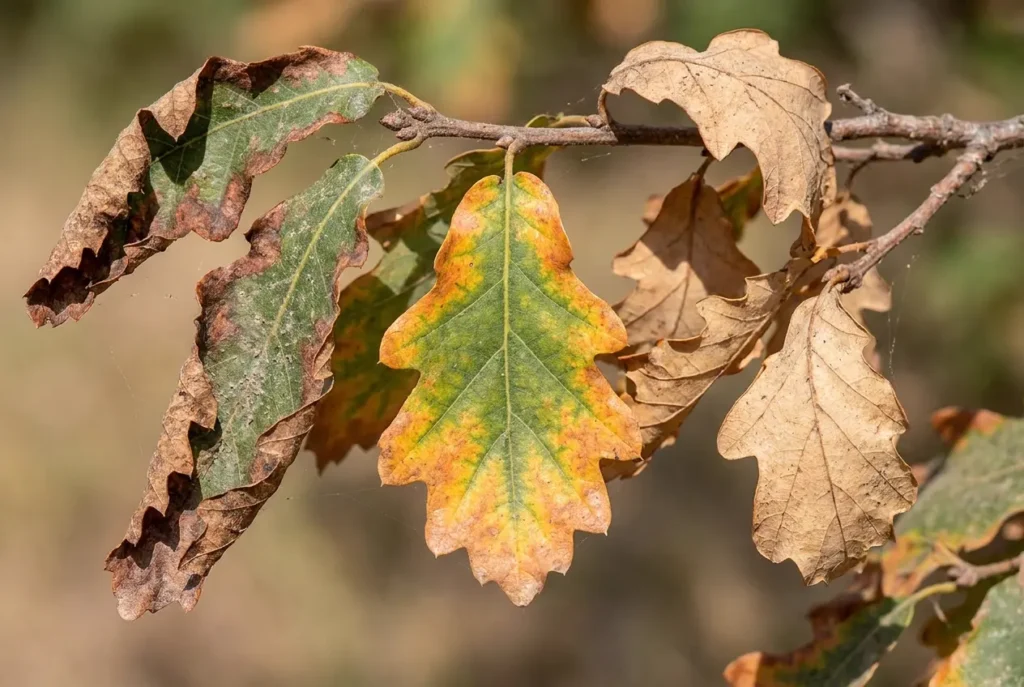
When a tree can’t pull enough water from the soil to support its entire canopy, it drops leaves.
This is triage; the tree is shedding surface area it can’t afford to maintain. It’s a survival response, not a death sentence.
- What to look for: Leaves may yellow, turn brown at the edges, curl slightly before dropping, or fall while still partially green. The drop usually starts at the branch tips or the outer canopy first. Soil at the drip line feels bone dry, even a couple of inches down.
- What to do: Water slowly and deeply at the drip line. i.e., the outer edge of the canopy where feeder roots are, rather than at the base of the trunk. Target 1–1.5 inches per week during hot, dry stretches. A 3–4 inch layer of mulch around the base (kept away from the trunk) helps retain soil moisture and moderate ground temperature.
Leaf Scorch: When Heat and Wind Do the Damage
Leaf scorch happens when a tree loses water through its leaves faster than it can replace it from the roots.
Heat, direct sun, and drying winds are the main drivers. It looks a lot like drought stress and often goes hand-in-hand with it.
- What to look for: Browning or crisping along leaf edges and tips, sometimes spreading inward. The damage usually appears on the side of the tree most exposed to afternoon sun or prevailing winds. Leaves may drop or hold on, looking crispy and tattered.
- What to do: Deep watering helps, but scorch is often as much about site conditions as soil moisture. Thin-leaved ornamentals, such as Japanese maples, are especially vulnerable to repeated scorch. If it keeps coming back, consider whether the planting location is the underlying issue.
Fungal Diseases That Trigger Early Leaf Drop
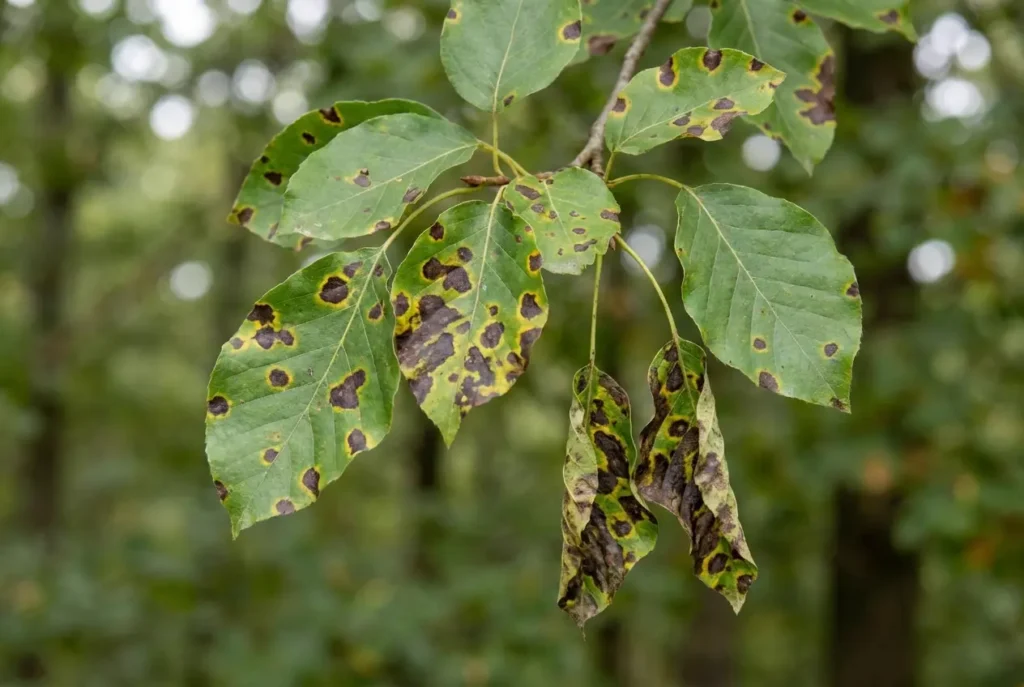
Anthracnose, apple scab, tar spot, and powdery mildew are the most common fungal diseases that cause premature leaf drop in summer. Most hit hardest when wet springs or poor air circulation give them a foothold.
- What to look for: Dark spots or blotches on leaves, white powdery coating, yellowing around spots before the leaf drops, or leaves that look visibly diseased before they fall. Fungal problems often start on the lower or inner canopy where air circulation is poorest.
- What to do: Rake and remove fallen leaves. Don’t compost them, as fungal spores survive the composting process. Improve air circulation through strategic pruning. Copper-based fungicides are effective against many common tree pathogens and are a good option for organic-minded approaches.
Verticillium Wilt: The Silent Killer Underground
Verticillium wilt is a soil-borne fungal disease that attacks the tree’s vascular system, i.e., the internal plumbing that moves water and nutrients.
Unlike surface fungal issues, this one works from the inside out.
- What to look for: Wilting or yellowing on individual branches, progressing branch by branch rather than across the whole canopy at once. Affected branches may die back entirely. A cross-section of a recently dead branch often shows dark streaking in the wood beneath the bark.
- What to do: There’s no cure. Management focuses on slowing progression. Keep the tree healthy through proper watering and balanced fertilization, remove dead branches promptly, and minimize stress. If the tree eventually fails, replant with a Verticillium-resistant species.
Overwatering Can Cause Dropped Leaves
More water isn’t always better. Overwatered trees develop root rot when the soil stays saturated, as roots can’t breathe and will begin to die.
A tree with dying roots can’t take up water even when there’s plenty of it and will produce symptoms that look identical to drought stress.
- What to look for: Yellowing leaves and leaf drop, but the soil is consistently wet or waterlogged. Roots near the surface may smell sour or rotted. The problem often appears in low areas, clay-heavy soils, or spots where water pools after rain.
- What to do: Let the soil dry between watering cycles. Improve drainage in persistently waterlogged spots. If root rot is advanced, focus on improving conditions and monitoring recovery over the rest of the season.
Pest Damage: Aphids, Scale, and Leaf-Chewing Insects
Heavy pest infestations trigger premature leaf drop through direct damage to leaf tissue and the stress response the tree mounts in return.
Aphids, scale insects, spider mites, and various caterpillars are the most common summer culprits.
- What to look for: Sticky residue on leaves or the ground below (aphid honeydew), tiny bumps or crusty patches on bark and stems (scale), webbing on leaves (spider mites), or ragged chewed edges (caterpillars).
- What to do: A strong water spray knocks back aphids and mites. Insecticidal soap and neem oil are effective on soft-bodied insects. Scale requires targeted treatment; horticultural oil applied to affected bark smothers overwintering populations. Avoid broad-spectrum pesticides when possible to preserve beneficial insects such as ladybugs and lacewings that keep pest populations in check naturally.
Natural Causes: Some Trees Just Do This
Not every case of summer leaf drop signals a problem. Some species naturally shed interior leaves during the hottest months as an adaptation to heat stress.
Newly planted trees also drop leaves as they adjust to transplant shock. This can persist through most of the first growing season.
- What to look for: Minor, localized drop not accompanied by discoloration, visible pests, or disease signs. The affected area doesn’t spread, and the rest of the tree looks and behaves normally.
- What to do: Monitor it, keep the tree watered and mulched, and revisit the causes above if leaf drop escalates or new symptoms appear.
How To Diagnose Summer Leaf Drop (Start Here)
Work through these steps before reaching for a product or calling an arborist.
Step 1: Check Soil Moisture First
Push a screwdriver or your finger 2–3 inches into the soil at the drip line. Dry and compacted? Drought stress is the most likely culprit. Saturated and cold? Look at overwatering or drainage.
This one check rules out the two most common causes immediately.
Step 2: Inspect the Leaves Closely
Look at leaves still on the tree, not just ones that have already fallen. Spots, blotches, white powder, webbing, or insect activity points toward disease or pests.
Healthy-looking leaves that simply dropped with no visible damage point back toward stress from heat, drought, or transplant shock.
Step 3: Check the Bark and Branches
Look for unusual growths, oozing sap, dead branch sections, or dark streaking beneath the bark of recently dead wood.
Streaking in the wood is a Verticillium wilt flag. Unfamiliar growths on the bark deserve a closer look. Identifying what’s growing on your tree can help you determine whether it’s a disease, pest, or something harmless before you act.
Step 4: Review Your Watering History
When did you last water deeply? Has there been significant rainfall in the past two weeks? Have you been watering every day? Your answers will either confirm drought stress or put overwatering on the table as a possibility.
One Bad Summer Doesn’t Have To Mean a Dead Tree
A tree dropping leaves in midsummer is communicating, not necessarily dying.
Get into the habit of checking soil moisture and inspecting leaves at the first sign of unusual leaf drop, and you’ll catch most problems before they have time to escalate.
The most important moves right now: water deeply at the drip line, mulch the root zone if you haven’t already, and actually look at those falling leaves.
Most cases of summer leaf drop respond well to early action. The trees that really struggle are the ones that get ignored.