
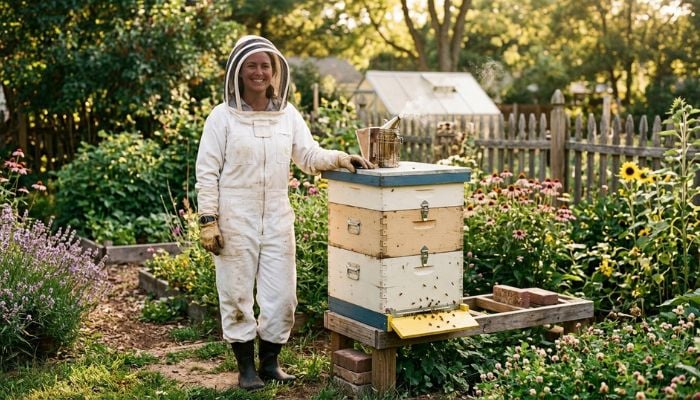
Beekeeping sounds idyllic, and it is, but it also requires a real upfront investment before you ever see a drop of honey.
The honest answer to “how much does it cost to start beekeeping?” is somewhere between $400 and $800 for your first year, depending on how you shop and what you already own.
That range sounds a little wide, but it’s accurate. The difference between a budget setup and a premium one comes down to equipment quality, whether you buy bees as a package or a nucleus colony, and a few hidden costs that catch most first-year beekeepers off guard.
Here’s how the numbers actually break down.
How Much Does It Cost To Start Beekeeping? (The Short Answer)
If you want a quick snapshot before diving into the details, here’s a realistic first-year budget:
- Hive setup: $150–$300
- Bees: $150–$200
- Protective gear: $50–$150
- Tools and feeders: $50–$100
- Unexpected costs (medications, extra equipment): $50–$150
Total first-year range: $450–$900
Year two and beyond? Dramatically cheaper. Once you have a hive and gear, your annual costs drop to $50–$150 in a good year. That’s mostly for mite treatments and the occasional replacement part.
Hive Setup Costs ($150–$300)
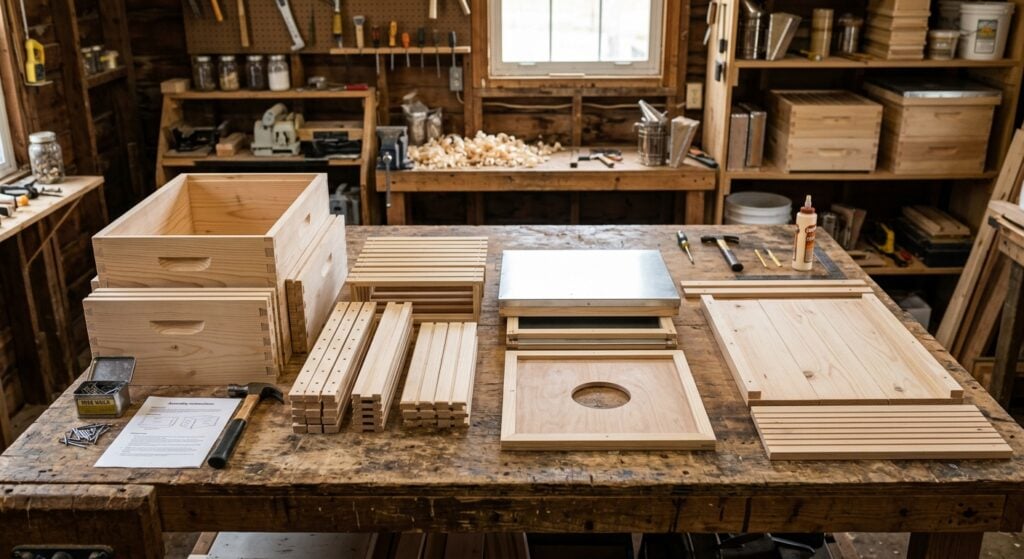
The hive is your biggest single expense. Most beginners start with a Langstroth hive; it’s the most common design, the easiest to find resources for, and the one most beekeeping mentors and local clubs will know inside and out.
(If you’re still deciding on hive style, check out our comparison of the best beehives for beginners to weigh Langstroth against Top Bar and Warré.)
A standard 10-frame Langstroth starter setup includes one deep brood box, frames, foundation, a bottom board, inner cover, and outer cover. Here’s what to expect at different price points:
Budget: $150–$175
Unassembled pine kits are the cheapest option. You’ll spend a few hours with a hammer and wood glue, but the savings are real. These work fine, as beginner beekeepers don’t need premium wood.
Mid-range: $200–$250
Pre-assembled kits with a second brood box included. Having two deep boxes from the start gives your colony more room to grow, which reduces swarming pressure in your first season.
Premium: $275–$300+
Assembled, pre-painted hives with two brood boxes and a shallow honey super included. These are more convenient and have slightly better construction, but they aren’t necessary for year one.
Two things purchased setups don’t always include are a queen excluder (used to keep the queen out of honey supers) and a hive stand to keep the bottom box off the ground. Budget an extra $20–$40 if those aren’t included in your kit.
The Cost of Bees ($150–$200)
You can’t keep bees without bees. There are two main ways to acquire your first colony:
Package Bees ($130–$175)
A package is a screened box containing roughly 10,000 worker bees and a mated queen. There’s no comb, no brood, and no honey. Packages are cheaper and widely available in early spring (order by January or February, as they sell out fast).
The downside is that you’re starting from scratch. The colony needs time to build comb, raise brood, and establish itself, which means slower honey production in year one.
Nucleus Colony ($150–$200)
A nucleus colony (nuc) is a small working colony with 5 frames of drawn comb, brood, workers, and a laying queen. Nucs give you a head start because the colony is already functional when you install it.
They cost more and sell out even faster, but most experienced beekeepers recommend them for beginners because the colony establishes more quickly and is more forgiving of beginner mistakes.
Either way, order your bees before you order your hive. Spring bee supplies often run out before the equipment does.
Protective Gear ($50–$150)
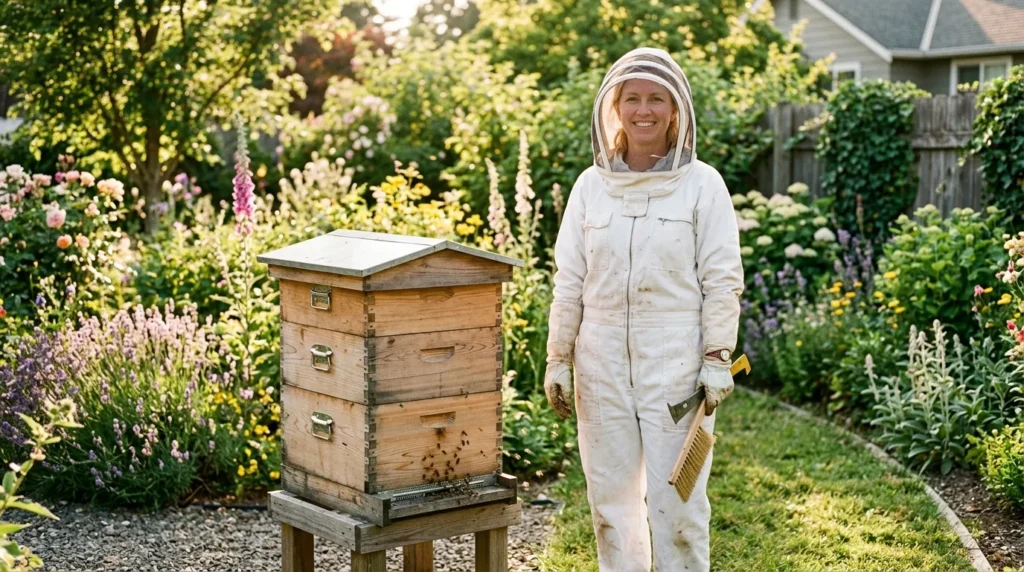
You need a veil. Everything else is a judgment call.
At minimum, pick up a ventilated full suit or a veil + jacket combo. A basic veil and jacket run $50–$80. A full ventilated suit with an integrated veil (more comfortable for hot weather inspections) costs $80–$150.
Don’t try to save money here. One bad sting on the face early on can end someone’s beekeeping before it begins.
Gloves are a personal preference. Beginners almost always want them ($15–$25 for leather or nitrile). Experienced beekeepers often work without them for better dexterity, but that’s not where you start.
Tools and Feeders ($50–$100)
A few essential tools round out your starter kit:
- Hive tool ($10–$15): A flat pry bar for separating frames. Buy two; you’ll likely lose one.
- Bee brush ($8–$12): A gentle way to move bees off frames during inspection.
- Smoker ($25–$50): Calms bees during inspections by masking alarm pheromones. Buy a quality stainless steel smoker; cheap ones are frustrating.
- Entrance feeder or top feeder ($15–$30): You’ll need to feed your new colony sugar syrup until they build up adequate stores. An entrance feeder is cheaper; a top feeder holds more syrup and requires fewer refills.
Unexpected Costs for First-Year Beekeepers
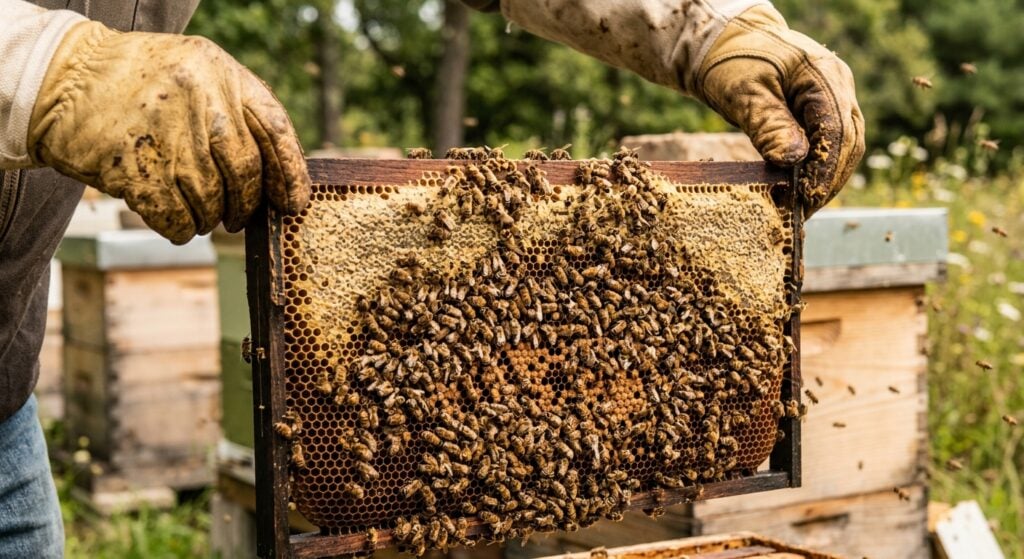
This is where most first-year budgets get a surprise.
Varroa Mite Treatments ($25–$60)
Varroa mites are the single biggest threat to managed honeybee colonies in North America. Treating for these pests isn’t optional. Untreated colonies typically collapse within 1–3 years.
Oxalic acid (ApiVar strips or vaporization) and formic acid treatments (Mite Away Quick Strips) are the most common options. Plan to treat at least once in your first fall. Budget $25–$60, depending on the treatment method.
Additional Honey Supers ($40–$80)
If your colony builds up well in year one, which is possible but not guaranteed, you may need a honey super to give them room for honey storage.
A pre-assembled shallow super with frames runs $40–$80. Don’t skip this if your colony is strong; a hive without room to store honey will swarm.
Replacement Equipment and Repairs ($0–$50)
Bottom boards crack. Frames warp. The bee brush goes missing unexpectedly. Budget a small buffer for minor equipment needs.
Hive Loss
This one stings (pun intended). First-year colony losses are common, especially in areas with harsh winters or heavy Varroa mite pressure. Not every beekeeper loses a hive in year one, but it happens. If it does, you’ll need to buy new bees in the spring, which is another $150–$200.
Your Complete First-Year Beekeeping Budget
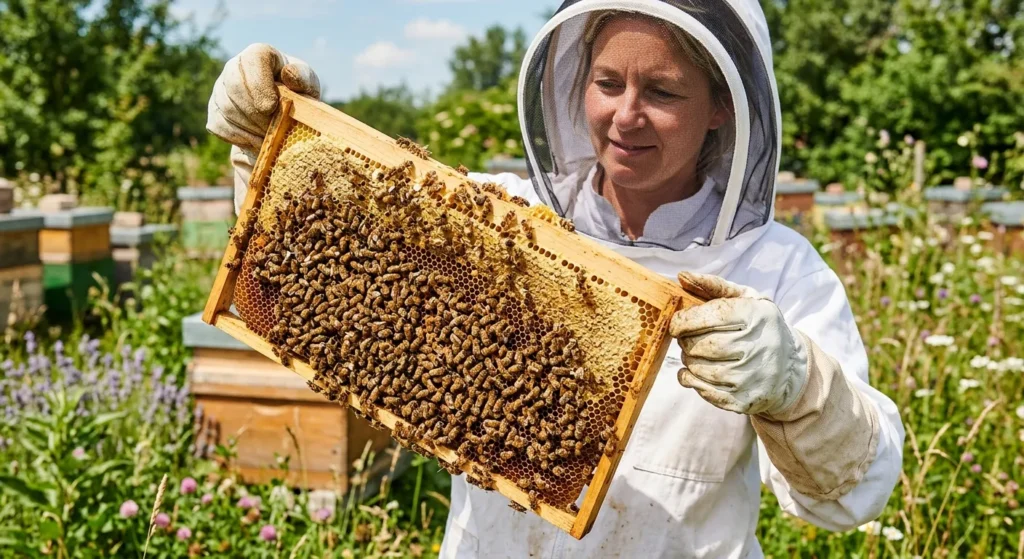
Here’s what a realistic first-year setup looks like across three budget scenarios:
- Budget setup (DIY kit, package bees, and basic gear): ~$450–$500
- Mid-range setup (assembled hive with 2 boxes, nuc, and full suit): ~$600–$700
- Premium setup (everything pre-assembled, nuc, ventilated suit, and quality smoker): ~$800–$900
None of these numbers includes the cost of a beginner beekeeping course or a local club membership, both of which are highly recommended.
Many local beekeeping associations charge $25–$50/year for membership and offer free mentorship. It’s worth every dollar for your first season.
Why Year Two Costs So Much Less
Your second year of beekeeping is where it starts to feel sustainable. You already have:
- A functioning hive (assuming it survived winter)
- All your protective gear and tools
- A smoker that works
- Frames with drawn comb (no foundation to replace unless damaged)
Year two costs mostly boil down to mite treatments ($25–$60), any honey supers you add, and occasional frame replacements. Most beekeepers spend $50–$150 in a typical year two, not counting any honey extraction equipment if you’re planning to harvest.
The first year is the investment. After that, beekeeping is genuinely affordable, and if you get a honey harvest, it starts paying for itself.
Start Small, Stay Curious, and Let the Bees Lead
The cost of starting beekeeping is real, but it’s also a one-time threshold. Once you’re past that first-year investment, you’re in. The equipment lasts for years, the knowledge compounds, and the hobby pays dividends that have nothing to do with money.
If you’re still on the fence about whether beekeeping is right for you, start with our Beekeeping for Beginners guide; it covers everything from local regulations to what your first inspection actually looks like.
One hive. One season. That’s all it takes to know if beekeeping is for you.