
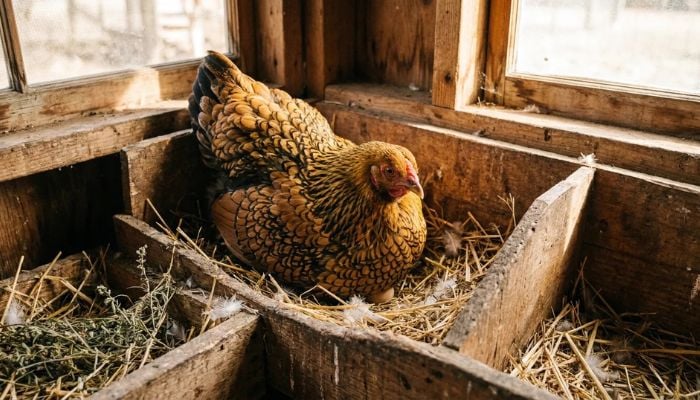
You‘ve raised your chicks from day one and set up the coop, and now you’re checking the nesting boxes every morning. Nothing. Just a lot of chickens going about their chicken business while you wait. So, when do chickens start laying eggs?
Patience is the main skill in the weeks before your first egg. But knowing what to look for and understanding what’s happening in your pullets’ bodies makes the wait easier and helps you catch any issues early.
This guide covers when to expect eggs, how to read the signs that laying is imminent, and what affects production once it starts.
When Do Chickens Start Laying Eggs? The Short Answer
Most chickens start laying eggs somewhere between 16 and 24 weeks of age. The exact timing depends on breed, season, diet, and stress levels, but for the most common backyard breeds, somewhere around 18–20 weeks is a reasonable expectation.
That range is wider than most people expect. A fast-maturing production breed, such as a Leghorn, might drop her first egg at 16–17 weeks. A heritage breed, such as a Dominique, or a dual-purpose bird like a Buff Orpington, might not lay until 24 weeks or later.
If your hens hit 24 weeks without laying and were hatched in late summer or fall, seasonal timing may be the culprit (more on that below). As long as they’re healthy and eating well, the eggs will come.
Breed-by-Breed Laying Timeline
Different breeds mature at different rates. Here’s a quick reference for the most common backyard breeds:
- Leghorn: 16–17 weeks; 280–320 eggs/year (white)
- Rhode Island Red: 18–20 weeks; 250–300 eggs/year (brown)
- Australorp: 18–20 weeks; 250–300 eggs/year (brown)
- Plymouth Rock (Barred Rock): 18–20 weeks; 200–280 eggs/year (brown)
- Easter Egger: 20–22 weeks; 200–280 eggs/year (blue/green/pink)
- Sussex: 20–22 weeks; 200–250 eggs/year (brown/tinted)
- Wyandotte: 20–22 weeks; 200–240 eggs/year (brown)
- Buff Orpington: 22–24 weeks; 200–280 eggs/year (brown)
- Brahma: 28–30 weeks; 150–200 eggs/year (brown)
- Silkie: 28–36 weeks; 80–120 eggs/year (cream/tinted)
Heritage breeds and fancy breeds almost always take longer. If you got mixed-breed chicks or “barnyard mixes,” expect them to fall somewhere in the middle of that range.
Signs Your Pullet Is About To Lay Her First Egg
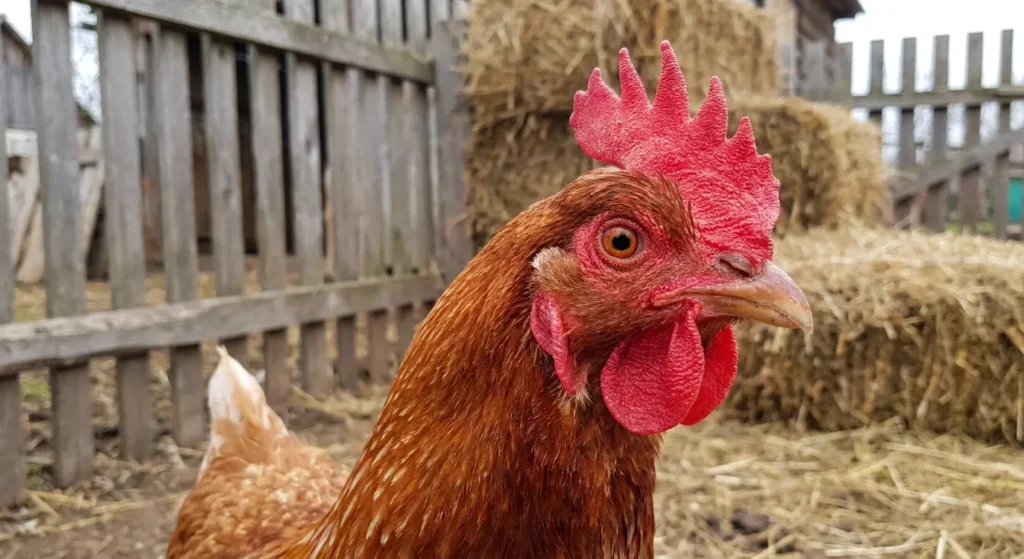
Hens usually show signs that they’re getting close before the first egg actually arrives. If you know what to look for, you can often predict your first egg within a week or two.
The Comb and Wattles Redden and Enlarge
This is one of the most reliable early signs. As a pullet approaches laying age, the hormones that trigger egg production also cause the comb and wattles to grow and deepen in color, going from pale pink or pale red to a bright, full red.
If your pullet’s comb has been pale and small and suddenly starts looking full and bright, she’s close.
She Starts Squatting
The submissive squat, where a pullet crouches low, fans her wings slightly, and holds still, is a mating behavior that typically appears in the week or two before a hen starts laying. If you reach down to pet her and she squats instead of running away, that’s a strong sign eggs are imminent.
She Explores the Nesting Boxes
Pullets approaching laying age start investigating potential nest sites. You’ll see them hopping in and out of nesting boxes, rearranging bedding, and spending time sitting in them, even before they actually lay. This is a good time to make sure your nesting boxes are ready and accessible.
Appetite Increases
Egg production is metabolically demanding, and hens approaching laying age often eat noticeably more. If your pullets are suddenly at the feeder more often, that’s a good sign their bodies are ramping up for production.
She Gets More Vocal
The “egg song,” that distinctive loud cackling many hens do after laying, sometimes starts showing up even before the first egg, as a kind of pre-production rehearsal. If your pullet is becoming louder and more vocal around the coop and nesting boxes, she’s probably close.
What Affects When (and How Much) Your Chickens Lay?
Breed and age are the big factors, but they’re not the only ones. Several external variables influence when pullets start laying and how consistently hens produce once they’re established.
Daylight and Seasonal Timing
Egg production is controlled by light. Specifically, it’s triggered by the pituitary gland responding to light exposure through a hen’s eyes. Longer days signal the body to produce eggs.
Hens need about 14–16 hours of light per day to maintain consistent egg production. In spring and summer, natural daylight covers this easily.
In fall and winter, as days shorten, production naturally drops, and pullets hatched in late summer may delay the start of laying entirely until days start lengthening again in late winter or early spring.
This is why timing matters when you order chicks. Chicks ordered in late winter or early spring (hatching in March–April) will reach laying age right as days are long.
Chicks hatched in late summer may reach laying age in October or November, right as days are shortening, which can delay the appearance of first eggs by months.
To maintain winter production, many flock keepers supplement with a timer-controlled coop light to keep total daily light at 14–16 hours. A simple 40-watt bulb on a timer is enough to keep hens laying through winter.
Feed and Nutrition
Hens need adequate protein to produce eggs. Specifically, laying hens require at least 16–18% protein in their diet. Low-protein feed delays the start of laying and reduces production in established hens.
Switch your birds from chick starter to a quality layer feed around 16–18 weeks, right around the time they approach laying age. Layer feed has the right protein and calcium balance for egg production.
Calcium is especially important, as egg shells are almost entirely calcium, and hens need supplemental calcium (usually provided as oyster shell offered free-choice) to avoid thin-shelled eggs or health problems from calcium depletion.
Stress and Environment
Stress delays everything. A hen that’s being bullied, dealing with a predator threat, moved to a new coop, or experiencing extreme temperature swings will delay laying or temporarily stop production.
Keep the environment as calm and consistent as possible in the weeks leading up to the expected first eggs.
Why Do Chickens Stop Laying in Winter?
Even reliably productive hens naturally slow down or stop laying in winter.
Several things happen at once: shorter days reduce the light signal that triggers ovulation, hens often go into molt (shedding and regrowing feathers), and cold temperatures put extra metabolic demands on the body.
The annual molt is the main culprit. Most hens molt in the fall, and during molt, egg production pauses entirely while the bird’s resources go toward growing new feathers.
A molt usually lasts 6–12 weeks, after which hens resume laying, often with improved production compared to before the molt.
First-year hens sometimes skip the fall molt entirely and lay through their first winter and then molt in their second fall. This is why new flock keepers are sometimes surprised when their highly productive first-year hens suddenly slow or stop in their second fall.
How Many Eggs Can You Expect?
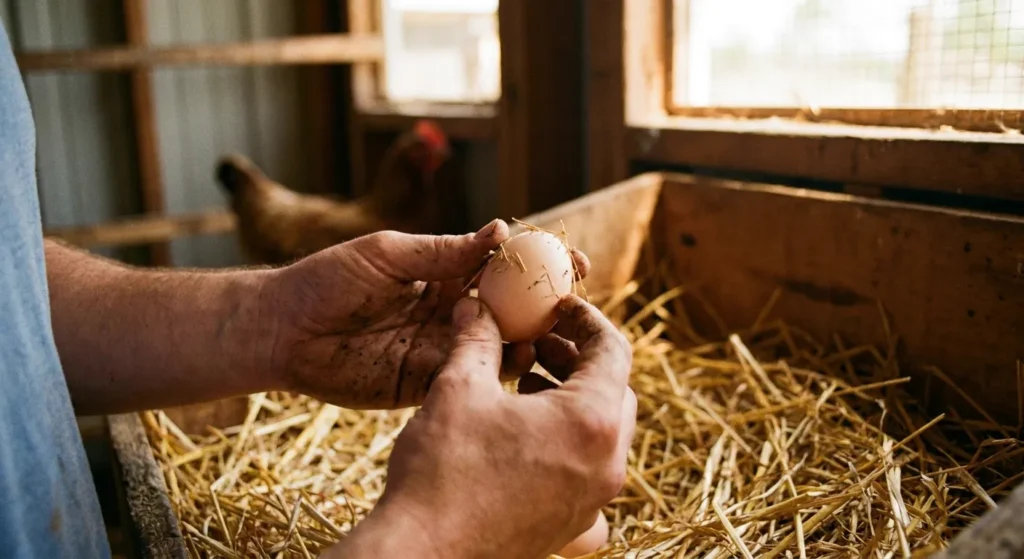
A healthy backyard flock of 4 hens, consisting of a productive breed such as Rhode Island Reds or Australorps, can realistically produce well over 200 eggs per year per bird, but production will vary. Here’s what to expect from a typical 4-bird flock:
- Peak production (year 1): 4–5 eggs per day, 24–30 eggs per week.
- Year 2 and beyond: Production naturally declines about 10–15% per year.
- Winter months: Expect a significant drop unless supplementing with light.
Production peaks in the first year and gradually declines over a hen’s life. Most backyard hens stay productive through years 2 and 3, then taper off significantly by years 4–5, though they may still lay occasionally.
Patience Is Key
Waiting for your first egg tests every new flock keeper’s patience, and then the first one appears in the nesting box, and suddenly it’s all worth it.
The basics are simple: most hens start laying between 16 and 24 weeks, the comb and wattles will tell you it’s coming, and light and nutrition are the two levers you control. Get those right, and your flock will take care of the rest.
Once your hens are laying, our guide on what to feed backyard chickens covers the diet details that keep production high and your birds healthy through every season.
Frequently Asked Questions
My pullet is 20 weeks old and hasn’t laid yet. Should I be worried?
Not necessarily. Breed, season, and individual variation can push first eggs to 24 weeks or beyond. Make sure she’s on layer feed, has access to calcium, and isn’t being bullied. If she hits 28 weeks with no eggs and shows no signs of illness, it may be worth talking to a vet, but for most breeds in most situations, patience is the answer.
Can I eat the first egg even though it might be small or oddly shaped?
Yes. First eggs are often smaller than normal and sometimes have thin shells, double yolks, or unusual shapes as the hen’s system gets dialed in. They’re completely safe to eat.
My hen was laying fine and then stopped. What happened?
The most common culprits are molt, a change in daylight, a change in feed, stress (new birds added to the flock, a predator event, or being moved), or a health issue. Check all of these systematically. Most laying pauses have an obvious cause once you look for it.
Do I need a rooster for my hens to lay eggs?
No. Hens lay eggs regardless of whether a rooster is present; the eggs just won’t be fertilized. You only need a rooster if you want to hatch chicks.
How long do chickens live and lay?
Most chickens live 5–10 years. Productive laying declines significantly after year 3, but many hens continue laying occasionally for 5+ years. Backyard flock keepers often keep hens past peak production as pets.