
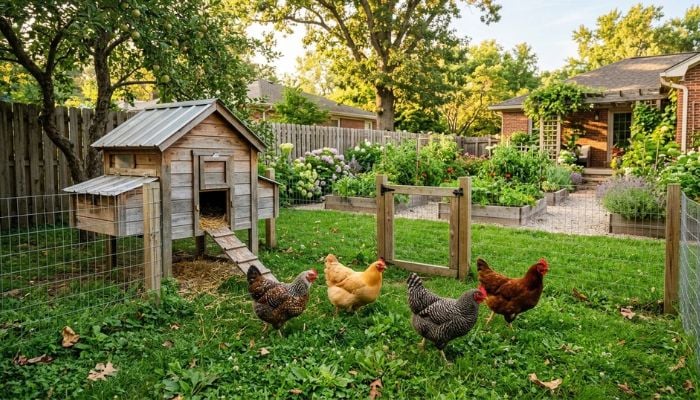
Backyard chickens are low-maintenance, entertaining, and genuinely useful, and you don’t need a farm to keep them. A small flock in a suburban backyard can produce fresh eggs year-round, turn kitchen scraps into fertilizer, and quickly become the most interesting thing in your yard.
But there’s a right way and a wrong way to get started. Most beginner mistakes come down to skipping steps or not checking local laws, buying too many chicks at once, or building a coop that’s too small.
This guide walks you through everything you need to know before your first chick arrives. Whether you’re planning a small three-hen setup or dreaming of a full backyard flock, this is your complete backyard chickens for beginners starting point.
Is It Legal To Keep Backyard Chickens?
Before you buy a single chick, check your local ordinances. Rules vary wildly, even between neighborhoods in the same city.
Common restrictions include:
- Flock size limits (often 4–6 hens in suburban areas).
- Roosters are banned outright (they’re loud; most urban ordinances prohibit them).
- Setback requirements (how far the coop must be from property lines or neighboring homes).
- Permit or licensing requirements.
- HOA rules that may override local law.
Where To Check
Start with your city or county website and search for “backyard chickens ordinance” or “urban livestock.” If you’re in an HOA, review your CC&Rs. Some areas require a simple permit application; others have no restrictions at all.
Don’t assume it’s legal just because your neighbor has chickens. Call your local planning or zoning department if you’re unsure. It’s a quick call that can save you serious headaches later.
How Many Chickens Should You Start With?
For most beginners, 3–4 hens is the sweet spot.
Here’s why:
- Chickens are social animals. They need at least 2–3 companions to be healthy and calm.
- A small flock is manageable while you learn the basics.
- Three good layers will produce roughly 15–21 eggs per week, which is more than enough for most households.
Don’t start with just one or two. Lone chickens are stressed chickens. And don’t go overboard with six or eight birds your first year. More chickens mean more coop space, more feed costs, and more to learn at once.
You can always expand your flock once you’ve got a season under your belt. Just remember to only get your chickens from reputable sources.
Choosing the Right Breed
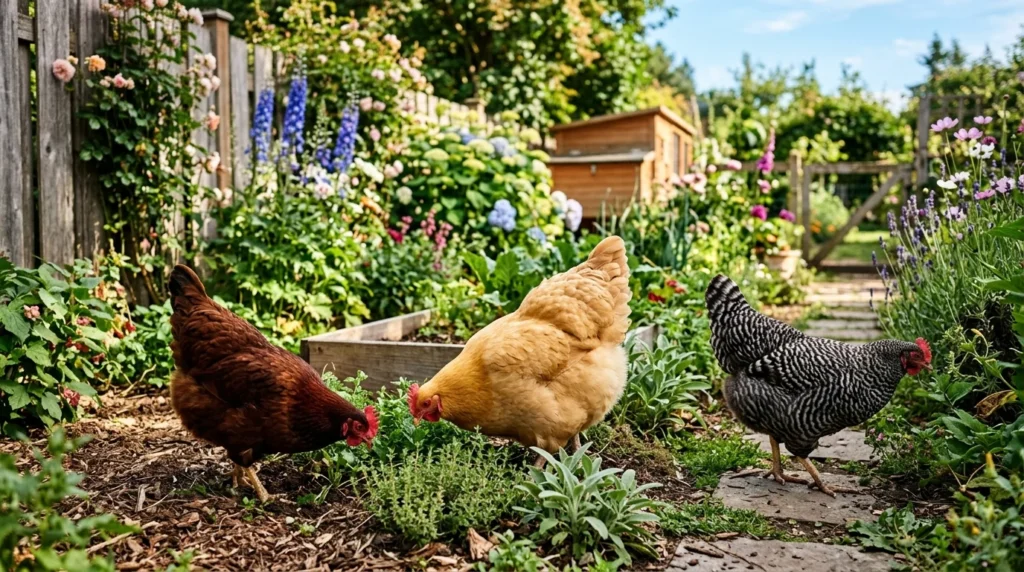
Not all chickens are the same; some are meat birds, some are superb layers, and some are great moms. Breed selection matters a lot, especially for beginners who want hens that are calm, hardy, and reliable layers.
Top beginner-friendly breeds include:
- Rhode Island Red: Tough, adaptable, and excellent layers. One of the most popular backyard breeds for a reason. Expect 250–300 brown eggs per year.
- Buff Orpington: Calm, gentle, and great with kids. Handles cold weather well and rarely goes broody at inconvenient times. Around 200–280 eggs per year.
- Plymouth Rock (Barred Rock): Docile, cold-hardy, and consistent. A classic dual-purpose breed that works well in mixed flocks.
- Australorp: World-record egg layers. Friendly, quiet, and heat-tolerant. Ideal if egg production is your main goal.
- Easter Egger: Not a standardized breed, but beloved for laying blue, green, and pink eggs. Hardy and friendly, great for families.
Avoid highly flighty or skittish breeds (like Leghorns) for your first flock if you want birds you can handle easily. Unless you specifically want fertilized eggs or are in a rural area, skip the rooster. Contrary to popular belief, you don’t need one for hens to lay.
Coop Requirements: What Your Chickens Actually Need
The coop is the most important piece of infrastructure you’ll build or buy. Get this right, and everything else gets easier.
Space
Plan for a minimum of 4 square feet of interior coop space per bird. A 4×4 coop (16 sq. ft.) works for 4 hens. Go bigger if you can. Cramped coops lead to stressed, pecky birds.
Ventilation
Chickens produce a surprising amount of moisture and ammonia. Good airflow is non-negotiable. Install vents near the roofline. They should be open even in winter (positioned so wind doesn’t blow directly on the birds).
Roost Bars
Chickens sleep on raised bars, not the floor. Provide 8–10 inches of roost space per bird, positioned higher than the nesting boxes.
Nesting Boxes
One nesting box per 3–4 hens is the standard rule. Boxes should be 12×12 inches minimum and filled with clean bedding (straw, pine shavings, or nest pads).
Predator Proofing
This is where many beginners underestimate the threat. Raccoons, possums, foxes, hawks, snakes, and even rats will target your flock. Key rules:
- Use hardware cloth (welded wire mesh), not chicken wire. Chicken wire keeps chickens in but doesn’t keep predators out.
- Bury wire 12 inches underground around the run perimeter to stop diggers.
- Use hardware cloth on all openings.
- Add a sturdy latch; raccoons can open simple hook-and-eye clasps.
Bedding
The deep litter method (6–12 inches of pine shavings) works well for most backyard coops. It composts in place, generates heat in winter, and only needs a full clean-out 1–2 times per year with regular top-ups.
Run Sizing: How Much Outdoor Space Do They Need?
The run is the outdoor enclosed area attached to your coop. Standard guidance is 10 square feet per bird minimum, but more is always better.
A few key points on run design:
- Cover the top with hardware cloth or bird netting to protect against hawks.
- Bury the perimeter wire or use an apron (hardware cloth laid flat on the ground extending 12 inches outward) to deter diggers.
- Add enrichment: a dust-bathing area, roosts, and things to peck at keep birds occupied and reduce boredom behaviors.
If you plan to free-range your chickens (allowing them to roam the yard), you still need a secure coop and run for nights and bad weather. Free-ranging without a secure space to retreat to is a fast way to lose birds to predators.
What To Feed Backyard Chickens
Chickens need a complete layer feed as their primary diet, not scratch grains, kitchen scraps, or a mix of whatever you have on hand. Here’s the baseline:
- Layer feed: 16–18% protein pellets or crumbles, formulated for laying hens. This should make up 90% of their diet. Offer it free-choice (available at all times); chickens self-regulate.
- Scratch grains: Corn, oats, and wheat are fine as treats, but scratch is junk food for chickens. Limit it to a small handful per bird per day, especially in hot weather (it generates body heat as it digests).
- Kitchen scraps: Many table scraps, such as vegetable trimmings, fruit, cooked grains, and leftover greens, are fine. Avoid avocado (toxic), onions, garlic in large quantities, chocolate, and anything moldy or heavily processed.
- Grit: Chickens don’t have teeth. They use grit (small stones) to grind food in their gizzard. If they’re free-ranging on natural ground, they’ll pick up grit themselves. If confined, offer commercial grit free-choice.
- Oyster shell: Laying hens need calcium to produce strong eggshells. Offer crushed oyster shell in a separate dish. Don’t mix it into feed, as roosters and non-laying pullets don’t need extra calcium.
- Water: Fresh water available at all times. A standard waterer needs refilling and cleaning at least every 1–2 days. In hot weather, check twice daily.
When Will They Start Laying?
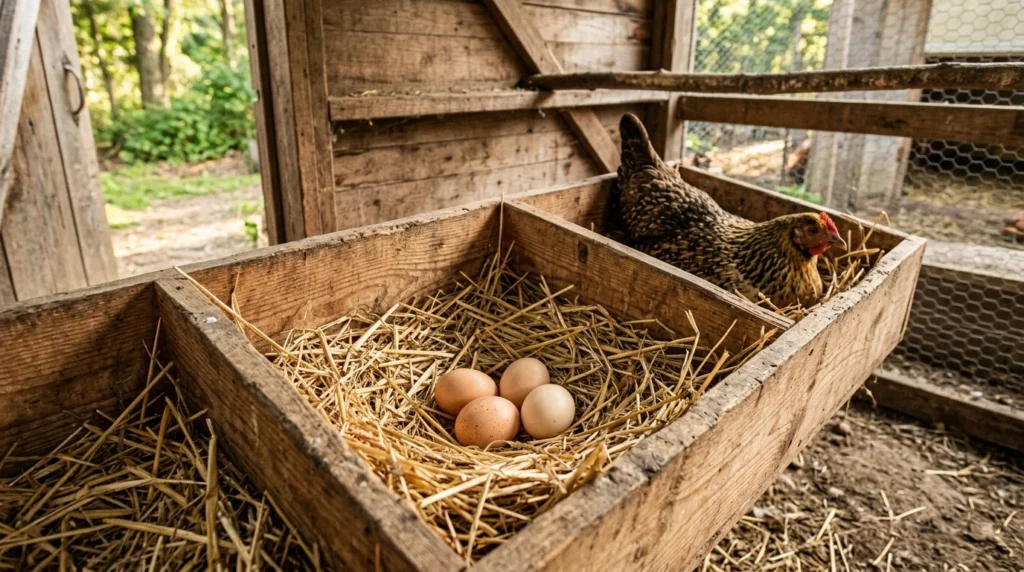
Most breeds begin laying between 16 and 24 weeks of age, depending on the breed and time of year.
What to expect:
- Pullets (young hens in their first year) are your most productive layers.
- Production peaks in years 1–2 and then gradually declines.
- Hens need roughly 14–16 hours of daylight to lay consistently. Production drops naturally in winter.
- The first eggs are often small and misshapen as the hen’s system calibrates. This is normal.
Signs a pullet is about to lay: her comb and wattles will redden, she’ll start investigating the nesting boxes, and she’ll often crouch (a submissive posture) when you approach.
Backyard Chickens for Beginners: Common Mistakes To Avoid
Raising chickens isn’t too difficult, but many people make mistakes in the beginning that cost them in the long run. Avoid these common blunders:
- Buying too many birds at once. Start small. You can always add more once you know what you’re doing.
- Building or buying a coop that’s too small. Cramped conditions cause stress, pecking, and disease. The “starter coop” sold at big-box stores for 4 birds usually fits 2 comfortably. Always size up.
- Using chicken wire instead of hardware cloth. Chicken wire rusts, has openings predators can reach through, and can be torn apart by determined animals. Hardware cloth is the only acceptable material for runs and vent covers.
- Skipping the quarantine period. If you ever add new birds to an existing flock, quarantine them in a separate space for 2–4 weeks first. Introducing sick birds to a healthy flock can wipe out everything you’ve built.
- Not having a plan for roosters. If you hatch eggs or buy straight-run chicks, roughly half will be male. Know what you’ll do with them before you start. Many municipalities ban roosters, and rehoming adult males is difficult.
- Neglecting the coop. Chickens generate waste. A dirty coop breeds disease, parasites, and pests. Clean nesting boxes weekly, refresh bedding regularly, and do a full cleanout at least twice a year.
- Underestimating predator pressure. Even in suburban backyards, predators are present and persistent. One raccoon, one fox, or one neighborhood dog can wipe out a flock overnight. Invest in proper hardware cloth and secure latches from day one.
What To Budget For
Starting a backyard flock isn’t free, but it’s also not as expensive as it sounds if you plan ahead. Here’s a rough breakdown:
- Coop and run: $200–$800+, depending on DIY vs. pre-built, and flock size
- Chicks: $3–$10 per chick, depending on breed and source
- Feed (startup): $20–$30 for a 50-lb bag of layer feed
- Waterer and feeder: $20–$60
- Bedding: $10–$20 per bale of pine shavings
Ongoing costs are mostly feed. A small flock of 4 hens will go through roughly 1.5–2 lbs. of feed per day (about $15–$20 per month total, depending on brand and whether they free-range).
The eggs won’t pay for themselves in year one, but the quality of truly fresh eggs, the entertainment value, and the compost benefits add up quickly.
Building Your Chicken Knowledge Base
The best thing you can do before your first chick arrives is read ahead. Understanding what’s coming, including the brooder stage, the awkward pullet phase, the first lay, and the winter slowdown, makes each transition smoother.
Backyard chickens reward the prepared. Take the time to set things up right, learn the basics before your birds arrive, and don’t cut corners on the coop. Do those three things, and you’ll have a healthy, productive flock that earns its keep and then some.