
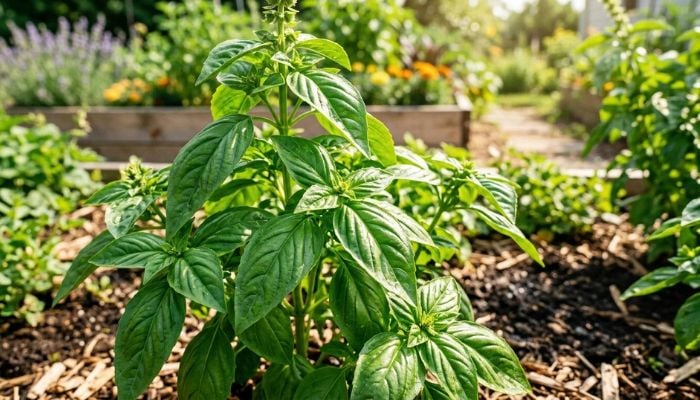
Herbs are some of the most rewarding plants you can grow in a raised bed. They’re productive and useful, and most of them thrive in exactly the kind of loose, well-drained soil a good raised bed provides.
The challenge isn’t getting them to grow. It’s figuring out which herbs to choose, how to space them, and which ones will take over everything if you’re not careful.
This guide covers the 10 best herbs for raised beds, how to pair them with your vegetables, and how to lay out a 4×4 herb bed that actually works.
Best Herbs for Raised Beds
1. Basil
The quintessential raised bed herb. Basil loves heat, needs good drainage, and performs best in full sun, all things a raised bed delivers well.
It’s also one of the best companion plants in the garden: planted near tomatoes, it’s said to improve flavor and deter aphids and whiteflies. Give each plant about 12 inches of space, and pinch the flowers as they appear to keep leaves coming all season.
One important note: Basil hates cold. Don’t transplant it until nighttime temps are consistently above 50°F, and don’t grow it near fennel.
2. Chives
Chives are one of the most underrated herbs in the garden. They’re perennial (they come back every year), they’re low-maintenance, and they pull double duty as a companion plant, particularly alongside carrots, where they’re believed to deter the carrot fly.
Plant them at the edge of your bed, and they’ll fill in nicely without crowding anything out.
3. Parsley
Both flat-leaf and curly parsley do well in raised beds. Parsley is a biennial; it grows leaves in year one, goes to seed in year two, and then dies, so most gardeners treat it as an annual and replant each spring.
It tolerates partial shade better than most herbs, which makes it useful for filling spots that don’t get full sun all day. Space about 6–8 inches apart.
4. Thyme
Thyme is tough, drought-tolerant, and one of the easiest herbs to keep alive. It stays compact, doesn’t crowd its neighbors, and comes back reliably as a perennial in most climates.
It’s a good companion for brassicas (broccoli, cabbage, and cauliflower) and is said to deter cabbage worms. Give it 12 inches of space and good drainage. The one thing thyme won’t forgive is wet feet.
5. Oregano
Oregano is vigorous and spreads freely; not as aggressively as mint, but it will expand if you don’t trim it back. That’s easy to manage with regular harvesting.
It’s a natural companion for peppers and does well near most vegetables. Like thyme, it’s drought-tolerant and prefers drier conditions, so group them together in the bed to make watering easier.
6. Rosemary
Rosemary is a shrub, and it will eventually get large, reaching 3–4 feet wide in a mild climate. In a raised bed, this means giving it its own corner or its own bed entirely.
It’s worth it, though. Rosemary is a powerful aromatic that deters a range of pests and does well near beans and brassicas. In colder climates (Zone 6 and below), plan to overwinter it in a pot or treat it as an annual.
7. Mint
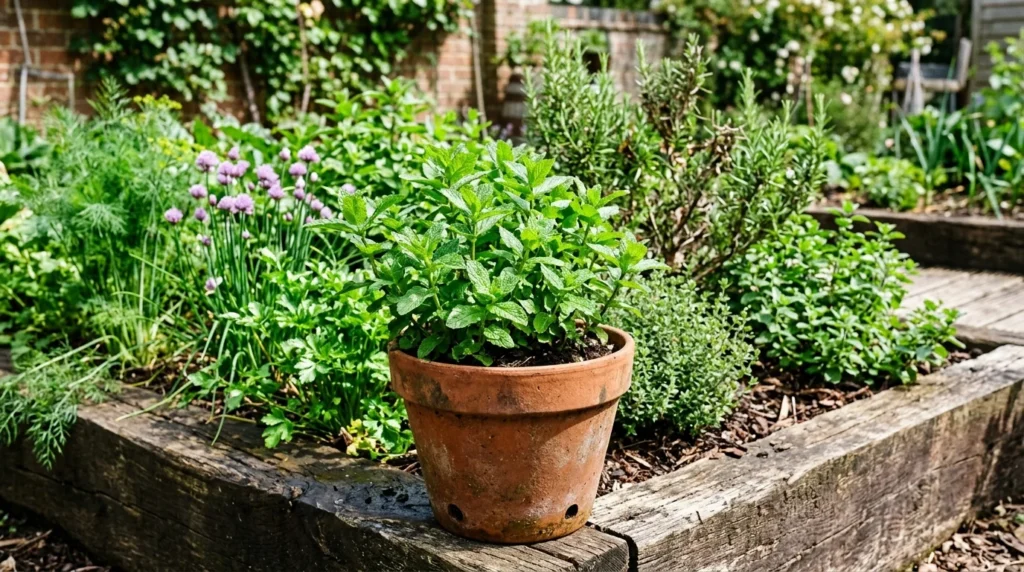
Here’s what to know about mint: don’t plant it directly in a raised bed. Mint spreads aggressively by underground runners and will colonize your entire bed within a season or two.
Grow it in a container instead. A pot sunk into the soil with the rim at bed level works well and gives the appearance of being in the bed without letting the roots escape.
That said, mint is excellent near brassicas and can repel aphids, flea beetles, and even some rodents. It’s just better managed in containment.
8. Dill
Dill is a tall, feathery herb that attracts beneficial insects, particularly predatory wasps and hoverflies that prey on garden pests. It pairs well with lettuce, onions, and cucumbers.
One thing to watch: dill does not get along with carrots or tomatoes when they’re young. Plant dill away from those crops, or add it after tomatoes are established and flowering. It self-seeds freely, so you’ll often get a second generation without replanting.
9. Sage
Sage is a compact, woody perennial that does particularly well near brassicas, and it’s said to deter cabbage moths and beetles. It grows slowly and doesn’t need much space (12 inches is fine), and it’s drought-tolerant once established.
Plant it in a spot where it can stay long-term; sage gets woody after a few years and benefits from being cut back in spring to encourage fresh growth.
10. Cilantro
Cilantro is the bolting-prone herb that frustrates a lot of gardeners. In hot weather, it goes to seed fast, and once it bolts, the leaves turn bitter and sparse. The trick is to succession-sow it every 2–3 weeks and grow it in partial shade during summer.
You may not know this, but the seeds (coriander) are just as useful as the leaves, and letting plants bolt attracts beneficial insects. Pair it with spinach and other cool-season greens.
Companion Planting Pairings
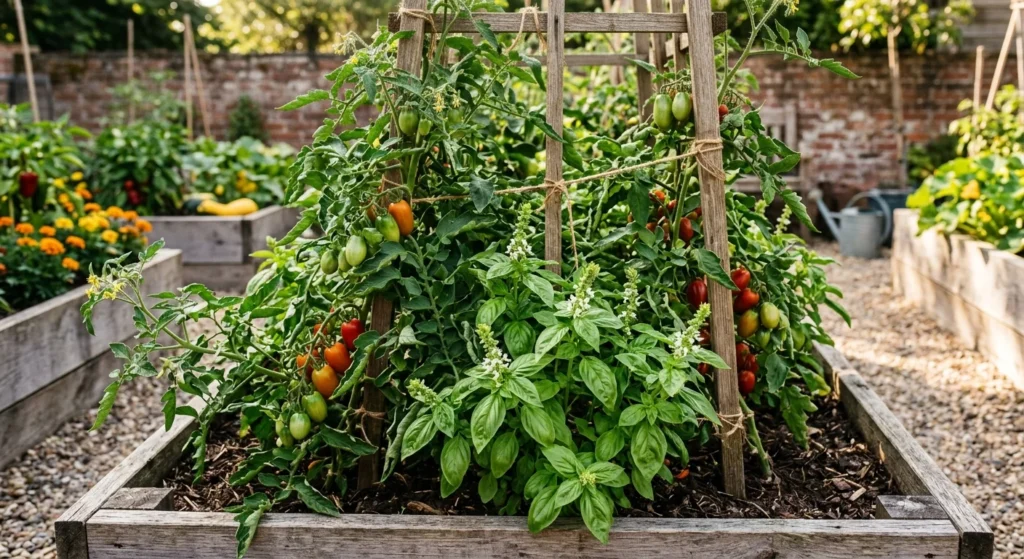
Smart herb placement does more than just fill space; the right pairings actively support your vegetables.
Winning combinations:
- Basil + tomatoes: One of the most well-known pairings. Basil is believed to deter tomato hornworm, aphids, and whiteflies.
- Chives + carrots: Chives may help deter carrot fly; both grow at a similar pace and don’t compete for space.
- Thyme + brassicas: Thyme deters cabbage worms and works well at the edge of a broccoli or cabbage bed.
- Dill + cucumbers: Dill attracts beneficial insects, and both enjoy similar growing conditions.
- Sage + cabbage, broccoli, cauliflower: Classic pairing; sage repels cabbage moths and white butterflies.
Keep these apart:
- Basil + fennel: Fennel is allelopathic, which means that it inhibits the growth of most plants near it, basil especially.
- Dill + carrots: Can cross-pollinate and affect flavor; keep them separated.
- Dill + tomatoes (young plants): Dill can stunt young tomatoes; okay once plants are established.
- Mint + everything: Grows too aggressively; keep in a container.
- Fennel + almost anything: Best grown in its own spot, away from the main raised beds entirely.
How To Arrange a 4×4 Herb Bed
A 4×4 raised bed gives you 16 square feet, which is plenty for a productive herb garden. Here’s a layout that works:
- Corner 1 (back left): Rosemary – Rosemary goes in the back corner where it won’t shade smaller plants. It’s the tallest, most permanent resident of the bed.
- Corner 2 (back right): Sage – Sage is similarly compact and long-lived. Back right keeps it out of the way and paired with rosemary. Both are Mediterranean herbs that like it dry.
- Middle row: Basil (×2) and Thyme – Two basil plants centered in the bed with thyme tucked alongside. Basil is the star of most culinary herb gardens, so give it prime real estate.
- Front edge: Chives and Parsley – Both are low-growing, tidy, and won’t crowd the back. Chives especially work well as a border plant.
- Interplanted: Oregano – Oregano fills in gaps between larger plants. Trim it regularly to keep it from spreading too far.
- Not in this bed: Mint, Dill, Cilantro – Mint gets its own container. Dill and cilantro are better suited to a vegetable bed or a dedicated annual herb patch, as they’re taller, self-seed, and have different growing seasons than the perennial herbs above.
A Few Practical Notes
Drainage Matters More for Herbs
Mediterranean herbs (rosemary, thyme, oregano, and sage) prefer drier conditions and can struggle in heavy or constantly moist soil.
If you’re grouping herbs together in one bed, orient your watering so the moisture-loving herbs (basil, parsley, chives, cilantro) get consistent water while the Mediterranean herbs are on the drier end.
Harvest Frequently
Most herbs respond to regular cutting by producing more. Waiting until a plant is enormous before harvesting is the wrong approach.
Cut basil, mint, and cilantro by up to a third every week or two, and they’ll reward you with fresh growth all season.
Think About Longevity
Perennial herbs such as chives, thyme, oregano, sage, and rosemary will come back year after year. Annual herbs such as basil, cilantro, and dill need replanting each season. Plan your bed layout around that. Put perennials in stable positions, and leave flexible space for annuals.
Herbs + Raised Beds: A Winning Combination
Raised beds are genuinely excellent for herb growing. The soil stays loose and well-drained, you can position the bed for maximum sun, and the contained environment makes it easy to manage spacing and companions.
Start with a handful of the herbs above (basil, chives, parsley, and thyme are hard to go wrong with), and expand from there as you get a feel for what you actually use in the kitchen.
For more on building out your raised bed garden, see our guide on the best vegetables to grow in raised beds.