
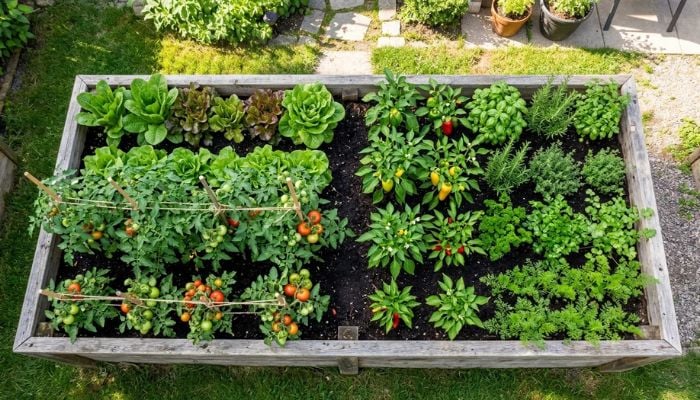
New to raised beds and not sure how deep to dig? You’re not alone. Bed depth is one of the most common questions beginner gardeners ask, and getting it wrong can mean stunted roots, poor yields, and a lot of head-scratching about why things aren’t growing.
The good news is that it’s not complicated once you know what your raised bed plants actually need.
So, how deep should raised beds be?
Raised bed depth comes down to root depth. Shallow-rooted crops such as lettuce are perfectly happy in 6 inches of soil. Tomatoes and peppers want at least 12 inches. Carrots, parsnips, and deep-rooting squash need 18 inches or more.
Match the depth to the crop, and your plants will do the rest.
This guide breaks it all down by vegetable type, gives you a quick-reference table, and explains what to do when you’re dealing with hard surfaces or want just one bed to grow everything.
Shallow-Rooted Crops: 6 Inches Is Enough
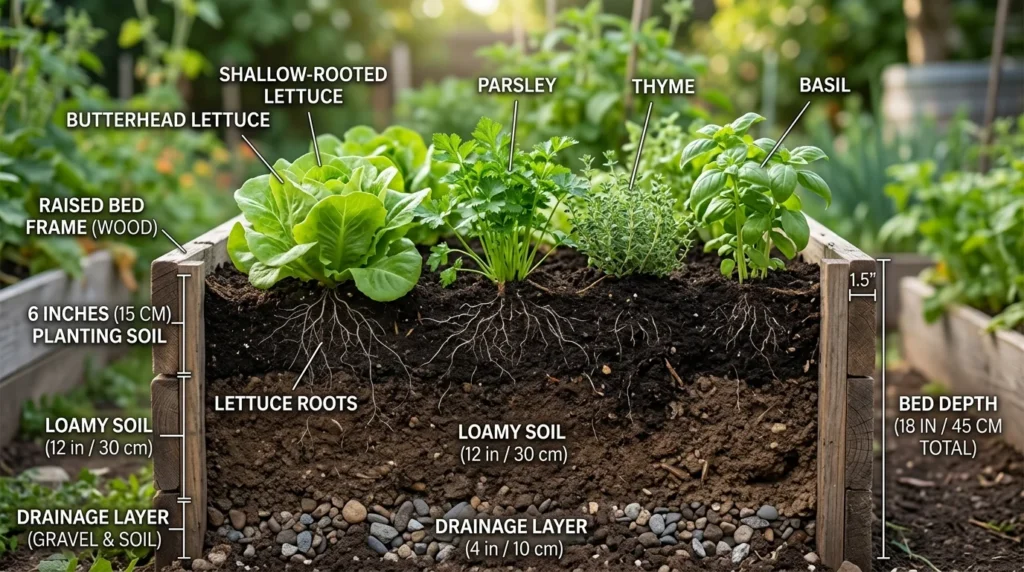
These crops stay near the soil surface and are the easiest to grow in raised beds, even low-profile ones.
What grows here:
- Lettuce and salad greens
- Spinach
- Herbs (basil, cilantro, parsley, chives, etc.)
- Radishes
- Kale
- Swiss chard
- Arugula
- Peas (the roots are shallow, even though the vine gets tall)
A 6-inch bed works for all of these. That said, 8–10 inches is even better. More soil means better water retention, more room for root development, and more buffer against temperature swings. If you’re building new beds, don’t go below 6, and aim for 8 when you can.
Note on peas: the vines grow tall, but the root system stays fairly shallow. Support them with a trellis and a 6-inch bed handles them fine.
Medium-Rooted Crops: Aim for 12 Inches
The workhorses of most raised bed gardens fall into this category. Think tomatoes, peppers, beans, cucumbers, and other summer favorites. These plants have more substantial root systems and benefit significantly from 12 inches of quality soil to spread into.
What grows here:
- Tomatoes
- Peppers (sweet and hot)
- Eggplant
- Cucumbers
- Summer squash and zucchini
- Beans (bush and pole)
- Broccoli
- Cauliflower
- Cabbage
- Brussels sprouts
- Beets
Twelve inches is the practical minimum for this group. Tomatoes, in particular, are heavy feeders with root systems that spread wide and deep. They’ll push their roots further than 12 inches if you let them, but 12 inches of good raised bed soil gives them enough to thrive.
If your beds sit over native soil (rather than pavement or wood), roots can push down further even from a shallower bed, but if you’re growing directly over concrete or a hard surface, 12 inches is the floor, not the target. Go deeper when you can.
Deep-Rooted Crops: 18 Inches or More
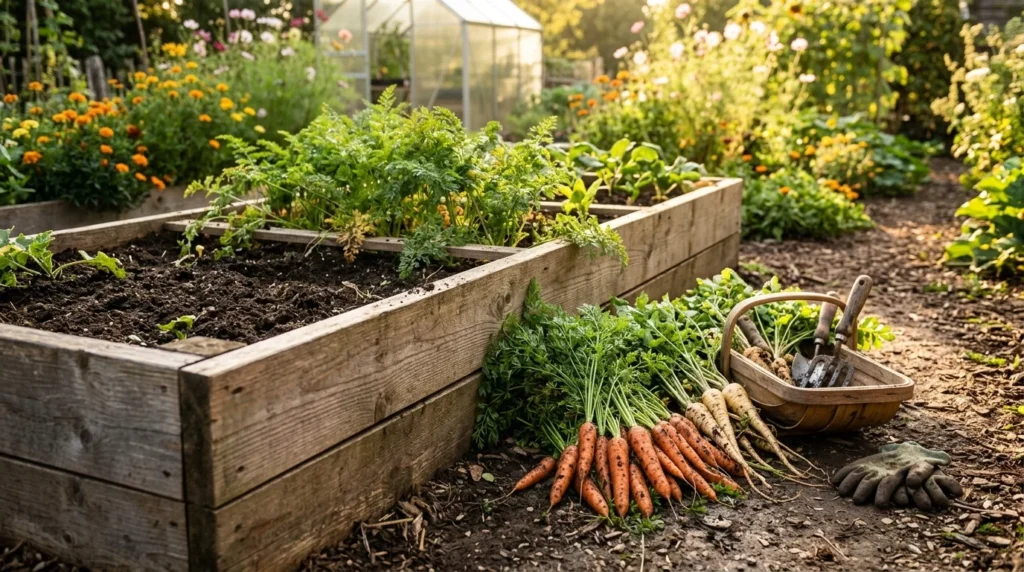
Root vegetables and a few others need real depth to perform. This is where gardeners most often go wrong. They put carrots or parsnips in a shallow bed, get stubby or forked roots, and blame the seeds. It’s almost always a depth problem.
What grows here:
- Carrots
- Parsnips
- Potatoes
- Winter squash and pumpkins
- Artichokes
- Asparagus
- Watermelon
Carrots and parsnips need 18 inches of loose, unobstructed soil. They don’t just grow down; any resistance (rock, compacted layer, hard subfloor, etc.) causes them to fork or stop short. This is why raised beds are actually ideal for root vegetables: you control the soil completely.
Potatoes are technically in this group but are often grown in shorter beds by hilling up the soil as they grow. You can start with a 12-inch bed and mound additional soil over the emerging plants. Some gardeners use dedicated potato towers or deep buckets for this reason.
Perennials such as asparagus and artichokes are the deepest-rooted of the bunch. If you’re growing asparagus, plan for at least 18 inches and keep in mind this is a long-term bed, as asparagus comes back for 15–20 years once established.
Quick Reference: Raised Bed Depth by Vegetable
- 6 inches: Lettuce, spinach, arugula, radishes, herbs, kale, chard, peas
- 12 inches: Tomatoes, peppers, eggplant, cucumbers, summer squash, zucchini, beans, broccoli, cauliflower, cabbage, beets
- 18 inches+: Carrots, parsnips, potatoes, winter squash, pumpkins, artichokes, asparagus
What if You’re Growing Over Concrete or a Solid Surface?
Over native soil, roots can go deeper than your bed walls, which gives you a little forgiveness on depth. Over concrete, pavers, or wood decking, your bed is the whole story. Roots have nowhere else to go.
In this case:
- Add 2–4 inches to the minimums listed above.
- For root vegetables over a hard surface, consider 20–24 inches, or use a purpose-built deep planter.
- Make sure drainage is excellent. Water can’t wick downward, so beds over hard surfaces need extra attention to soil structure and drainage holes.
If you’re growing on a rooftop, deck, or balcony, a 12-inch bed is usually the practical ceiling due to weight. Stick to shallow and medium-rooted crops in those situations.
Can One Bed Depth Handle Everything?
If you want one standard bed depth that covers most crops, go for 12 inches.
It’s the sweet spot; it’s deep enough for tomatoes, peppers, and most vegetables, low enough to be affordable to fill, and manageable to build. Pair your 12-inch beds with a separate deeper section (or a dedicated bed) for root vegetables, and you’ve got a complete setup.
The most common bed heights you’ll see at garden centers are 6, 8, 12, and 18 inches. The 12-inch option (sometimes sold as “standard depth”) is the most popular for good reason.
Does Bed Material Change Anything?
No, the depth requirements are the same whether you’re building with cedar, pine, galvanized metal, composite lumber, bricks, or concrete blocks. Material affects durability, looks, and cost. Depth affects what you can grow.
One exception worth noting: Very dark metal beds in full sun can heat up significantly in summer. This isn’t a depth issue, but if you’re growing heat-sensitive crops such as lettuce in a metal bed, be aware that soil temps can get higher than expected near the walls.
Getting the Most Out of What You’ve Got
If you have shallow beds and want to grow something that needs more depth, you have a few options:
- Add a second tier (stack another board on top of your existing beds).
- Use the deepest section of the bed for shallow-rooted crops and reserve your deeper beds for bigger plants.
- For root vegetables specifically, consider growing them in deep containers or fabric grow bags instead.
Good soil matters as much as depth. A loose, well-draining mix with plenty of organic matter gives roots room to move and holds moisture without getting waterlogged.
One more thing: Don’t fill beds with straight garden soil. It compacts badly in a raised bed frame, drains poorly, and makes for a frustrating first season. A good blended raised bed mix or Mel’s Mix equivalent will outperform native soil every time.