
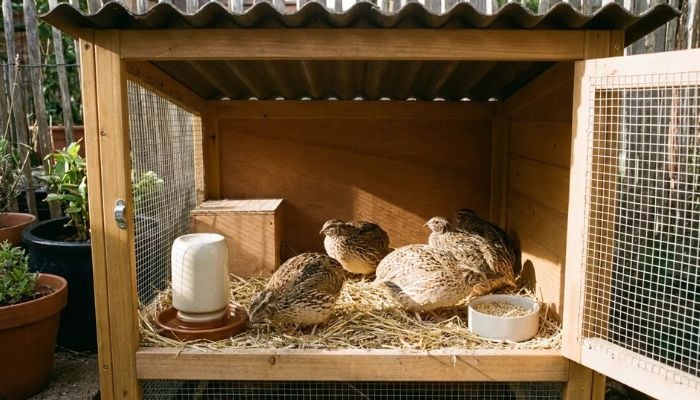
If you’ve been researching small backyard livestock and have considered chickens and rabbits but are worried about noise or space, Coturnix quail might be exactly what you’re looking for.
These compact, quiet birds start laying eggs at just 6–8 weeks old, making them one of the fastest-producing animals you can keep in a backyard or small homestead.
Raising quail for eggs is genuinely beginner-friendly, and once you understand a few key differences from other poultry, the learning curve is surprisingly short.
Unlike chickens, quail are permitted in many urban and suburban areas where full-sized poultry aren’t allowed.
They’re nearly silent (hens only make a soft, muffled call), and a small colony of six to 12 birds can fit comfortably in a hutch the size of a large rabbit cage.
If you’re just getting started with backyard animals, quail are one of the smartest first steps you can take. Here’s everything you need to know to get started.
Quail vs. Chickens: Why Quail Win for Small Spaces
Chickens are a fantastic choice for many backyard keepers, and if you’re considering them, our guide to backyard chickens for beginners is worth a read.
But quail have a few hard-to-ignore advantages for anyone working with limited space or navigating city ordinances.
- Space: A single Coturnix quail needs about 1 square foot of floor space. Chickens typically need 4 square feet of indoor space plus outdoor run access.
- Noise: Hens are nearly silent. Males make a distinctive crow, but it’s far quieter than a rooster, and many areas that ban roosters have no restrictions on male quail.
- Egg timeline: Chickens take 5–6 months to start laying. Quail begin at 6–8 weeks.
- Urban compatibility: Many city zoning codes restrict chickens but have no specific language about quail, meaning they’re often permitted by default.
- Feed efficiency: Quail consume just 14–20 grams of feed per day. They’re lean, efficient birds.
The main trade-off is egg size. A quail egg is roughly a third the size of a chicken egg, but they lay almost every single day, and many people find quail eggs richer and more flavorful for certain dishes.
Raising Meat Rabbits vs. Raising Quail for Eggs
Both quail and rabbits are popular picks for homesteaders who want low-noise, low-footprint animals that don’t require a lot of land.
If you’re weighing your options or thinking about combining the two, here’s how they compare:
Quail are purpose-built egg producers. One Coturnix hen can lay 250–300 eggs per year, starting just weeks after hatching.
Rabbits obviously don’t produce eggs, but if meat production is part of your homesteading goals, our guide on how to raise meat rabbits covers everything you need for a beginner setup.
The two animals are surprisingly compatible: quail and rabbits can share barn space or adjacent hutches, and many small homesteaders run both.
If eggs are your primary goal, quail are the clear pick.
If you want both fresh eggs and a reliable meat source, pairing a small quail flock with a rabbit colony is one of the most space-efficient livestock setups a beginner can build, and the combined startup cost is relatively low.
Best Quail Breeds for Egg Production
For backyard egg laying, one breed stands above the rest: the Coturnix quail, also called Japanese quail or Pharaoh quail. This is the breed most beginners should start with, and for good reason.
- Coturnix (Japanese Quail): The gold standard for egg production. Lays at 6–8 weeks, produces 250–300 eggs per year, and has a docile temperament that makes handling easy.
- Jumbo Coturnix: A heavier strain of the standard Coturnix, bred for larger body weight. Still a solid layer and a good option if you want dual-purpose birds.
- Bobwhite Quail: North America’s native quail. Takes 16–24 weeks to mature, is significantly louder, and requires more management. Not the right starting point for egg-focused beginners.
- Button Quail: Small and sometimes kept as pets. Their eggs are too tiny to be practical for consumption; they’re not egg-production birds.
Start with Coturnix for your first flock. They’re widely available from hatcheries, forgiving of beginner mistakes, and consistent producers.
Setting up a Quail Coop (Housing Basics)
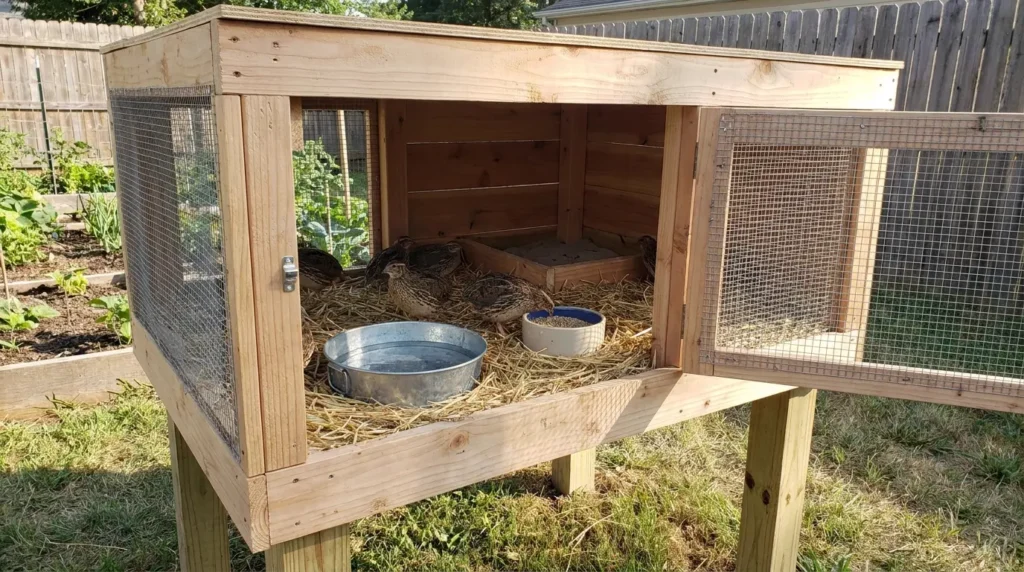
One of the first things to understand about quail is that they don’t roost. Unlike chickens, quail prefer to stay low, huddling on the ground or in low-lying cover. That changes how you design their housing.
The two main housing options for quail:
- Wire cage (hutch style): The most common and practical setup. Elevated wire hutches allow droppings to fall through, keeping birds clean and dramatically reducing smell. Use 1/2-inch hardware cloth on the bottom to support their feet. Plan for a minimum of 1 square foot per bird.
- Ground pen (deep litter): A floor-level pen with soil or bedding litter. More natural for the birds, but requires more frequent cleaning and carries a higher disease risk if management slips.
Key features your setup needs:
- Ventilation: Quail produce a surprising amount of ammonia. Good airflow is non-negotiable.
- Predator proofing: Always use hardware cloth, not chicken wire. Quail are small and vulnerable to weasels, rats, and other small predators that slip through standard chicken wire.
- Height: Quail bolt straight up when startled. Keep cage height at 10–12 inches to prevent injury from impact; anything taller puts them at risk.
- Shade: Quail are sensitive to heat stress. Ensure shaded areas in summer setups.
Quail don’t use nesting boxes. They’ll lay wherever they happen to be, which is usually corners. Collect eggs daily to prevent breakage and keep the space clean.
What To Feed Laying Quail
Quail are small birds with high protein requirements, especially laying hens. This is the area where new quail keepers most often go wrong.
Feed basics:
- 20–24% protein game bird feed. This is higher than standard chicken layer feed (which runs 16–18%). A feed formulated specifically for quail or game birds is ideal. If you can only find chicken feed, supplement with mealworms or dried insects to bring protein levels up.
- Fresh water at all times. Quail drink frequently. Use shallow waterers; deep dishes can drown small birds.
- Insoluble grit: If your birds are on wire with no soil access, provide grit to support digestion.
- Oyster shell: Offer free-choice to support strong eggshells. Keep it separate from feed rather than pre-mixed.
- Treats (sparingly): Leafy greens, mealworms, crickets, and small amounts of scratch grain are all fine. Keep treats to under 10% of daily intake; too much disrupts the protein balance laying hens need.
What to avoid: Avocado, raw onion, raw beans, high-salt foods, and anything moldy or spoiled.
Egg Production: What To Realistically Expect
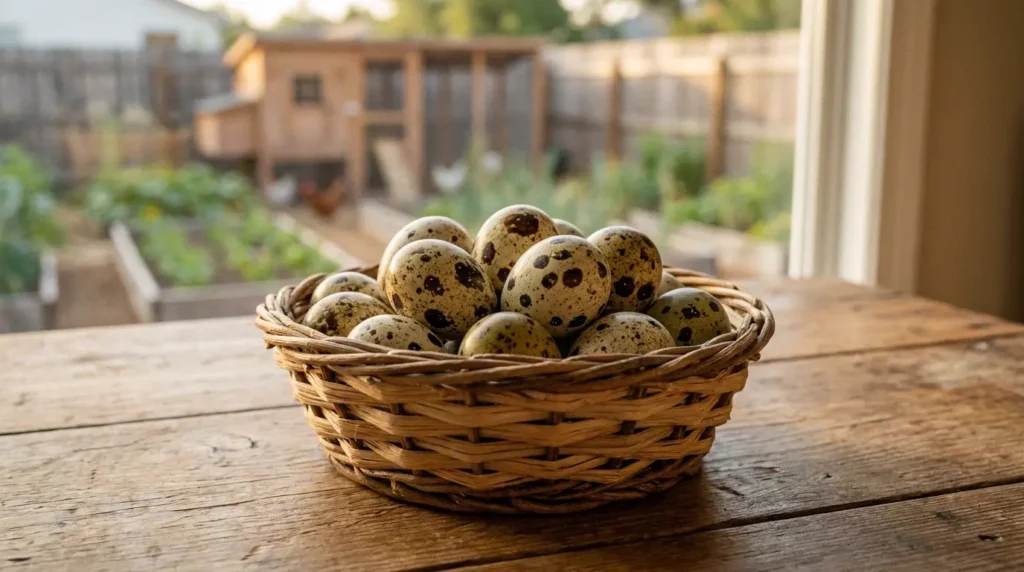
A healthy Coturnix hen in good conditions starts laying at 6–8 weeks old. Peak production runs from that point through roughly 12–14 months of age, after which output begins to decline.
What the numbers look like:
- Peak production: 5–7 eggs per week per hen
- Annual total: 250–300 eggs per hen
- Egg size: Approximately one-third the size of a chicken egg
Factors that affect how much your flock lays:
- Light: Quail need 14–16 hours of light per day to lay consistently. Without supplemental lighting, winter production drops sharply.
- Stress: A new environment, sudden noises, or routine disruption can temporarily halt laying entirely.
- Age: Production peaks in the first year, then declines. Many keepers run a rolling replacement cycle, hatching new birds every few months to keep production steady.
- Health: Mites, respiratory illness, or poor nutrition will all reduce egg output quickly.
Plan your flock size around your egg goals. If you want a dozen eggs every few days, start with 12–20 hens.
Incubating Quail Eggs (They Won’t Hatch Their Own)
Here’s something many new quail keepers don’t discover until it’s too late: Coturnix quail have almost no brooding instinct. Hens will lay eggs reliably, but they will not sit on them.
If you want to hatch your own chicks, you need an incubator.
Incubation basics:
- Incubator type: Forced-air incubators are easier for beginners than still-air. Forced-air runs at 99.5°F; still-air runs at 102°F.
- Humidity: 45–55% throughout incubation; raise to 65–70% for the final 3 days (called lockdown).
- Incubation period: 17–18 days for Coturnix quail.
- Turning: Eggs need to be turned 3–5 times daily through day 14. An automatic egg turner is worth the investment for beginners.
- Lockdown and hatch: On day 14 or 15, stop turning and increase humidity. Chicks will begin pipping on day 17.
- Brooding chicks: Coturnix chicks are tiny, barely bigger than a large grape, and need 95–100°F in their brooder for the first week, dropping 5°F each week. Use marbles or clean pebbles in water tray inserts to prevent drowning.
Selling Quail Eggs: Is There a Market?
Quail eggs are a growing niche. They’re popular at farmers markets, with specialty grocery buyers, and at farm-to-table restaurants that want something visually distinctive on the menu.
The small, speckled appearance makes them an easy sell once customers see them in person.
- Pricing to expect: Retail pricing varies significantly by region, but $3–$6 per dozen is a common starting range. Urban markets and food-focused venues often support higher prices.
- Scaling for sales: A single dozen quail eggs requires 12 eggs, which is achievable from 12 hens in about a day at peak production. To generate meaningful volume for a market table, you’ll want 50–75 hens producing 4–6 dozen per day.
- Regulations: Egg sales are regulated by your state. Most states allow small-scale, direct-to-consumer sales without a license, but rules vary. Check your state’s egg sales laws and any farmers’ market requirements before you start selling.
Start Small, Learn Fast, and Let the Eggs Come
Quail are one of the best-kept secrets in small homesteading. The barrier to entry is low, the learning curve is forgiving, and results come fast.
Within six to eight weeks of getting your first birds, you’ll have eggs. That turnaround is almost unmatched in backyard livestock keeping.
Start with a dozen Coturnix hens, get your housing ventilated and predator-proofed, source a high-protein game bird feed, and pick up a basic incubator if you want to hatch your own replacements.
From there, it’s a matter of daily care and letting the birds do what they’re exceptionally good at.
If your homestead goals grow from there, such as adding meat rabbits, scaling up to chickens, or thinking through larger livestock, you’ll find that the foundational skills you build with quail translate directly.
Start here. Start small. The rest follows naturally.