

Neem oil is one of the most effective natural pesticides and fungicides available to home gardeners, and it’s surprisingly easy to use.
This guide covers how to use neem oil on plants the right way, from mixing the perfect spray recipe to timing your applications for maximum results.
Whether you’re battling aphids, powdery mildew, or spider mites, neem oil belongs in every organic gardening toolkit.
If you’ve heard of neem oil but aren’t sure where to start, you’re in good company. It’s a staple for a reason.
It works across a wide range of pest and disease problems, it’s low-toxicity to people and pets when used correctly, and it degrades quickly in the environment.
The key is knowing how to mix it, when to spray it, and when to leave it on the shelf.
Here’s everything you need to know.
How To Use Neem Oil on Plants: The Spray Recipe
Neem oil doesn’t mix with water on its own. Because it’s an oil, it needs an emulsifier to stay suspended in a spray bottle. That’s where dish soap comes in. Here’s the standard dilution that works for most garden applications:
Basic Neem Oil Spray Recipe (1 gallon):
- 2 tablespoons (1 oz) of pure cold-pressed neem oil
- 1 tablespoon of mild liquid dish soap (such as Dawn or castile soap)
- 1 gallon of warm water
Mixing instructions:
- Combine the dish soap and neem oil in a small container and stir until a milky emulsion forms.
- Add the emulsion to your gallon of warm water.
- Stir well, and pour into a spray bottle or garden sprayer.
- Use immediately. Neem oil breaks down quickly once mixed, and any leftover spray loses effectiveness.
For a smaller batch (quart-sized spray bottle), use ½ teaspoon neem oil, ¼ teaspoon dish soap, and 1 quart of warm water.
A note on concentration: The 1:2 ratio is the standard for garden use. Going higher than this won’t improve results and increases the risk of leaf burn, especially in heat or direct sunlight.
What Neem Oil Controls (Pests and Diseases)
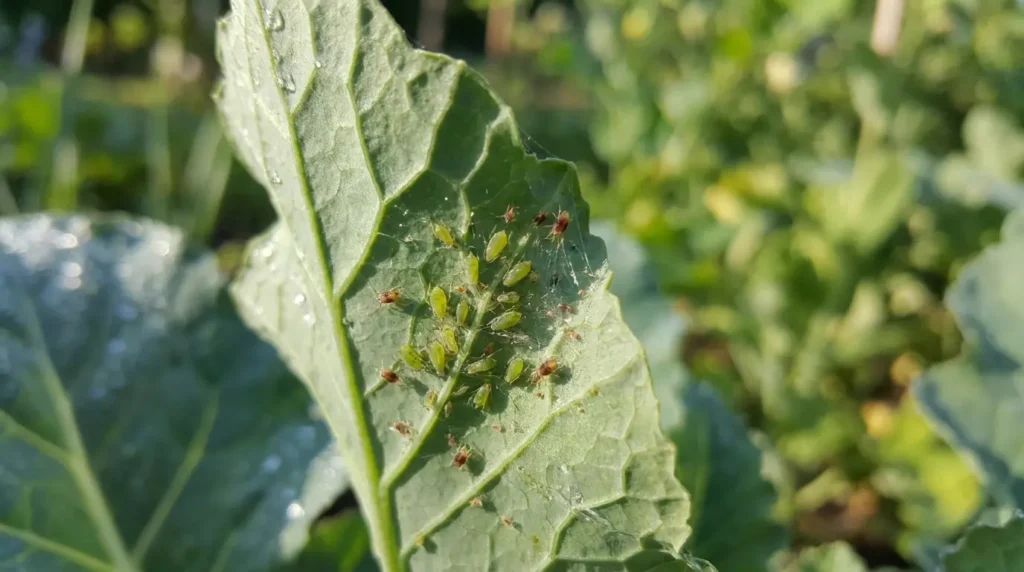
Neem oil’s active compound, azadirachtin, works by disrupting insect feeding, growth, and reproduction.
It doesn’t kill on contact the same way synthetic insecticides do, but it’s highly effective when applied consistently.
It also has antifungal properties that make it useful against several common plant diseases.
Pests neem oil controls:
- Aphids: Neem oil coats and smothers soft-bodied insects and disrupts their feeding cycle.
- Spider mites: One of neem oil’s best applications; mites have trouble building resistance to it.
- Whiteflies: Both adults and nymphs are affected by direct spray contact.
- Mealybugs: Regular applications break the reproductive cycle.
- Fungus gnats: A soil drench with diluted neem oil disrupts larvae in the growing medium.
- Scale insects: Neem oil suffocates soft scale effectively; armored scale is harder to treat.
- Thrips: Helps reduce populations when sprayed on leaf undersides where thrips hide.
Diseases neem oil controls:
- Powdery mildew: One of neem oil’s best-known uses. Apply at the first sign of white powdery spots on leaves.
- Early blight (Alternaria): Effective as a preventative and early-stage treatment on tomatoes and potatoes.
- Downy mildew: Helps slow the spread when caught early.
- Black spot: Weekly applications during humid weather help suppress fungal spread on roses.
- Rust: Some suppression, especially when applied preventatively.
Neem oil is not a rescue treatment for severe infestations or advanced disease. It works best as a preventative tool and for early-stage problems.
When and How Often To Apply Neem Oil
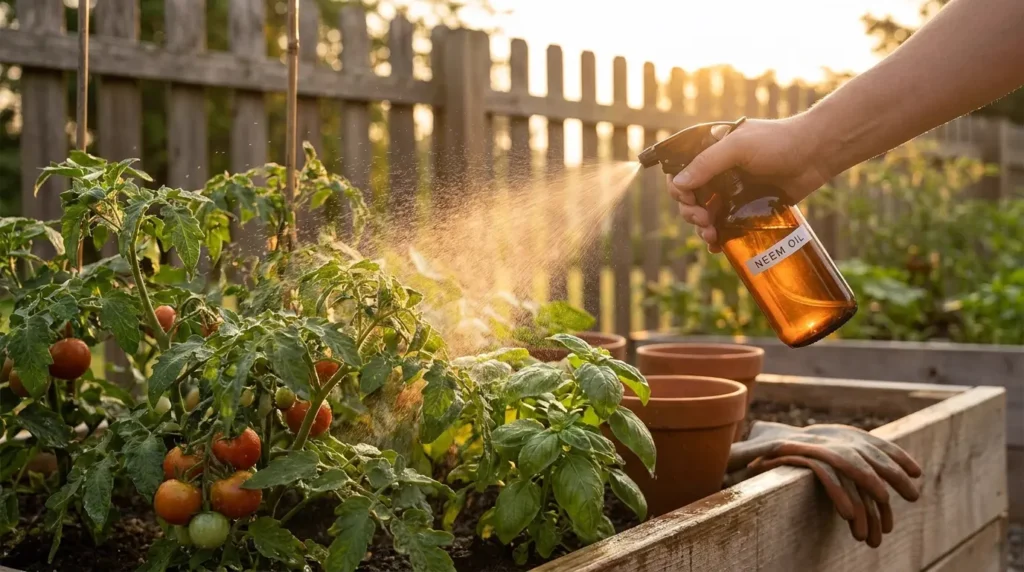
Timing and frequency matter as much as the spray recipe itself. Get these wrong, and you’ll either burn your plants or see no results.
- Best time to spray: Evening, after the sun has dropped below the direct heat window. Early morning is the second-best option. Avoid application when the sun is strong and temperatures are high. Neem oil on wet leaves in direct sunlight can cause phytotoxicity, which shows up as brown scorch marks on the foliage.
- Frequency: Every 7–14 days for preventative use. If you’re actively treating a pest or disease problem, spray every 7 days until the issue is resolved, and then back off to every 14 days for maintenance.
- Coat all surfaces: Spray the tops and undersides of leaves, stems, and soil surface if you’re dealing with soil-dwelling pests such as fungus gnat larvae. Thorough coverage is essential; missed spots give pests and disease a foothold.
- Reapply after rain: Rain washes neem oil off the leaf surface. Reapply after any significant rainfall, even if you’re mid-cycle.
When NOT To Use Neem Oil on Plants
Knowing when to skip neem oil is just as important as knowing how to use it. There are several situations where it can do more harm than good.
- Stressed or drought-damaged plants: If a plant is already struggling or wilting from heat, water issues, or transplant shock, neem oil can push it over the edge. Wait until the plant has recovered before spraying.
- Temperatures above 90°F (32°C): High heat makes neem oil more likely to burn foliage. Even at normal concentrations, spraying in hot weather is a gamble. Always check the forecast, and spray in the cooler part of the day.
- On or near flowering plants: Neem oil is harmful to bees and other beneficial pollinators on direct contact. If your plants are in bloom, avoid spraying flowers entirely, or spray only in the evening after pollinators have stopped foraging for the day.
- On seedlings and young transplants: Young plants with tender leaves are more sensitive to phytotoxicity. If you need to treat seedlings, reduce the concentration to 0.5% and do a test patch first.
- On plants with delicate foliage: Ferns, some herbs including basil, and ornamentals with waxy or fuzzy leaves can react poorly. Spot-test before committing to a full application.
Neem Oil vs. Copper Fungicide: Which Should You Use?
Both neem oil and copper fungicide are popular organic options for controlling plant disease, but they work differently and have different strengths.
Neem oil is a contact-and-systemic treatment that works on both pests and fungal disease.
It degrades quickly, usually within 3–7 days, which makes it safer for beneficial insects and the surrounding environment, but that also means you need to reapply consistently.
Copper fungicide is purely a fungicide with stronger protective action against bacterial diseases such as fire blight and certain molds that neem oil doesn’t address as effectively.
It’s more persistent on leaf surfaces. However, copper can accumulate in soil over time and has no effect on pests.
- Use neem oil when you’re dealing with a pest-and-disease combination or when you want a softer-touch preventative.
- Reach for copper fungicide when you’re managing a specifically fungal or bacterial problem, especially on tomatoes, cucurbits, or stone fruit.
- The two can be rotated but shouldn’t be mixed in the same spray batch.
Other Natural Sprays and Controls To Know
Neem oil is a cornerstone of organic pest and disease management, but it works best as part of a broader toolkit. A few others worth keeping on hand:
- Sulfur-based sprays: Sulfur powder is highly effective against fungal disease, especially powdery mildew. Don’t apply within 14 days of neem oil; the combination can cause serious leaf burn.
- Milk spray: A 40/60 milk-to-water dilution has shown surprising effectiveness against powdery mildew and is completely nontoxic. Get the full breakdown in our guide on using milk for plants.
- Compost tea: Brewed actively aerated compost tea introduces beneficial microbes that suppress fungal pathogens and build soil health.
- Diatomaceous earth: Not a spray, but a physical barrier made from fossilized algae. Effective against crawling insects at the soil level. Diatomaceous earth pairs well with neem oil for a two-front approach.
Keep Your Garden Ahead of Pests All Season
Neem oil rewards consistency. The gardeners who get the most out of it start preventative applications in early spring, right when pests emerge and disease pressure begins to climb, and keep a regular schedule through the season.
Mix fresh spray every time, apply in the evening, coat every leaf surface top and bottom, and reapply every 7–14 days. That’s the whole system. Stick to it, and you’ll handle most of what comes at your garden without synthetic inputs.
If you’re new to neem oil, pick one problem plant, and treat it for three weeks straight. The results will tell you everything you need to know about why it’s been a staple in organic growing for decades.